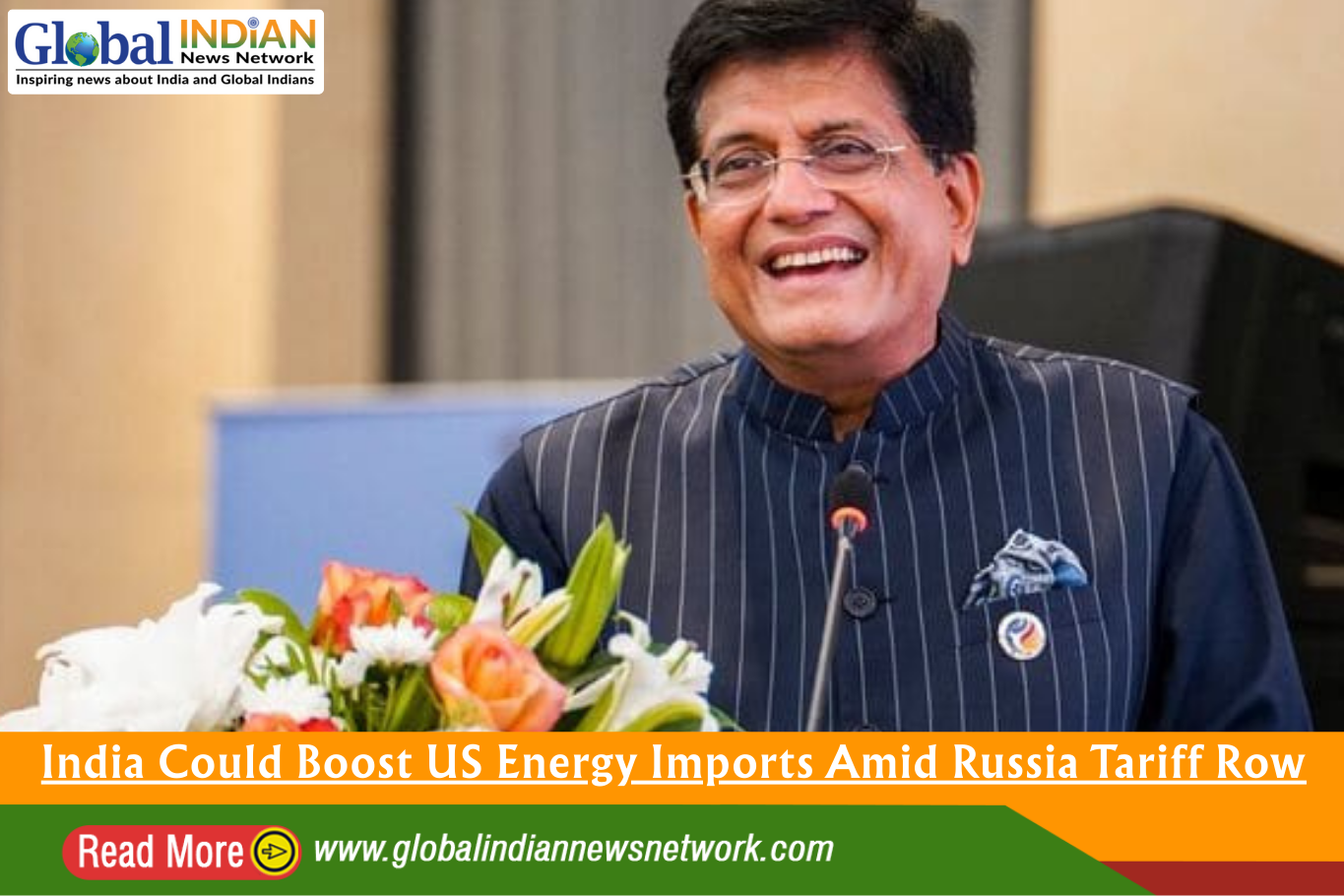
 India is looking to expand its oil and gas imports from the United States, Commerce Minister Piyush Goyal said, as both countries resume discussions on a broader trade agreement and explore ways to ease tariffs on Indian exports. Speaking at an event in New York, Goyal emphasized that energy cooperation between the two nations will play a major role in ensuring India’s long-term energy security.
“We expect our trade in energy products with the US to grow in the coming years,” Goyal remarked. “Being natural partners and close friends, the United States will be a crucial component of India’s energy strategy.”
Goyal’s visit follows last month’s announcement by the Trump administration to impose a 50% tariff on certain Indian exports, partly aimed at pressuring India to reduce its imports of Russian crude. India, the world’s third-largest oil consumer, has relied on discounted Russian oil to manage domestic costs while keeping import bills under control. The tariffs had disrupted long-standing diplomatic and trade relations but came amid renewed talks signaling potential progress.
Increasing energy imports from the US is expected to help reduce the trade imbalance between the two nations and strengthen India’s bargaining position in ongoing trade negotiations. Analysts note that deeper collaboration in energy could become a central pillar of a broader economic partnership, reflecting shared strategic and commercial interests.
India-US relations have seen fluctuating dynamics in recent years. While the partnership gained visibility after President Trump called Prime Minister Narendra Modi on his birthday, tensions arose with new measures such as the $100,000 fee on H-1B visas affecting Indian tech professionals.
Goyal underscored that the United States is vital to diversifying India’s energy sources, ensuring stable supplies for the import-dependent nation. By boosting US energy imports, India aims to balance global energy responsibilities with domestic needs, marking a significant step toward long-term energy security and bilateral cooperation.