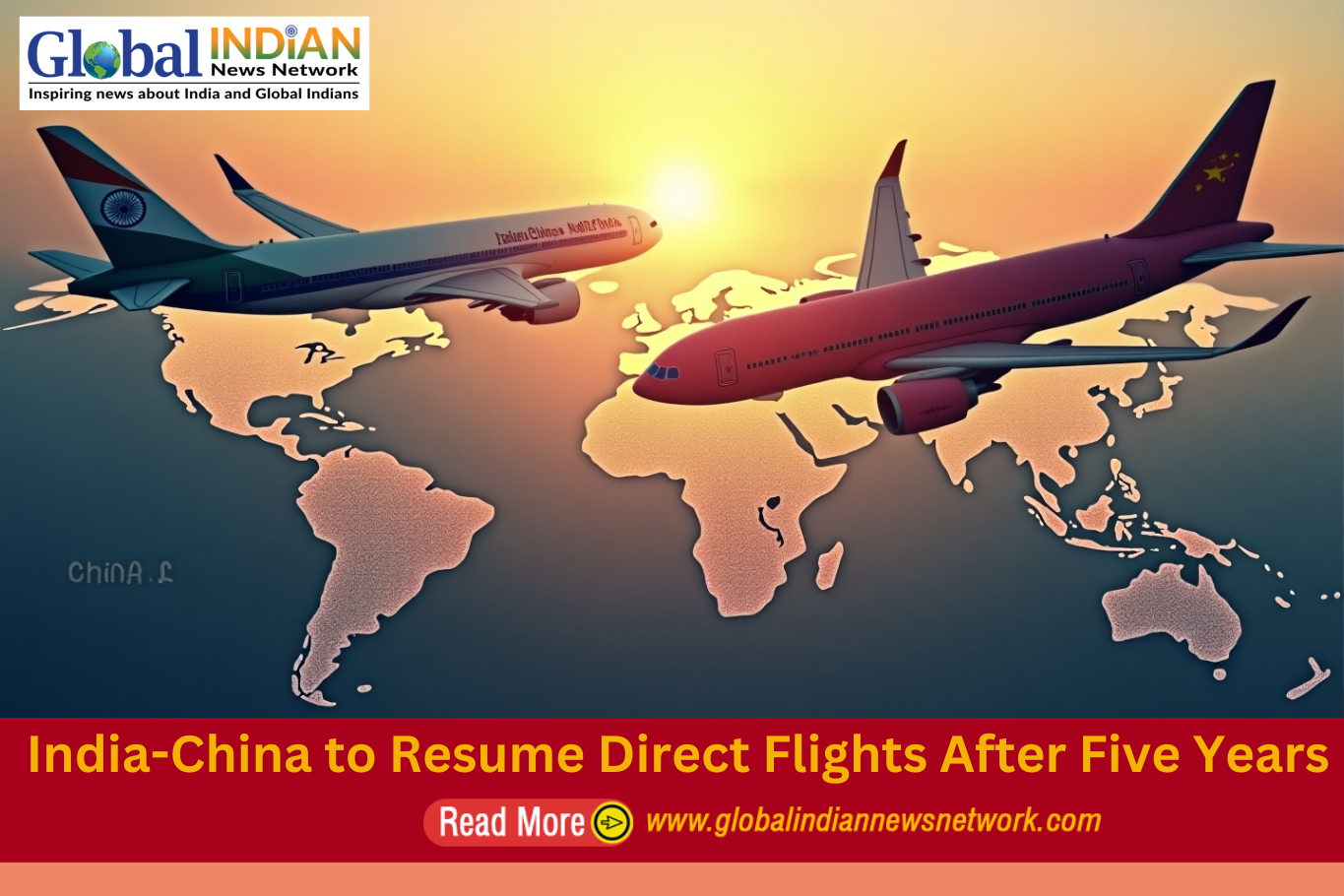
 Direct air connectivity between India and China is set to make a comeback as early as next month, ending a five-year gap. The breakthrough followed discussions between Indian Foreign Secretary Vikram Misri and Chinese Vice Foreign Minister Sun Weidong, during which both sides agreed to speed up the resumption of direct flights and deepen bilateral engagement. Analysts view the development as a significant stride toward mending relations that have been tense in recent years.
The revival of flights is expected to provide a strong boost to tourism, trade, and people-to-people exchanges. Air India and IndiGo have been advised to prepare for China-bound routes at short notice, with a formal announcement likely during Prime Minister Narendra Modi’s visit to China for the Shanghai Cooperation Organisation (SCO) summit on August 28.
Relations between the two countries have been strained since the 2020 border clashes in Ladakh, but the move to restore direct flights is seen as part of a broader effort to reset ties. The SCO summit could also create an opening for bilateral talks between PM Modi and Chinese President Xi Jinping, further reinforcing the thaw.
Sources indicate that the official announcement of resumed flights will probably be made at the summit. This development comes at a time when India is navigating rising trade tensions with the United States, particularly over President Donald Trump’s decision to impose 50% tariffs on Indian goods in response to its purchase of Russian oil. India has criticized the move as unjust and pledged to safeguard its sovereignty.
China has publicly backed India on the tariff issue, with its officials declaring that India’s foreign policy decisions cannot be dictated by external powers. The Chinese Embassy in New Delhi even released an illustration depicting India as an elephant resisting a baseball bat symbolizing US tariffs.
In a separate development, Air India recently announced it will halt its non-stop Delhi–Washington flights from September 1 due to aircraft shortages as it upgrades 26 Boeing 787-8 planes.
Once flights resume, passengers will no longer need to route through hubs like Hong Kong or Singapore, cutting travel time and costs while improving efficiency for both leisure and business travelers.