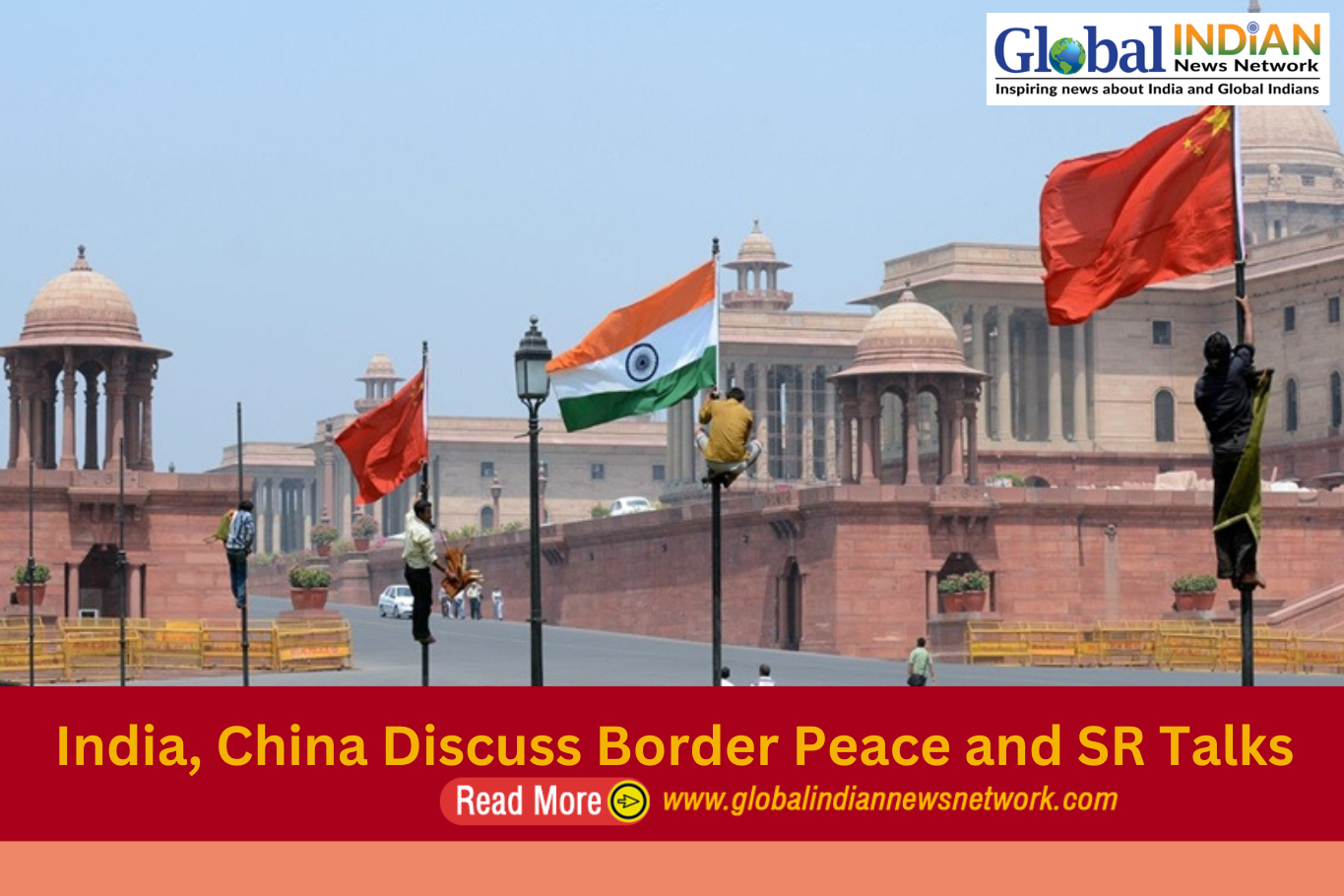
On July 23, 2025, India and China held talks in New Delhi to evaluate the current conditions along the Line of Actual Control (LAC) in eastern Ladakh. This meeting, part of the Working Mechanism for Consultation and Coordination (WMCC), served to prepare for the upcoming Special Representatives (SR) dialogue regarding the longstanding border issue.
During the discussions, both nations expressed satisfaction with the relatively peaceful conditions across the LAC, which have gradually helped stabilize overall bilateral relations. India’s National Security Adviser, Ajit Doval, and China’s Foreign Minister, Wang Yi, will lead the next round of SR talks, which are expected to be hosted in India later this year. The last session took place in Beijing in December 2024.
According to India’s Ministry of External Affairs, both sides have agreed to maintain consistent diplomatic and military communication through established channels. They also revisited measures proposed during the 23rd SR dialogue to ensure effective border control and long-term peace.
Representing India at the WMCC was Gourangalal Das, Joint Secretary of the East Asia Division, while China was represented by Hong Liang, Director General of the Department of Boundary and Oceanic Affairs. Hong also met with Indian Foreign Secretary Vikram Misri.
Efforts to normalize India-China ties have been underway since the disengagement of military troops from conflict zones in October 2024. However, a full de-escalation is still pending, with approximately 50,000 to 60,000 soldiers from each side remaining deployed near the LAC.
The military standoff had originally erupted in May 2020, leading to a deadly confrontation in the Galwan Valley in June of that year, severely straining ties. Peace-building initiatives resumed following an agreement in October 2024 to disengage from the Demchok and Depsang regions.
The decision to reactivate diplomatic dialogue mechanisms stemmed from a meeting between Indian Prime Minister Narendra Modi and Chinese President Xi Jinping in Kazan, Russia, in October 2024, shortly after the disengagement accord was signed.