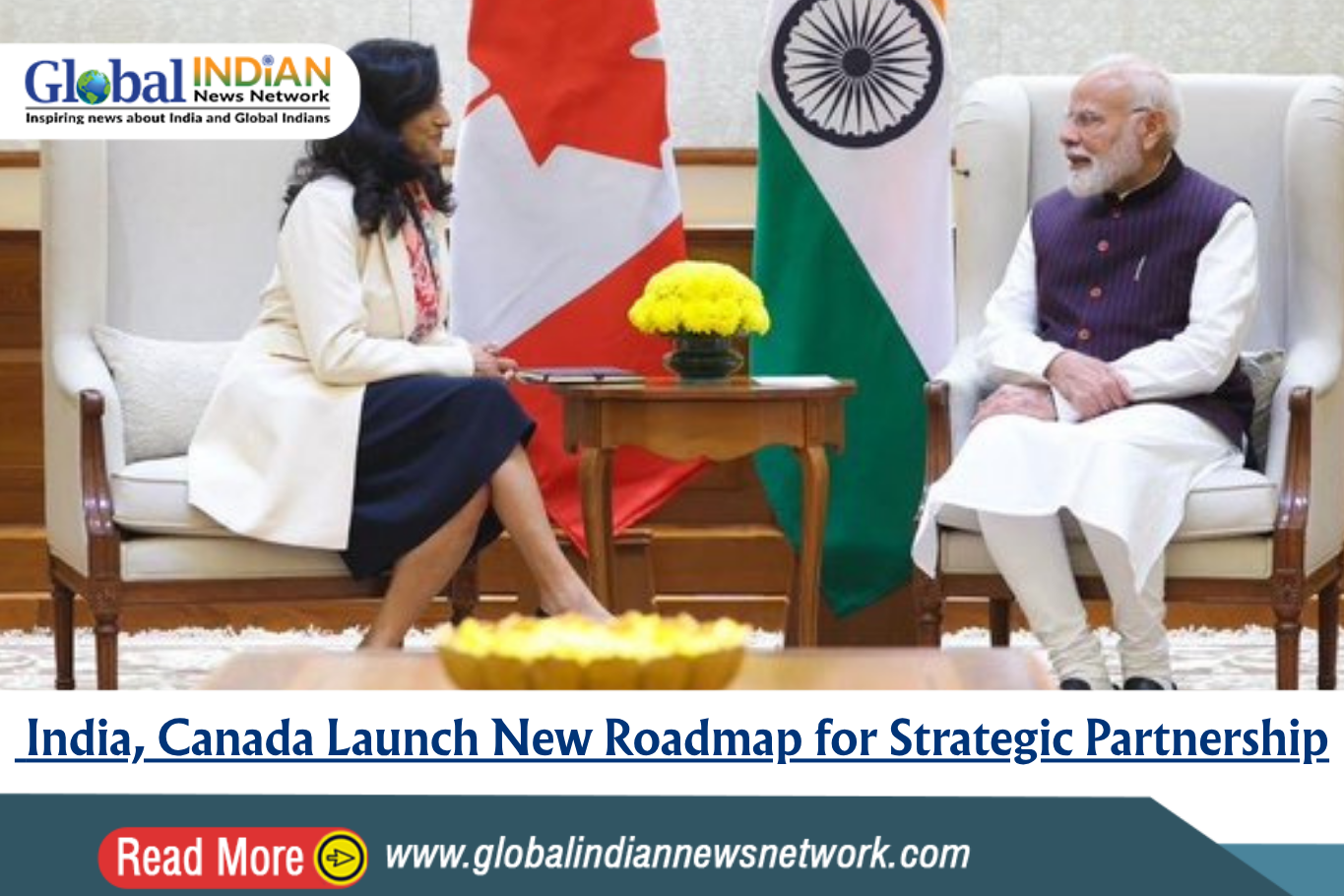
 Prime Minister Narendra Modi on Monday met Canada’s visiting Foreign Minister Anita Anand to discuss deepening cooperation across trade, energy, technology, agriculture, and people-to-people engagement. The meeting, held in New Delhi, underlined both leaders’ commitment to enhancing bilateral ties, with Modi extending warm wishes to Canadian Prime Minister Mark Carney and expressing eagerness for future collaborations.
The discussions coincide with the launch of a “New Roadmap for bilateral relations,” designed to reinvigorate India-Canada strategic ties. The roadmap builds on guidance provided by both Prime Ministers during the G7 Summit in Canada, emphasizing shared democratic values, rule of law, and respect for sovereignty. Prior steps include reinstating High Commissioners, advancing security cooperation, and holding senior official-level consultations on law enforcement and diplomacy.
Under the new framework, trade and investment cooperation will be revitalized. Ministerial-level discussions and the resumption of the Canada-India CEO Forum will focus on sectors such as clean technology, infrastructure, agri-food, and digital innovation. A senior-level trade mission is scheduled for early 2026 to coincide with the Forum. The initiative aims to strengthen bilateral economic growth, create resilient supply chains, and increase investment opportunities.
Climate and environmental collaboration will include renewable energy, decarbonization of heavy industries, plastic waste reduction, and sustainable consumption. Both nations plan to relaunch the Canada-India Ministerial Energy Dialogue (CIMED) and promote trade in clean fuels, grid modernization, and green technologies.
Innovation and technology cooperation will be advanced through the Joint Science and Technology Cooperation Committee (JSTCC), supporting AI partnerships, digital public infrastructure, and participation in India’s AI Impact Summit in February 2026. Agricultural cooperation will focus on climate-resilient practices, supply chain strengthening, and waste-to-energy initiatives.
Education, tourism, cultural exchanges, and institutional collaboration will also be prioritized. High Commissions and consulates will be strengthened to provide expertise in economic, political, defense, and technology domains. With bilateral trade reaching USD 23.66 billion in 2024, both nations view this Roadmap as critical to fostering prosperity, strategic stability, and cooperation amid global economic and geopolitical challenges.