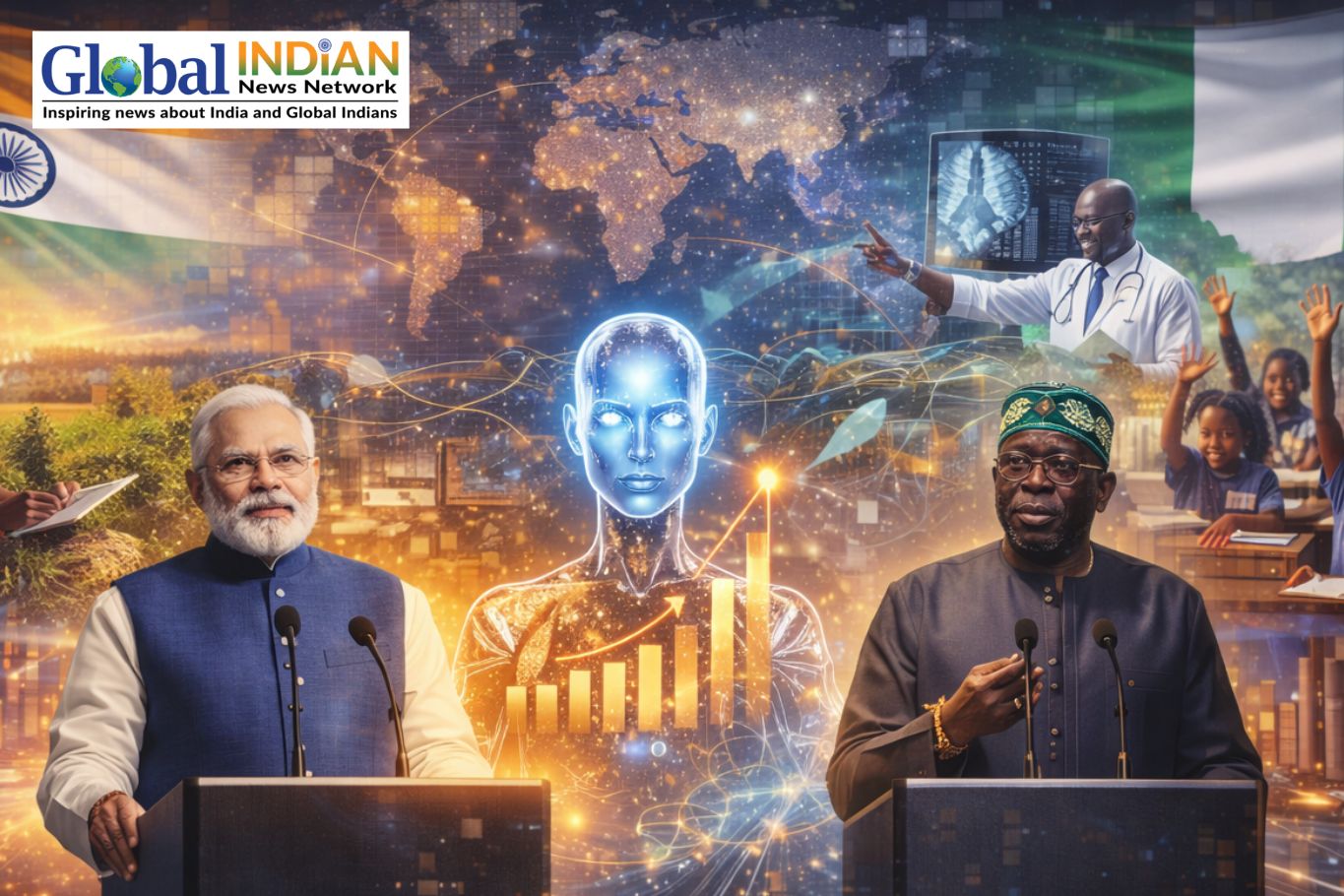
 India’s High Commissioner to Nigeria, Abhishek Singh, emphasized that the India–AI Impact Summit is poised to reshape the global discussion on artificial intelligence, strengthen bilateral relations with Nigeria, and bring widespread benefits to Africa and the Global South. According to a report by Nigeria-based NAN news, Singh highlighted that the summit aims to ensure AI serves as a tool for inclusive growth, rather than exacerbating global inequality.
The envoy noted that the event would amplify the voices of developing nations in AI governance while addressing pressing issues such as data sovereignty, workforce disruptions, and the growing digital divide that affects emerging economies. Singh underscored the summit’s core philosophy, “Sarvajana Hitaya, Sarvajana Sukhaya,” which translates to welfare and happiness for all, reflecting shared aspirations between India, Nigeria, and other African nations.
This approach continues India’s practice of sharing digital public goods, offering Nigerian developers, start-ups, and public institutions the chance to create AI solutions at reduced cost. Singh also highlighted that the summit will demonstrate practical AI applications across sectors including agriculture, healthcare, education, energy, and climate resilience, aligning closely with Nigeria’s development and digital transformation goals.
Earlier, Prime Minister Narendra Modi expressed pride that participants from around the globe would be gathering in India for the summit. The India AI Impact Summit will run alongside a larger expo from February 16 to 20, covering over 70,000 square meters across 10 arenas. The event will bring together global tech firms, start-ups, academic and research institutions, Union ministries, state governments, and international collaborators.
Policy makers at the event emphasized that achieving AI-driven prosperity begins with foundational education and skill reforms. In addition, the summit will feature 13 country pavilions showcasing international collaboration in the AI ecosystem. These include participants from Australia, Japan, Russia, the United Kingdom, France, Germany, Italy, the Netherlands, Switzerland, Serbia, Estonia, Tajikistan, and several African countries, highlighting a truly global approach to AI innovation and development.