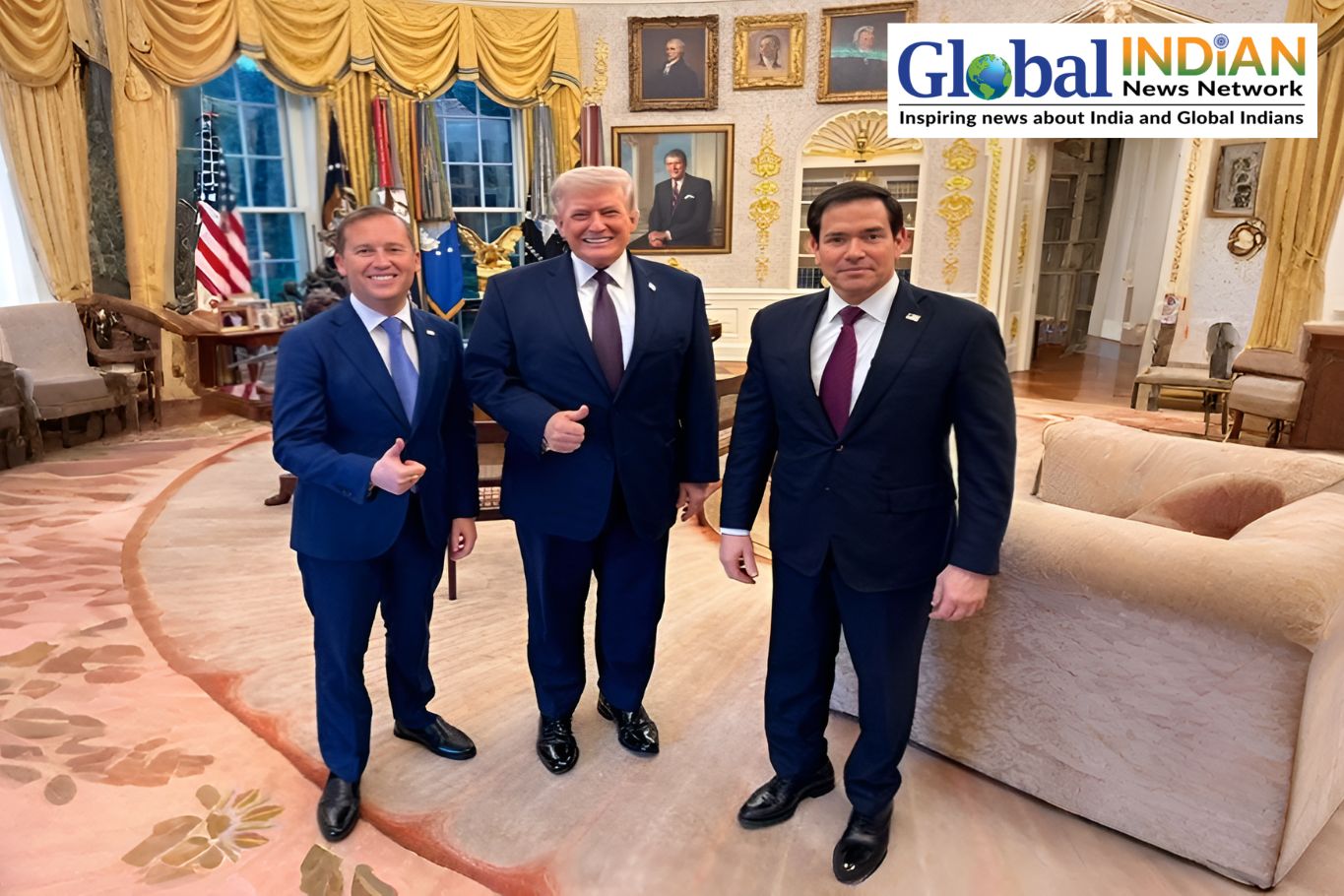
India and the United States are intensifying their trade dialogue, with both countries holding frequent virtual sessions and preparing for a fresh round of face-to-face talks in Washington, D.C. According to government sources, a senior-level Indian trade delegation will soon travel to the U.S. capital to advance negotiations toward finalizing a bilateral trade agreement.
While virtual meetings have laid the groundwork, the upcoming in-person talks are expected to tackle key trade irritants and explore both broad-based agreements and issue-specific arrangements that could lead to a breakthrough. Sources say this round of discussions is seen as pivotal, especially in light of recent geopolitical and economic developments.
The urgency stems from renewed tariff pressures from U.S. President Donald Trump, who resumed office earlier this year. His administration has pursued an aggressive tariff strategy, targeting countries with trade surpluses against the U.S.—with India included on the list of nations at risk.
Trump had originally planned to impose new tariffs in April 2025, but implementation was delayed by 90 days, later extended to August 1, providing both sides extra time to negotiate a workable compromise. Officials say the window is closing, and India’s next visit could be critical in shaping the final agreement before the deadline hits.
Meanwhile, Trump continues to expand his tariff agenda globally. On Wednesday, he unveiled a new slate of tariffs impacting 14 nations. These include:
- 30% tariffs on goods from Algeria, Libya, Iraq, and Sri Lanka
- 25% tariffs on Brunei, Moldova, Malaysia, and Kazakhstan
- 50% on Brazil, especially targeting copper exports
- 40% on Myanmar and Laos, and 32% on Indonesia
- 35-36% tariffs on Bangladesh, Serbia, Cambodia, and Thailand
- 30% on South Africa and Bosnia, and 25% on Tunisia
Trump also released letters sent to Japan and South Korea, informing them of 25% tariffs set to begin August 1. The widening list underscores his strategy of using trade penalties as leverage, adding pressure on nations like India to resolve trade issues swiftly.
As the August 1 deadline approaches, India’s diplomatic and trade efforts could prove decisive in avoiding punitive tariffs and securing a balanced trade pact with Washington.