 Researchers at the Indian Institute of Technology Bombay have developed a simpler and more efficient method to recover immune cells grown in laboratories, a breakthrough that could significantly improve T-cell-based cancer therapies.
T-cell immunotherapies, including CAR T-cell treatment, involve extracting T-cells from a patient’s blood, modifying and multiplying them in controlled laboratory conditions, and then infusing them back into the body to fight cancer. One of the most critical challenges in this process is recovering these cells without damaging their viability or function.
The research team, led by Professor Prakriti Tayalia from the Department of Biosciences and Bioengineering, focused on improving how lab-grown T-cells are retrieved after cultivation. The study highlighted that cell recovery, while seemingly straightforward, often determines whether enough healthy cells are available for effective therapy.
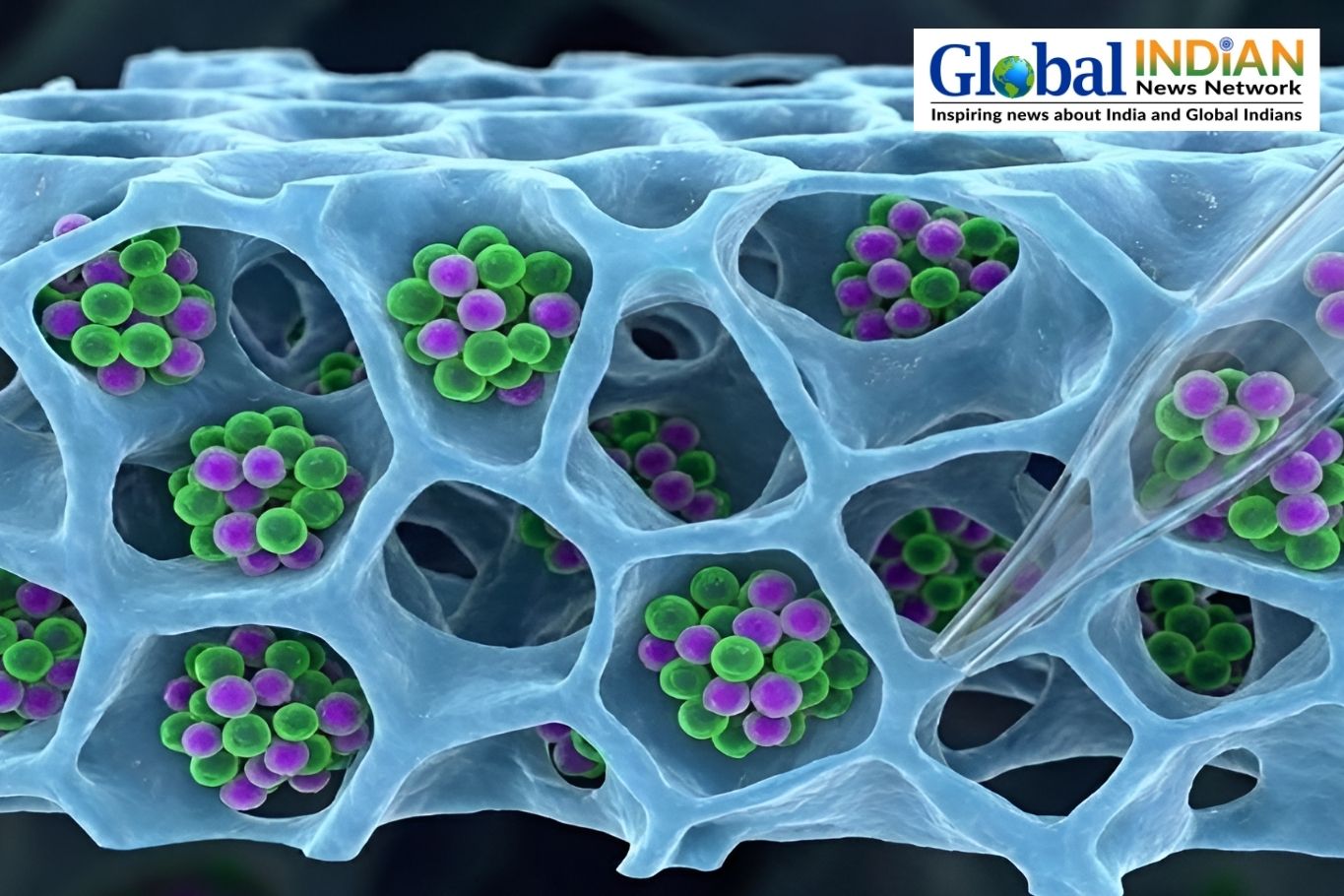
To better replicate the body’s natural environment, the researchers used electrospun scaffolds—thin fibre-based structures resembling dense mesh networks. Jurkat T-cells grown within these scaffolds actively migrated into the fibrous structure and became securely embedded.
The study found that commonly used enzymes such as trypsin caused higher cell death during recovery. In contrast, using a milder enzyme, accutase, resulted in significantly higher cell survival. Cells retrieved with accutase retained key surface proteins, formed healthy clusters, and continued to grow effectively after recovery.
According to the researchers, preserving these surface proteins is essential for immune signalling and activation, directly impacting the therapeutic effectiveness of T-cells used in cancer treatment.
Published in the journal Biomaterials Science, the findings offer a practical improvement that laboratories can adopt while preparing immune cells for advanced therapies. The research underlines that refining each step of cell growth and recovery is crucial to making next-generation cancer treatments safer, more reliable, and accessible to patients.