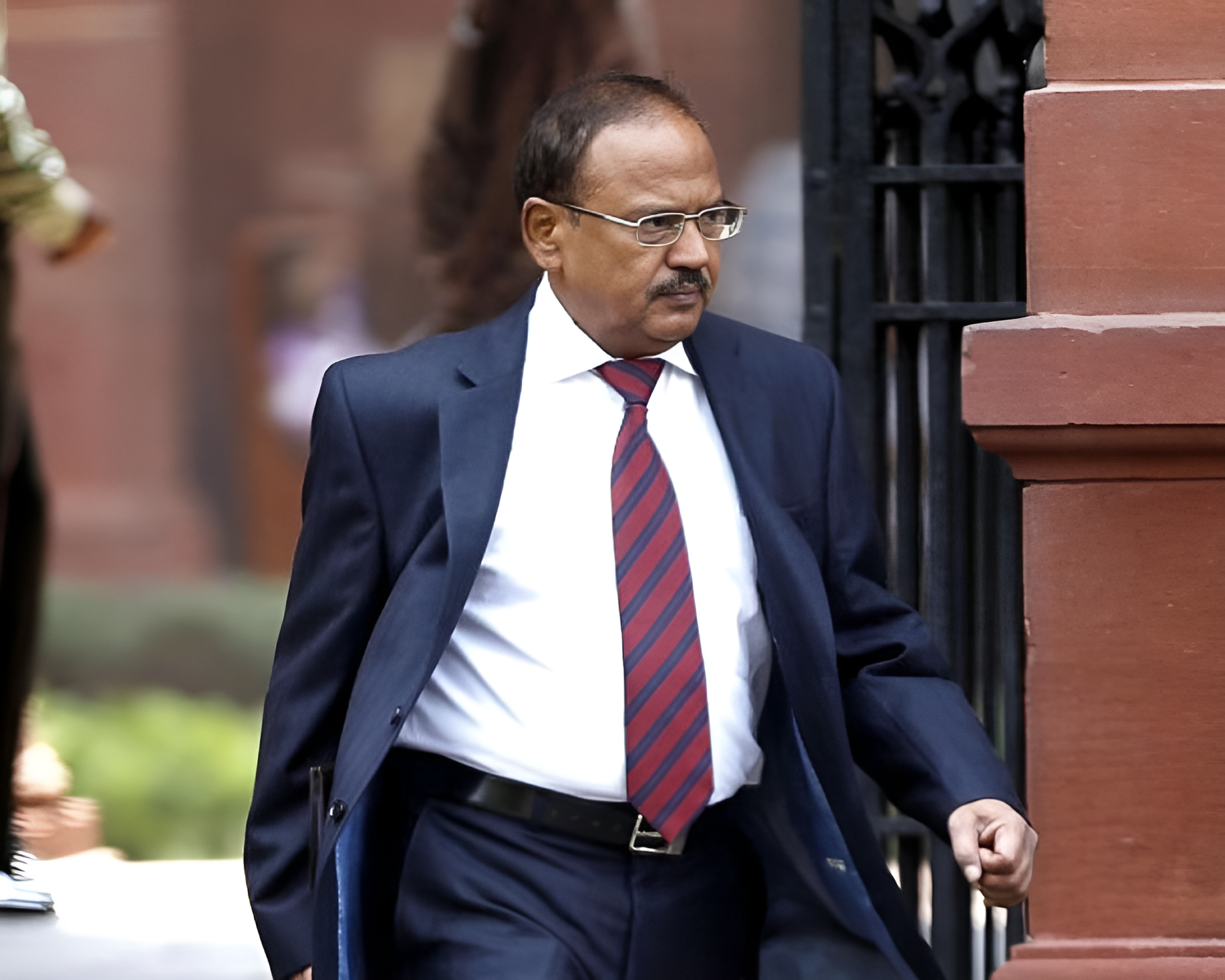
India’s recent counterterrorism mission, dubbed Operation Sindoor, showcased the country’s evolving military strategy under the guidance of National Security Advisor Ajit Doval. Designed in response to the deadly terror strike in Pahalgam, the operation focused on dismantling key terror networks within Pakistan and Pakistan-Occupied Kashmir (PoK). Senior officials reported that Doval closely oversaw the mission, maintaining strict secrecy, swift execution, and effective escalation management.
To maintain operational integrity, final target details were withheld until just two hours before launch. Though multiple strike plans had been circulated earlier among the armed forces, last-minute modifications were introduced by Doval himself. The central strategy was to dismantle terrorist support chains while avoiding uncontrolled escalation.
Operation Sindoor was structured in two calculated phases. The initial phase focused on neutralizing camps, hideouts, and logistics networks associated with terror outfits like Lashkar-e-Taiba and Jaish-e-Mohammed across PoK and Punjab, Pakistan. Phase two was prepared as a contingency—if Pakistan’s military responded directly, India was ready to escalate and strike key military sites including drone hubs and border installations.
Strategically vital terror sites in Bahawalpur and Muridke—long linked to leadership figures in these groups—were placed on alert. The operation aimed not only to eliminate threats but to send an unequivocal message to both the perpetrators and their state sponsors.
India’s intelligence agencies played a crucial role in the mission. Inputs came from Military Intelligence and field operatives, while satellite verification was provided by ISRO to confirm coordinates and minimize civilian casualties. The integration of real-time data enabled precise targeting across difficult terrains.
A notable dimension of Operation Sindoor was the detection of Chinese involvement in Pakistan’s technical setup. Sources confirmed that China had supported Pakistan in reconfiguring air defense systems and modifying satellite coverage post-Pahalgam attack. These developments were corroborated by defense analysts, further raising regional security concerns.
Ajit Doval’s leadership ensured India’s response wasn’t merely reactive but strategically transformative. The strikes weren’t limited to retaliating for a single attack; they aimed to redefine India’s deterrence capabilities. Within days of striking nine key terror sites, India responded to Pakistani provocation with a larger offensive on 11 military airbases. This included the destruction of radar networks and drone launch sites.
By May 10, both countries agreed to step back from further conflict. But Operation Sindoor made clear that India is now prepared to act decisively—backed by precision, intelligence, and a refusal to be provoked without purpose.