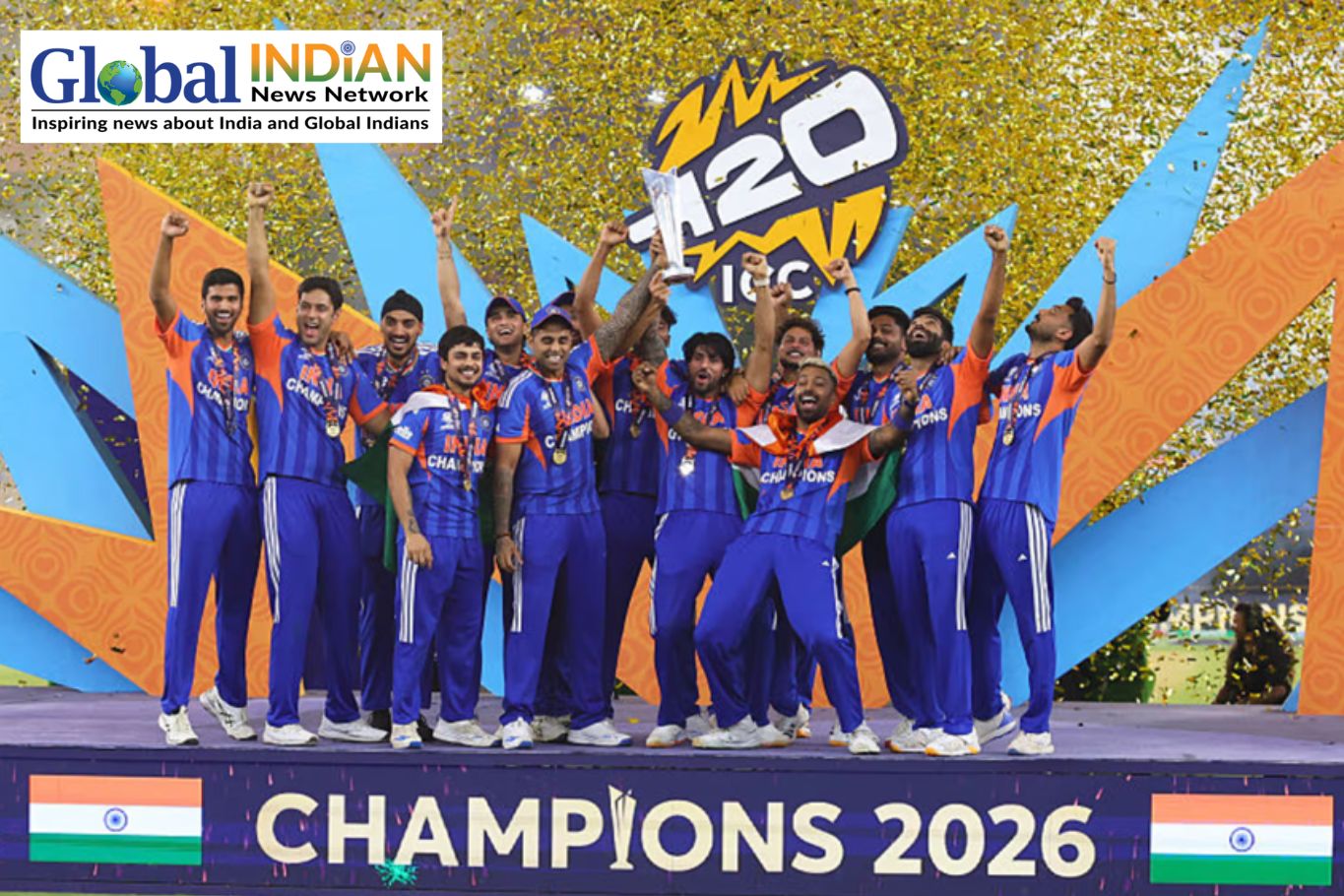
 India produced a commanding performance to defeat New Zealand by 96 runs in the ICC Men’s T20 World Cup 2026 final, creating history by becoming the first team to successfully defend the tournament title. The dominant victory in Ahmedabad also gave India their third T20 World Cup championship, marking another milestone in the country’s cricket legacy.
Batting first, India delivered a stunning display of power hitting, posting a massive total of 255 runs for five wickets. It was the highest score ever recorded in a T20 World Cup final, immediately placing enormous pressure on the New Zealand side. The aggressive approach from India’s top order ensured the team took control of the match early and never looked back.
The opening partnership set the tone for the innings. The Indian openers attacked from the start, scoring rapidly during the powerplay overs and building a strong foundation. Their partnership produced a significant stand before the first wicket fell, putting India in a commanding position. One of the standout moments of the innings was a blistering half-century scored in just 18 deliveries, the fastest fifty of the entire tournament.
Sanju Samson emerged as the key performer with the bat, delivering a powerful innings that further strengthened India’s total. His aggressive stroke play included multiple boundaries and towering sixes as he scored 89 runs from only 46 balls. With this performance, Samson achieved a rare feat by recording three consecutive scores above 80 in the tournament, highlighting his remarkable form during the competition.
Support also came from Ishan Kishan, who added momentum with a quick half-century. His aggressive approach ensured India maintained the scoring rate even after a few wickets fell in the middle overs. Late contributions from the lower order helped India push their score beyond the 250-run mark, a total that proved far beyond New Zealand’s reach.
Chasing such a massive target, New Zealand struggled to gain early momentum. India’s disciplined bowling attack quickly dismantled the top order, leaving the opposition under intense pressure. Early wickets prevented New Zealand from building meaningful partnerships, effectively ending their hopes of mounting a serious challenge.
Although Tim Seifert briefly counterattacked with a fast fifty, the innings failed to gain sustained support from other batters. Once his wicket fell, the chase collapsed rapidly as India tightened control of the match.
India’s bowling attack delivered a clinical performance to seal the victory. Jasprit Bumrah led the charge with an outstanding spell, claiming four wickets while conceding minimal runs. His performance marked the first four-wicket haul in a T20 World Cup final. Axar Patel also played a crucial role, taking three wickets and restricting the scoring rate during the middle overs.
With New Zealand eventually bowled out for 159 runs in 19 overs, India celebrated a historic triumph. The victory not only confirmed their dominance in the tournament but also made them the first team to win three T20 World Cup titles while successfully defending the championship on home soil.