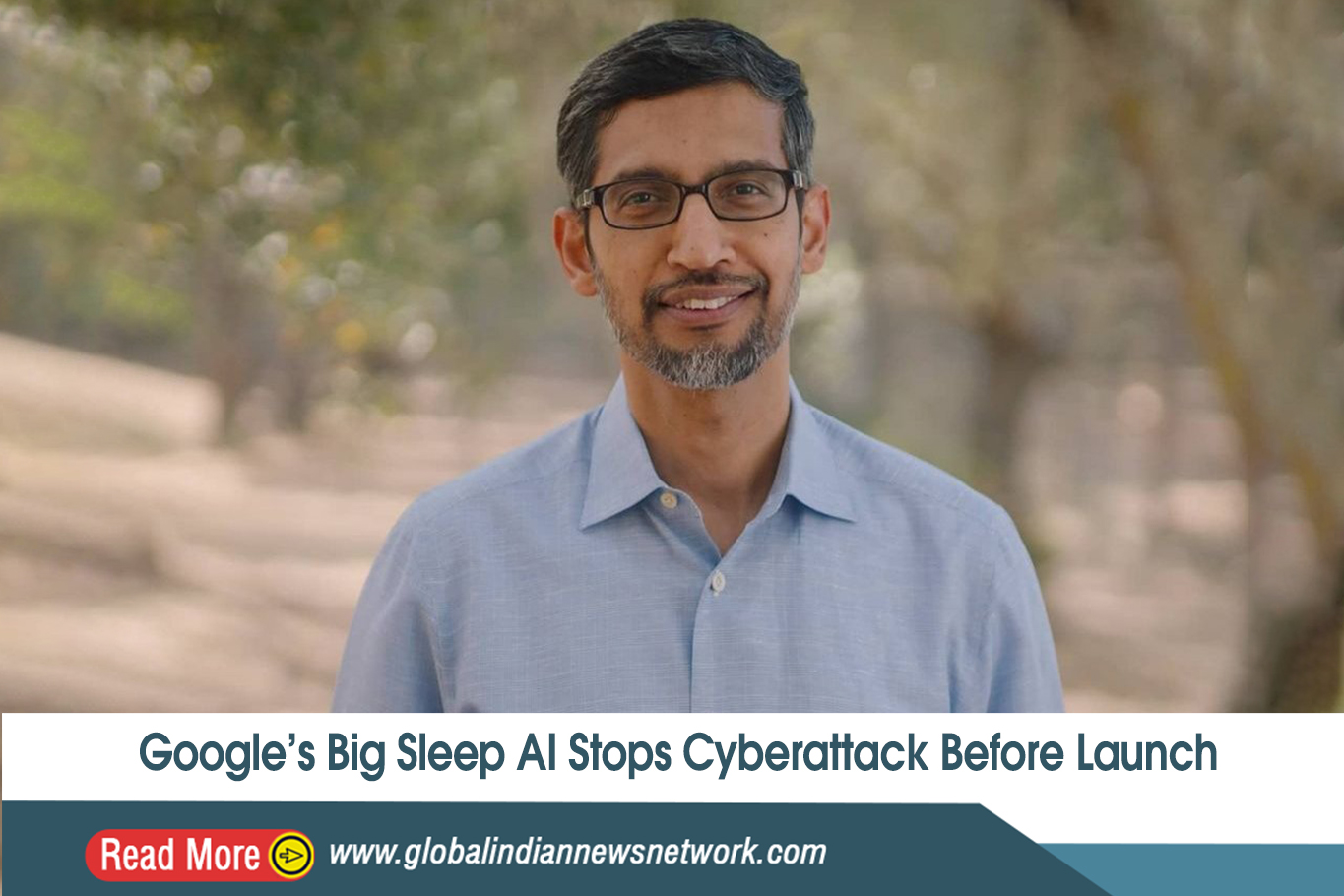
 In a groundbreaking moment for global cybersecurity, Google CEO Sundar Pichai revealed on July 15 that the tech giant’s AI system, known as Big Sleep, has successfully intercepted and neutralized a cyber exploit before it was launched. This achievement represents the first-ever case where artificial intelligence actively prevented a cyberattack from happening.
Pichai shared the update on X, formerly Twitter, stating, “Our AI agent Big Sleep just helped us stop a cyber exploit before it could even start. We believe this is a first for AI in cybersecurity—but certainly not the last.”
This event signals a pivotal change in the cybersecurity landscape. Traditionally, defenses have been reactive—responding to threats after they happen. Big Sleep’s success marks the beginning of proactive cyber defense, where AI identifies and shuts down threats in real time, preventing potential breaches before they cause harm.
While Google hasn’t specified how long Big Sleep has been active, the company confirmed plans to integrate such AI tools across Google services and make them available to its cloud customers. With cyberattacks becoming increasingly sophisticated and damaging, AI-driven security may soon become standard practice worldwide.
Big Sleep, developed by Google DeepMind in collaboration with Project Zero, specializes in discovering security vulnerabilities before attackers exploit them. Since identifying its first real-world threat in November 2024, Big Sleep has consistently outperformed expectations in vulnerability discovery.
One of its most notable achievements was uncovering a major flaw in SQLite (CVE-2025-6965), which had previously only been discovered by cybercriminals. Thanks to collaboration with Google’s Threat Intelligence division, Big Sleep intercepted this exploit before it was weaponized—a historic first in AI-led cybersecurity.
Google’s AI agent is now expanding its reach to secure widely used open-source software, broadening its protection beyond the company’s own infrastructure. This advancement allows human security teams to focus on complex issues while AI handles large-scale, early-stage threat detection, setting a new global standard for cybersecurity.