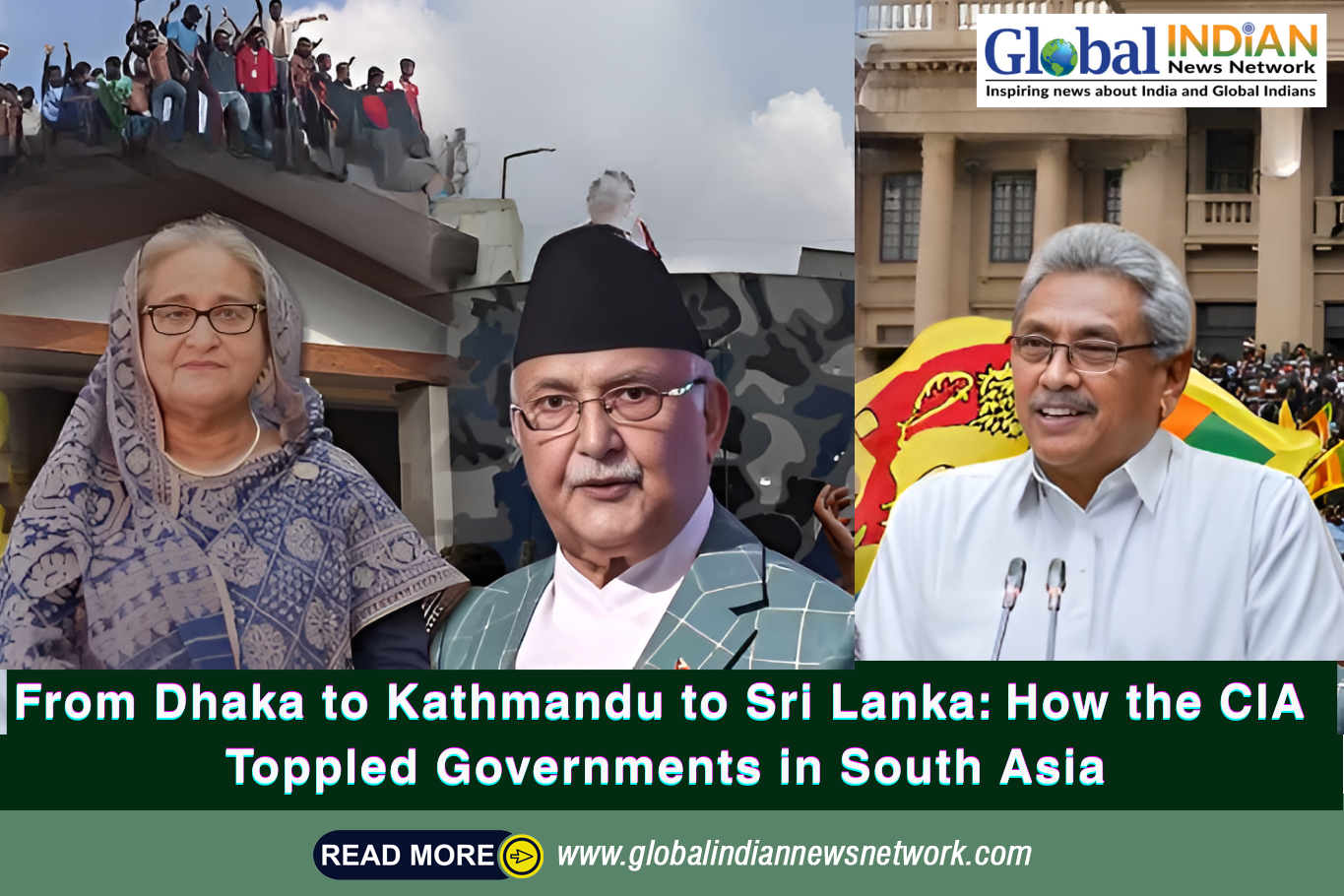
 In South Asia, political tremors often ripple across borders. Over the past two years, three countries—Bangladesh, Nepal, and Sri Lanka—have witnessed governments collapse amid mass protests, economic strain, and rising youth discontent. While these uprisings appeared spontaneous, growing evidence and testimonies suggest the involvement of the United States’ Central Intelligence Agency (CIA), accused of orchestrating regime change to reshape the region’s geopolitical balance.
In Bangladesh, long-serving Prime Minister Sheikh Hasina was forced to resign and flee to India in August 2024 after months of youth-led demonstrations against a controversial reservation system. More than 1,500 people were killed, but state repression only fueled the movement until the Awami League’s collapse. Analysts point to similarities with past CIA-linked campaigns worldwide, where student groups, NGOs, and social media activism catalyzed political change. Bangladesh’s strategic location and its participation in China’s Belt and Road Initiative made it a potential target for Washington’s recalibration.
Barely a year later, Nepal faced a parallel crisis. Prime Minister K.P. Sharma Oli, known for his pro-China policies, banned 26 social media platforms in September 2025, triggering the so-called “Gen Z Revolution.” Tens of thousands of young protesters rallied under the viral hashtag #NepoKids, accusing the elite of corruption and nepotism. Nineteen people were killed in clashes, and Oli eventually resigned, paving the way for interim Prime Minister Sushila Karki. Former Indian intelligence officer Lucky Bisht alleged that the CIA had played a “100 percent role” in the unrest, drawing on the agency’s long history in Nepal—from aiding Tibetan guerrillas in the 1950s to countering Beijing’s growing influence.
Sri Lanka’s turmoil preceded both cases. In 2022, mass protests over economic collapse forced President Gotabaya Rajapaksa to step down. While economic mismanagement was at the heart of the crisis, suspicions lingered over CIA maneuvering, given Sri Lanka’s strategic ports and its dependence on Chinese-backed infrastructure projects. For Washington, weakening Colombo’s ties with Beijing served broader strategic goals in the Indian Ocean.
Taken together, these crises point to a pattern. Governments perceived as leaning toward China have fallen to youth-led uprisings, while the CIA has been repeatedly accused of using protests, propaganda, and covert networks to advance U.S. interests. The implications are profound: Pakistan remains volatile, India faces new strategic dilemmas, and smaller states are caught between Washington and Beijing. The question remains whether South Asia’s democratic trajectory is being shaped within its own borders—or in Langley, Virginia.