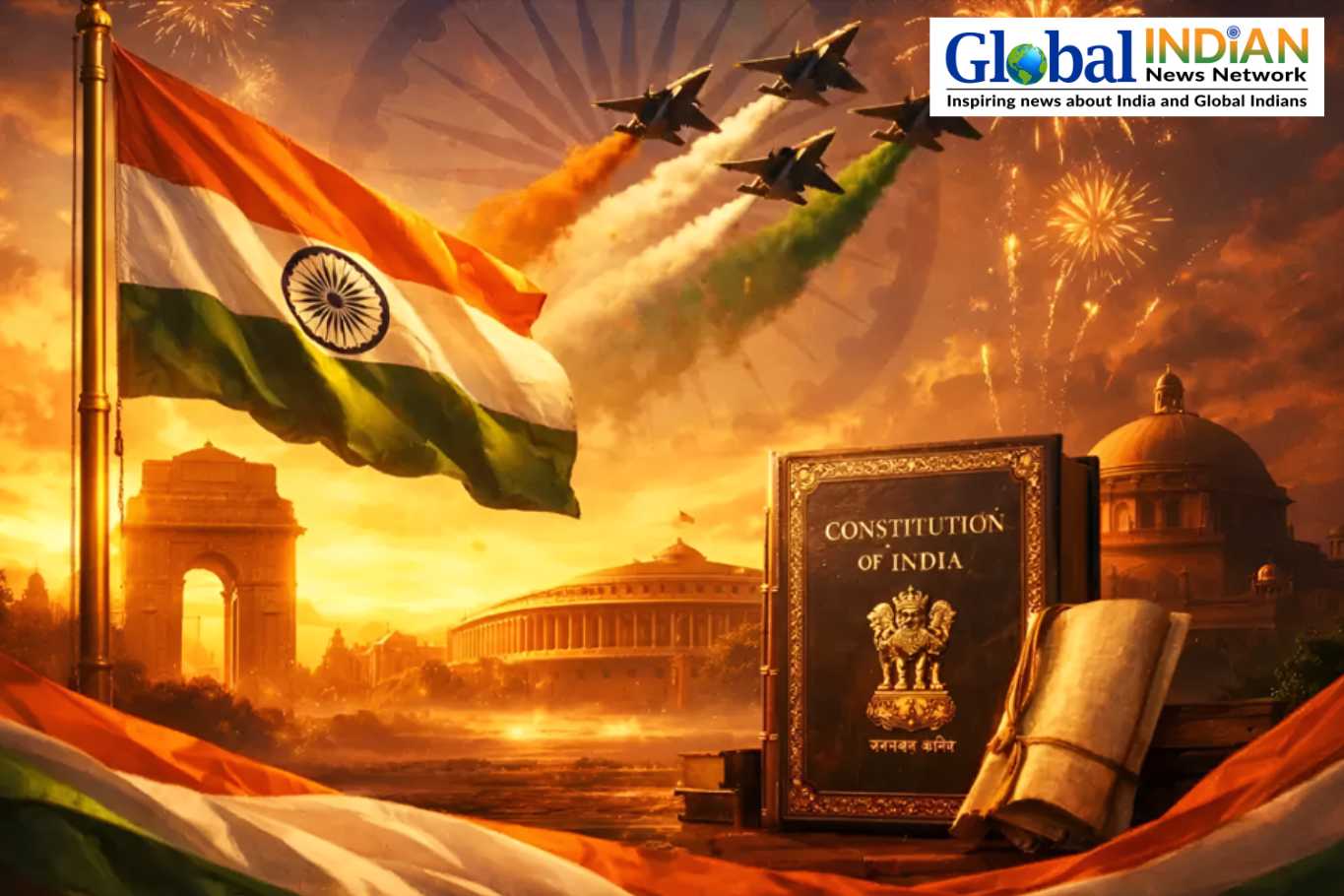
 Five American states—Alaska, Oregon, Washington, Nebraska, and South Dakota—have officially proclaimed January 26, 2026, as the “Republic Day of India,” marking the 77th anniversary of the adoption of India’s Constitution. The proclamations also recognized the significant contributions of Indian and Indian American communities to their respective states.
Alaska Governor Mike Dunleavy highlighted the day as a celebration of India’s status as the world’s largest democracy. He emphasized the Indian community’s role in enhancing Alaska’s cultural diversity, educational excellence, and economic vitality. The proclamation also referenced growing partnerships between Alaska and India in trade, technology, agriculture, and cultural exchange, underlining the importance of mutual understanding and prosperity.
Oregon Governor Tina Kotek similarly marked the occasion, acknowledging the Indian community’s contribution to the state’s cultural richness, academic achievements, and economic growth. The Oregon proclamation noted the ongoing collaboration between Oregon and India in areas such as technology, trade, agriculture, and cultural initiatives.
In Washington, Governor Bob Ferguson issued a proclamation recognizing India’s Republic Day and honoring the contributions of Indian Americans in education, science, business, arts, and civic life. The proclamation highlighted expanding partnerships in clean energy, trade, technology, agriculture, and cultural collaboration, emphasizing the enduring people-to-people ties between the state and India.
Nebraska Governor Jim Pillen and South Dakota Governor Larry Rhoden also officially proclaimed January 26 as “Republic Day of India” in their states. Both proclamations celebrated the Indian community’s role in enriching cultural and economic life and stressed the growing collaborations in trade, agriculture, technology, and cultural engagement between India and their respective states.
These proclamations by five US states underscore the deepening ties between the United States and India, celebrating shared democratic values, economic cooperation, and the remarkable contributions of Indian and Indian American communities to social, educational, and economic progress. The recognition reinforces the importance of fostering cultural understanding and strategic partnerships at both state and international levels.