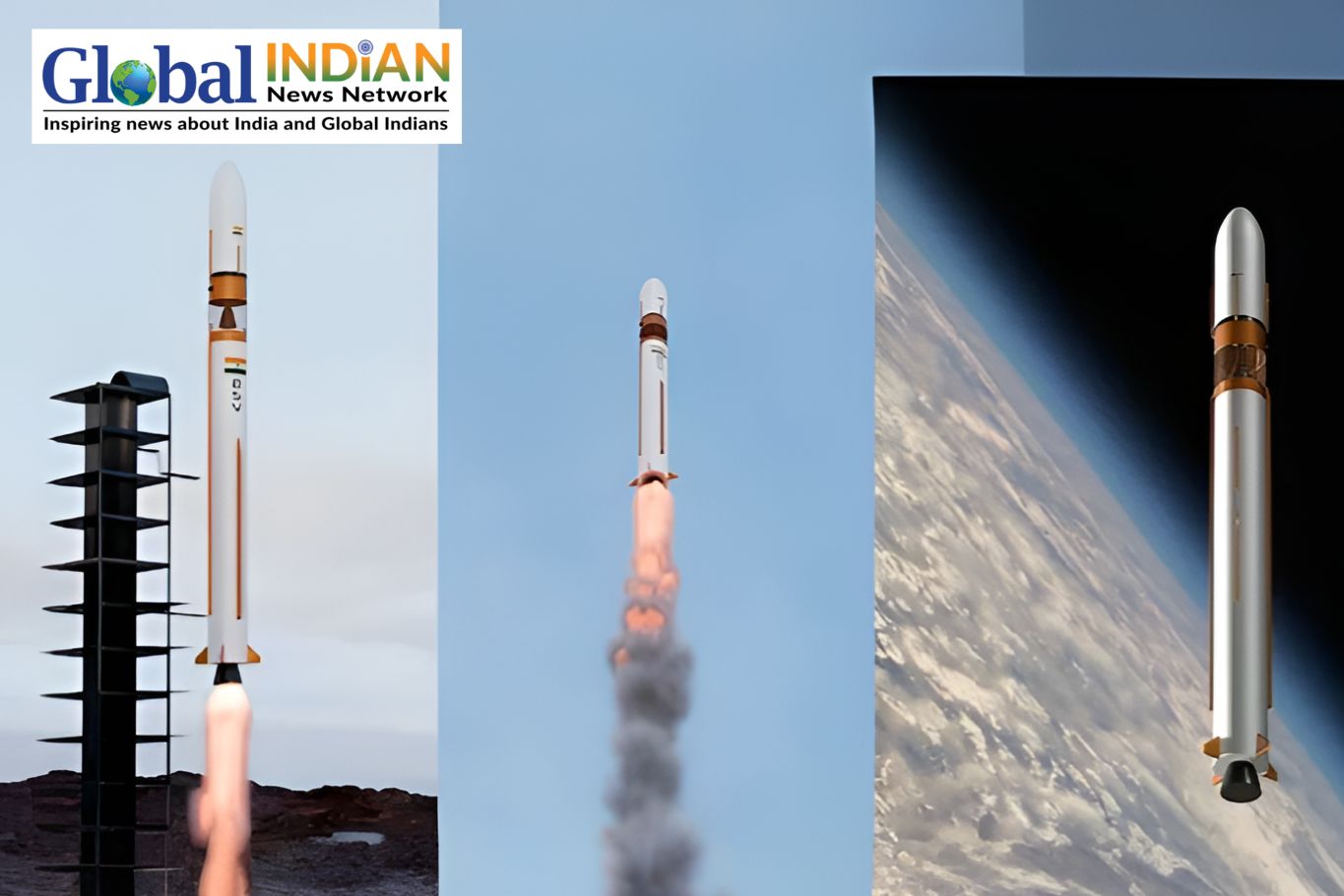
 India’s private space sector is witnessing a new wave of innovation with the emergence of Bharath Space Vehicle (BSV), a Surat-based startup founded in 2024. The company is developing a small-lift rocket named Agasthya-1, aiming to offer reliable and cost-effective launch services for the growing small satellite market, which is expected to generate opportunities worth millions of dollars globally.
The founding team brings over 70 years of combined experience from the Indian space program, giving the venture strong technical credibility. Agasthya-1 is designed as a two-stage expendable rocket powered by liquid oxygen and kerosene engines. Standing 28 meters tall, the vehicle is capable of carrying up to 500 kilograms to Sun-synchronous polar orbit and 800 kilograms to low Earth orbit at an altitude of around 400 kilometers.
A key differentiator of Agasthya-1 is its use of liquid fuel instead of solid propellants, which are commonly used in many Indian small satellite rockets. This choice allows engineers to test the engines extensively before launch. The second stage can undergo a hot-fire test lasting up to 40 seconds, while the first stage can be briefly tested just before liftoff. This “test before flight” approach significantly reduces the risk of failure and improves reliability.
Another advantage is rapid launch readiness, with the system capable of preparing for liftoff within 24 hours. This feature is particularly valuable for defense and emergency response missions, where timely satellite deployment is critical.
The leadership team includes experienced engineers who have contributed to major Indian launch vehicle programs. Their expertise spans multiple generations of rockets, bringing deep knowledge of design, testing, and mission execution.
BSV has also signed a framework agreement with India’s space regulatory body, allowing access to testing facilities and launch infrastructure. This support is expected to accelerate development and reduce operational costs, potentially saving millions of dollars in early-stage investments.
In addition, the company has proposed a new launch site near Kodinar in Gujarat. If approved, this location could become India’s first west-coast spaceport, offering strategic advantages such as open sea access and improved launch trajectories.
With supportive policies encouraging private participation, BSV is positioning itself alongside other emerging players in India’s space ecosystem. Its focus on innovation, cost efficiency, and rapid deployment could play a key role in shaping the future of satellite launches and expanding opportunities worth millions of dollars in the global space market.