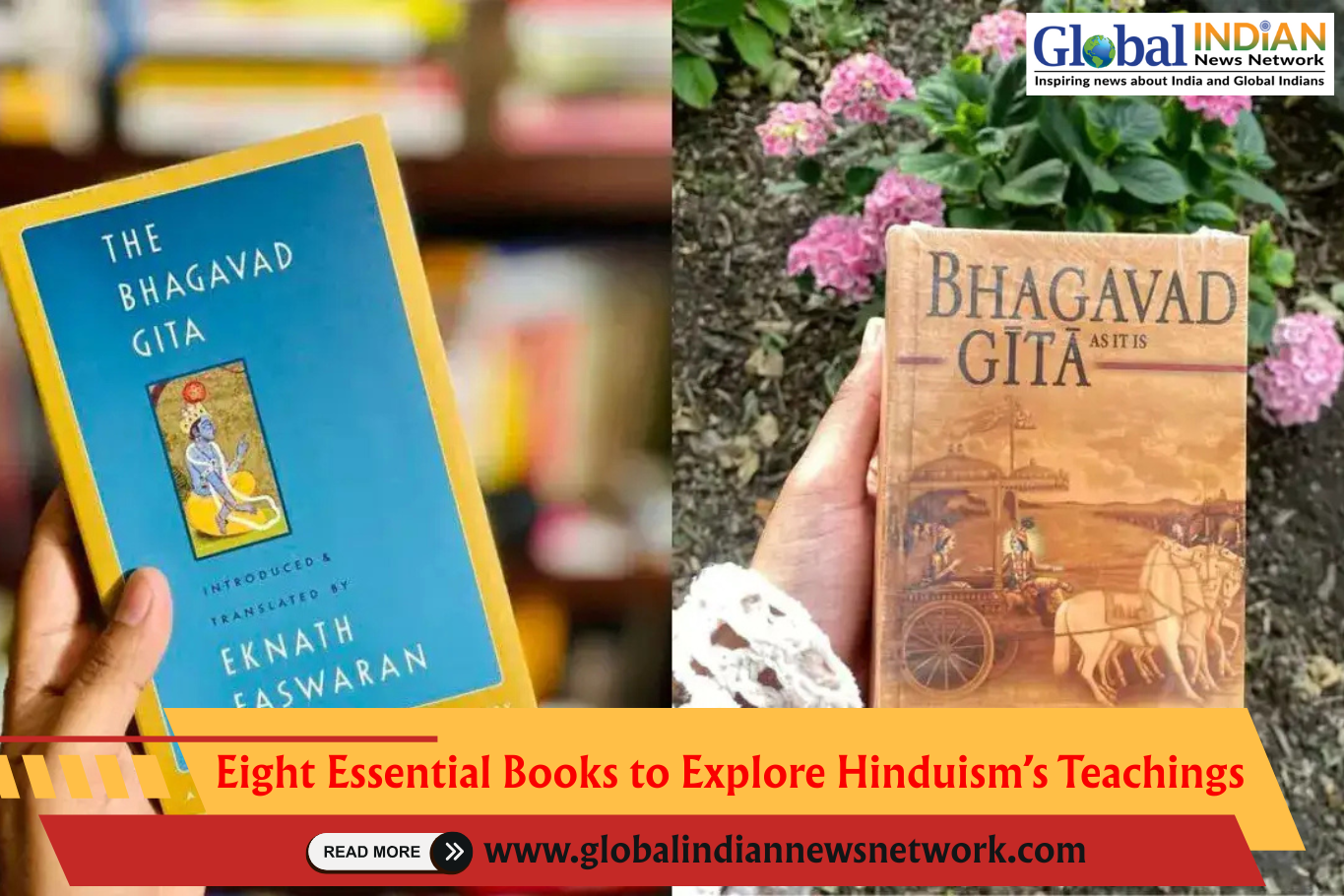
 Hinduism, often described as the world’s oldest living faith, is more than a religion—it is a philosophy, a cultural framework, and a way of life. With its vast spectrum of traditions, myths, rituals, and spiritual practices, it can feel overwhelming to those trying to explore it. Thankfully, a range of timeless scriptures and modern works provide guidance. Here are eight books that offer meaningful entry points into Hinduism’s spiritual and cultural landscape.
The Bhagavad Gita (translated by Eknath Easwaran / Swami Prabhavananda / others)
This sacred dialogue between Prince Arjuna and Lord Krishna takes place on the battlefield of Kurukshetra. In just 700 verses, it tackles profound dilemmas such as duty versus desire and action versus renunciation, making it both a spiritual manual and a philosophical classic.
The Upanishads (translated by Eknath Easwaran / Patrick Olivelle)
These philosophical writings, known as the “end of the Vedas,” move beyond ritual to contemplate self (Atman), ultimate reality (Brahman), and meditation. They form the bedrock of Vedanta thought.
The Ramayana (translated by R.K. Narayan / Arshia Sattar)
This beloved epic recounts Lord Rama’s exile, the abduction of Sita, and the battle against Ravana. Beyond its dramatic storyline, it emphasizes values of loyalty, devotion, and righteousness. Modern versions by Narayan and Sattar make the tale approachable without losing depth.
The Mahabharata (translated by C. Rajagopalachari / Bibek Debroy)
One of the world’s longest epics, this monumental work captures the Kurukshetra war while weaving in philosophy, politics, and dharma. The Bhagavad Gita itself is part of this larger text. Condensed versions (Rajagopalachari) and full translations (Debroy) suit varied readers.
The Essentials of Hinduism by Swami Bhaskarananda
Written in clear, practical language, this book explains karma, rebirth, yoga, and the diverse gods of Hinduism, making it ideal for newcomers.
Autobiography of a Yogi by Paramahansa Yogananda
This global spiritual classic blends memoir with mystical insight. Yogananda’s journey introduces readers to yoga, meditation, and encounters with saints, highlighting the universal appeal of Hindu spirituality.
An Introduction to Hinduism by Gavin Flood
Flood, a scholar, provides an academic yet accessible overview of Hinduism’s historical evolution, covering philosophy, rituals, and social practices.
Myth = Mithya: Decoding Hindu Mythology by Devdutt Pattanaik
Through storytelling and symbolism, Pattanaik explains gods, rituals, and myths, linking them to everyday life and cultural identity.
Together, these works illuminate Hinduism’s complexity while making its timeless wisdom relevant for today’s readers.