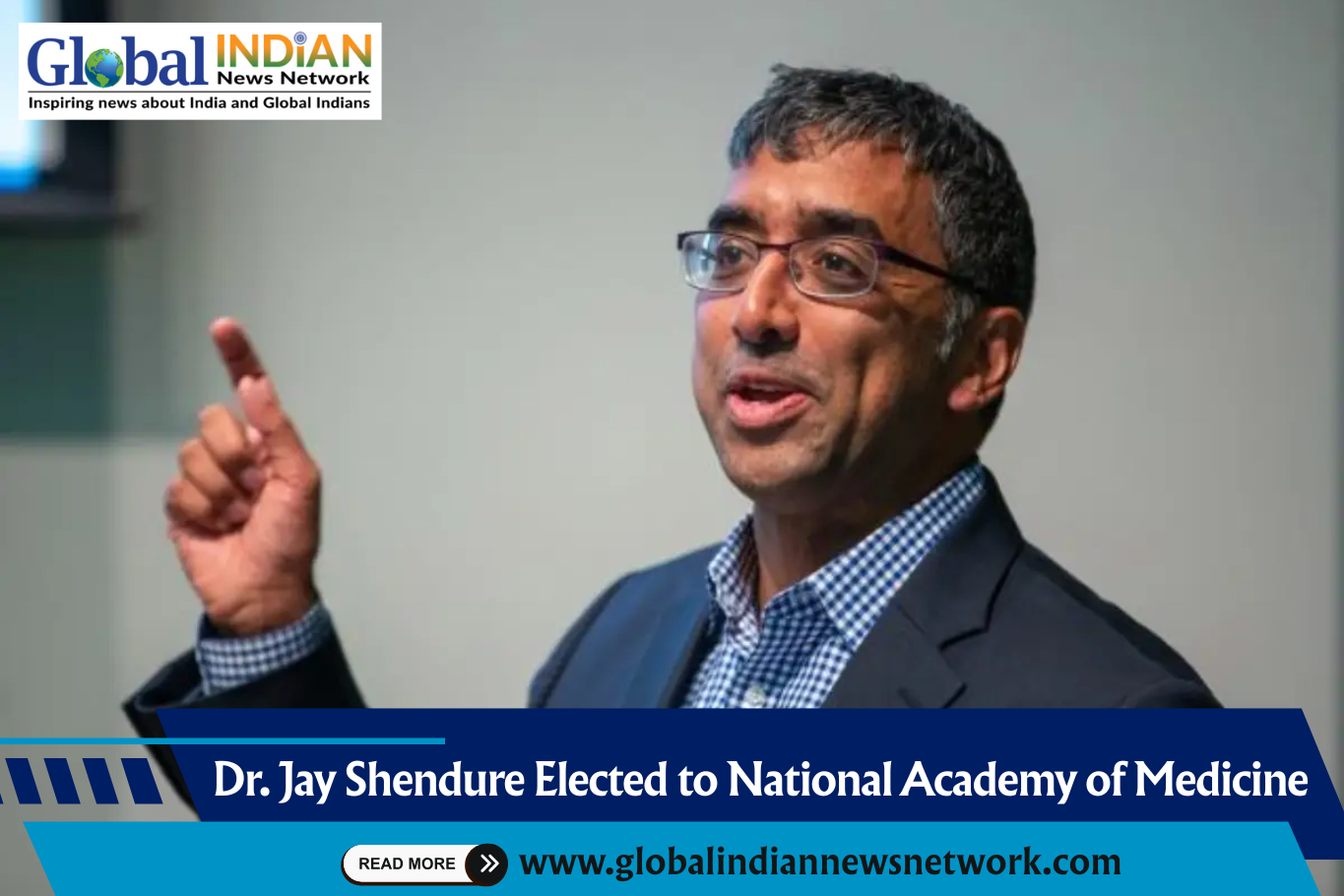
 Dr. Jay A. Shendure, professor of genome sciences at the University of Washington School of Medicine in Seattle, has been elected to the National Academy of Medicine, one of 100 newly inducted members announced at the Academy’s annual meeting. This recognition represents one of the highest honors in the fields of health and medicine, celebrating exceptional professional achievement and dedication to public service.
Shendure leads several prominent research centers, including the Allen Discovery Center for Cell Lineage at the Allen Institute and the Brotman Baty Institute for Precision Medicine. He also serves as scientific director of the Seattle Hub for Synthetic Biology and is an investigator with the Howard Hughes Medical Institute.
Renowned for his innovative approach to genomics, Shendure has played a pivotal role in advancing next-generation DNA sequencing and exome sequencing technologies. His research has contributed to breakthroughs in understanding cancer, autism, and Mendelian, or single-gene, disorders. In addition, he has developed faster and more efficient laboratory methods that have significantly improved insights into gene function, regulation, and the mapping of embryonic development at the single-cell level.
A native of Ohio, Shendure graduated summa cum laude from Princeton University in 1996 with a degree in molecular biology. He subsequently completed a Fulbright Scholarship at Sassoon General Hospital in Pune, India, before earning a Ph.D. in genetics in 2005 and an M.D. in 2007 through Harvard Medical School’s Medical Scientist Training Program, where he trained under renowned geneticist George M. Church.
Since joining the University of Washington faculty in 2007, Shendure has become a leading figure in genomics and precision medicine. His work combines groundbreaking research with collaborative initiatives that have transformed the scientific understanding of human health and disease. Through his innovations in DNA sequencing, single-cell analysis, and precision medicine, Shendure continues to shape the future of medical research and the global healthcare landscape.