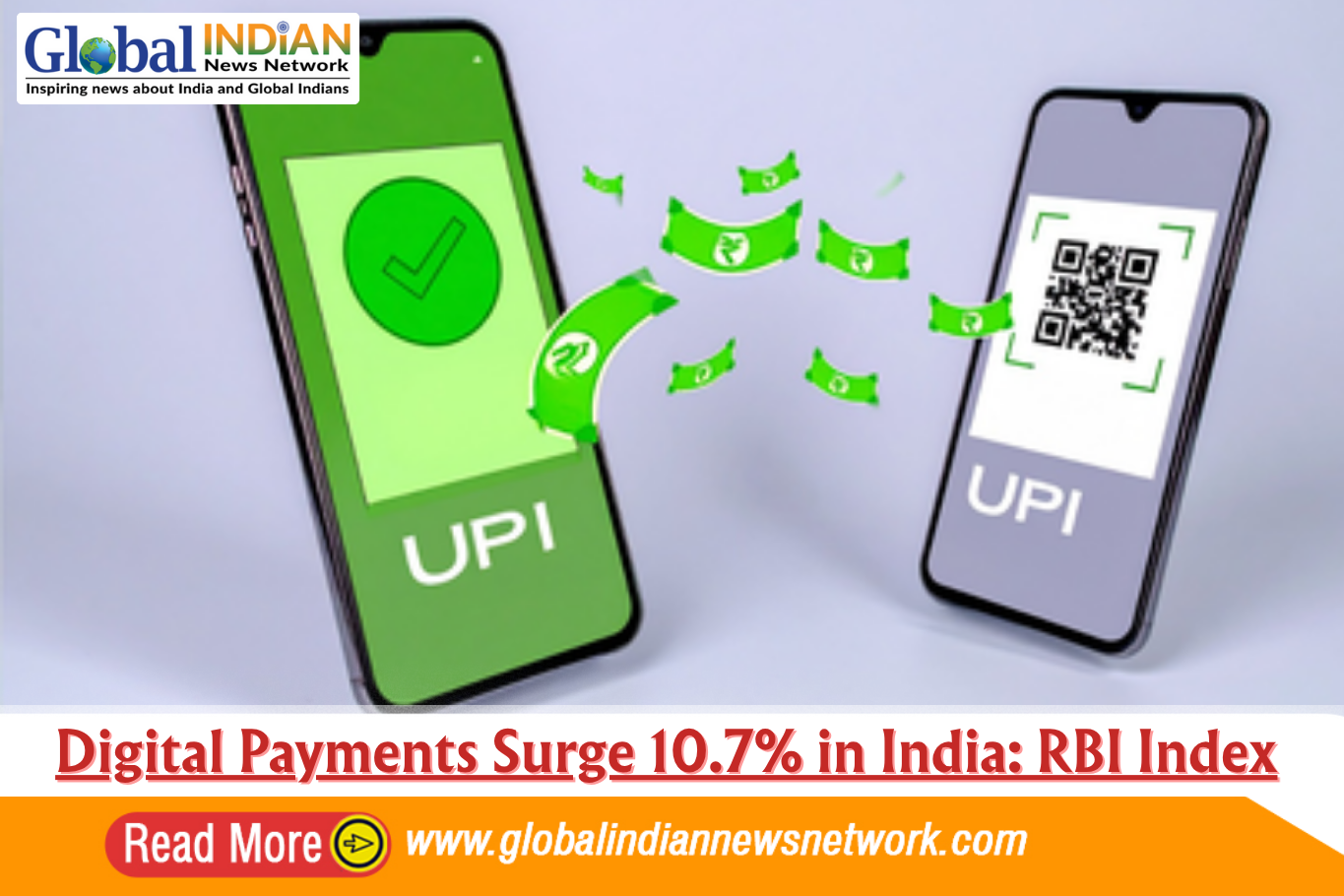
India’s shift toward a cashless economy continued to gain pace, with digital payments registering a 10.7% year-on-year growth as of March 2025. The Reserve Bank of India’s Digital Payments Index (DPI) recorded a strong increase, underscoring the rising adoption of platforms like UPI, internet banking, and point-of-sale (POS) systems.
According to the latest data, the DPI rose to 493.22 in March 2025 from 465.33 in September 2024. This steady growth follows a 13.3% jump recorded during the previous financial year, confirming that digital payment penetration remains on an upward trajectory across both urban and rural India.
The Digital Payments Index, released twice a year, measures the expansion and depth of digital transactions based on five weighted parameters: payment enablers (25%), payment infrastructure on the demand side (10%), infrastructure on the supply side (15%), payment performance (45%), and consumer centricity (5%). The index is benchmarked to March 2018, which has a base score of 100.
The growth in DPI reflects both infrastructural improvements and rising user engagement. The supply-side components—such as QR codes, POS terminals, ATMs, and digital-service-enabled bank branches—have expanded significantly. On the performance side, the volume and value of transactions across platforms like Unified Payments Interface (UPI), NEFT, RTGS, IMPS, and internet banking have surged.
India’s flagship payment system, UPI, continues to dominate. In June alone, UPI processed 18.39 billion transactions worth over ₹24.03 lakh crore. The platform now powers more than 85% of all digital transactions in the country and accounts for nearly half of all real-time digital payments globally, making India a global leader in fast payments.
The sustained rise in DPI indicates that the adoption of digital payments is not just a pandemic-driven shift but a structural transformation of the financial landscape. With increased smartphone penetration, simplified onboarding processes, and a growing digital-native population, digital payments are expected to become the default mode for financial transactions in the years ahead.
The momentum suggests that India is steadily building a resilient, inclusive, and innovation-led digital payment ecosystem—one that can serve as a model for other emerging economies seeking to digitize their financial systems.