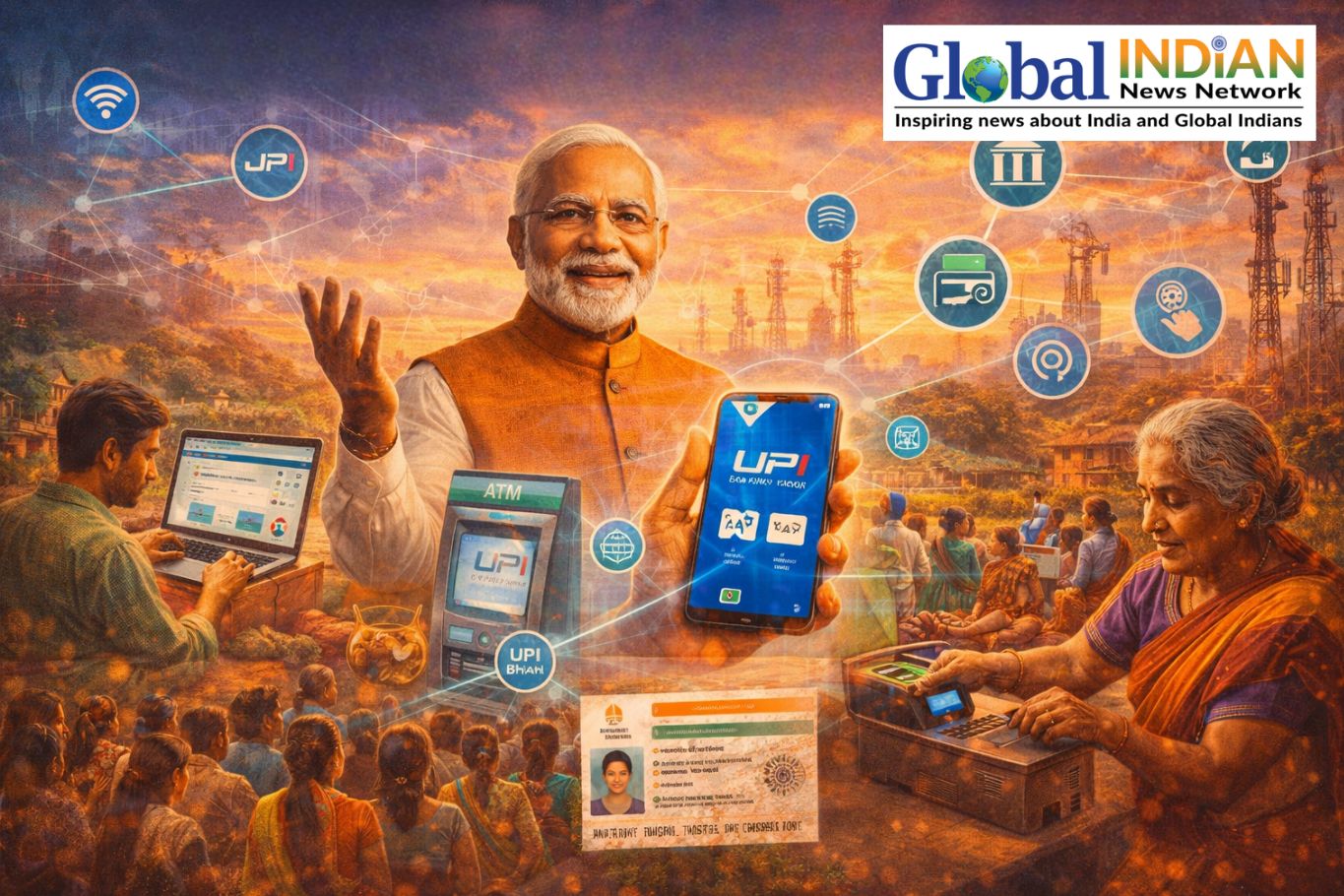
 India’s Digital India programme, launched in 2015, has significantly reshaped the country’s digital ecosystem by expanding connectivity, improving affordability, and strengthening digital infrastructure across urban and rural regions. Over the past decade, the initiative has played a central role in transforming how citizens access services, communicate, and conduct financial transactions.
Broadband penetration has witnessed a remarkable surge, rising from 2.5 billion connections to 10.3 billion, reflecting nearly a 400 percent increase. At the same time, mobile infrastructure has expanded rapidly, with base transceiver stations increasing by around 273 percent to 2.95 million units. Connectivity has now reached nearly all villages, with coverage extending to approximately 635,000 villages across the country. Optical fibre networks have also expanded significantly, reaching nearly 692,676 kilometres, strengthening the backbone of India’s digital infrastructure.
Digital consumption has grown sharply, with average monthly data usage per user increasing from 61.66 MB to approximately 25.25 GB. This surge has been supported by a dramatic reduction in data costs, which have fallen from about $4.20 per GB to nearly $0.09 per GB, representing a decline of around 97 percent. This affordability has played a key role in making digital access more inclusive and widespread.
The programme has also driven large-scale adoption of digital public services. Over 1.43 billion Aadhaar identities have been issued, forming the foundation of India’s digital identity framework. The Unified Payments Interface has emerged as one of the world’s largest real-time payment systems, serving over 460 million users and accounting for more than 80 percent of India’s digital payment transactions.
The JAM Trinity has enabled direct benefit transfers worth approximately $572 billion to citizens, improving transparency and reducing leakage in welfare distribution. Digital platforms such as DigiLocker and UMANG have further streamlined governance, with hundreds of millions of users accessing documents and government services online. DigiLocker alone has issued over 9.67 billion documents, while UMANG provides access to more than 2,400 government services.
In addition, the Pradhan Mantri Gramin Digital Saksharta Abhiyan has played a major role in improving digital literacy, training over 639 million individuals across India. These efforts have collectively strengthened digital inclusion and empowered citizens with greater access to technology-driven services.
Overall, the Digital India initiative has become a cornerstone of the country’s digital transformation, enabling widespread connectivity, efficient governance, and expanded economic opportunities across all sections of society.