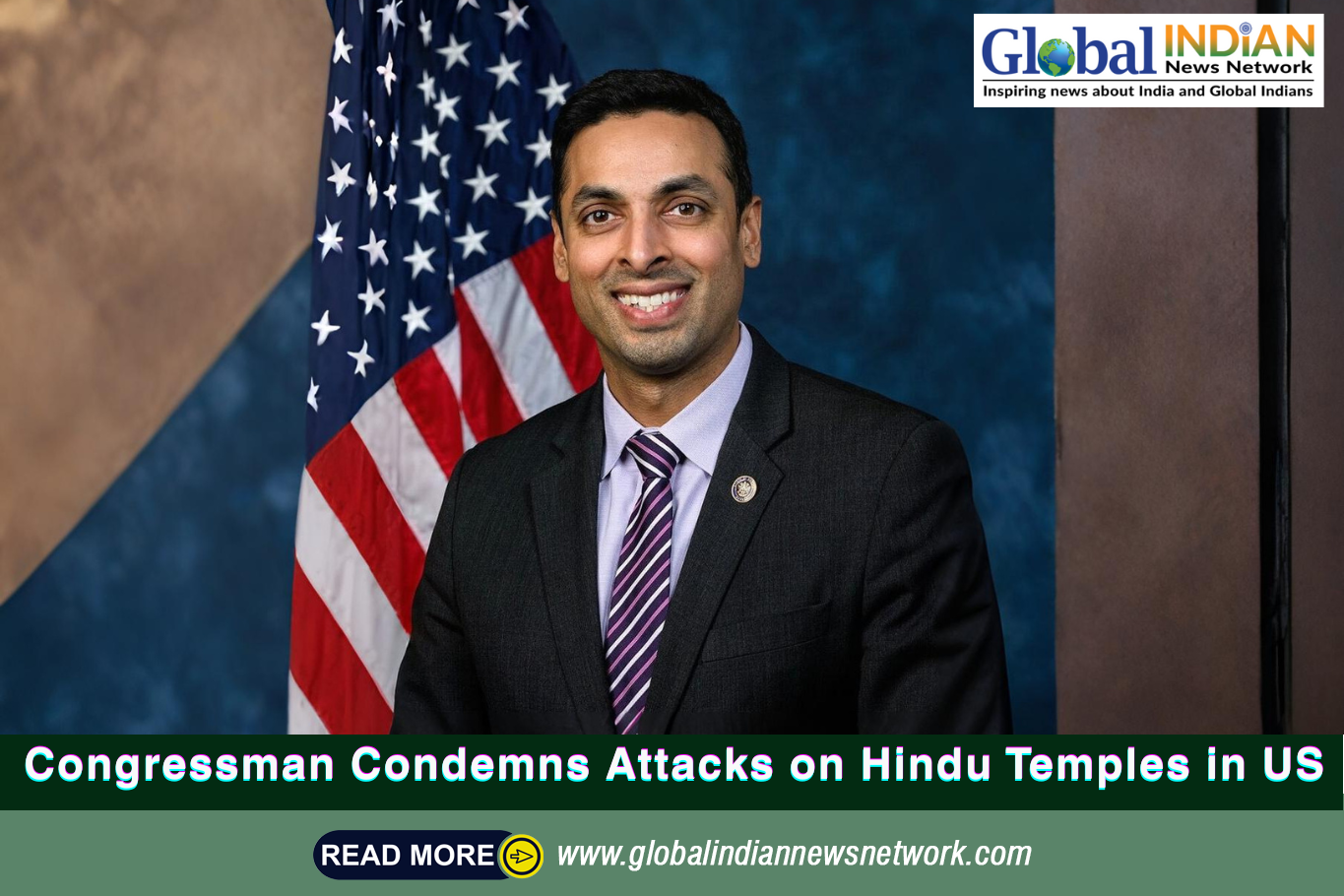
 Indian-American Congressman Suhas Subramanyam has strongly condemned a series of attacks targeting Hindu temples across the United States, describing them as “hateful” crimes that mirror a growing wave of violence against religious institutions.
Speaking on the floor of the US House of Representatives, Subramanyam stressed that such assaults threaten the very fabric of American communities. “Hate has no place in our neighborhoods,” he declared, adding that these incidents are not isolated but part of a troubling national trend.
Among the temples affected are the BAPS Shri Swaminarayan Mandir in Indiana and the Shri Shri Radha Krishna Temple in Utah, both of which have been subjected to acts of vandalism and graffiti. While investigations are underway, community members fear the attacks could embolden further hostility.
Subramanyam’s statement comes amid growing concern within the Hindu-American community. Several advocacy organizations, including the Coalition of Hindus of North America (CoHNA) and Hindu ACTion, applauded his words of solidarity. These groups have consistently raised alarms about rising hate crimes and have urged policymakers to take meaningful action to protect places of worship.
Community leaders note that damage to temples is not just physical—it undermines the sense of safety and belonging among Hindu Americans. For many families, temples are cultural and spiritual anchors. When they are defaced or desecrated, it instills a climate of fear and erodes trust in public security.
Advocacy groups argue that protecting temples is about safeguarding religious freedom itself. They call for increased security measures, better coordination between local law enforcement and federal agencies, and stronger community outreach to build awareness of the challenges faced by minority faiths.
The Congressman’s denunciation has been viewed as an important acknowledgment of these struggles. “Representative Subramanyam’s voice helps shine a light on what Hindu Americans have been enduring quietly for years,” one community organizer said. “It’s time for policy to reflect these realities.”
While the investigations into recent incidents continue, many Hindu-American groups remain cautious but hopeful that this visibility will lead to change. They emphasize that what is at stake is not only the protection of sacred spaces but also the assurance that every faith community in America can worship without fear.