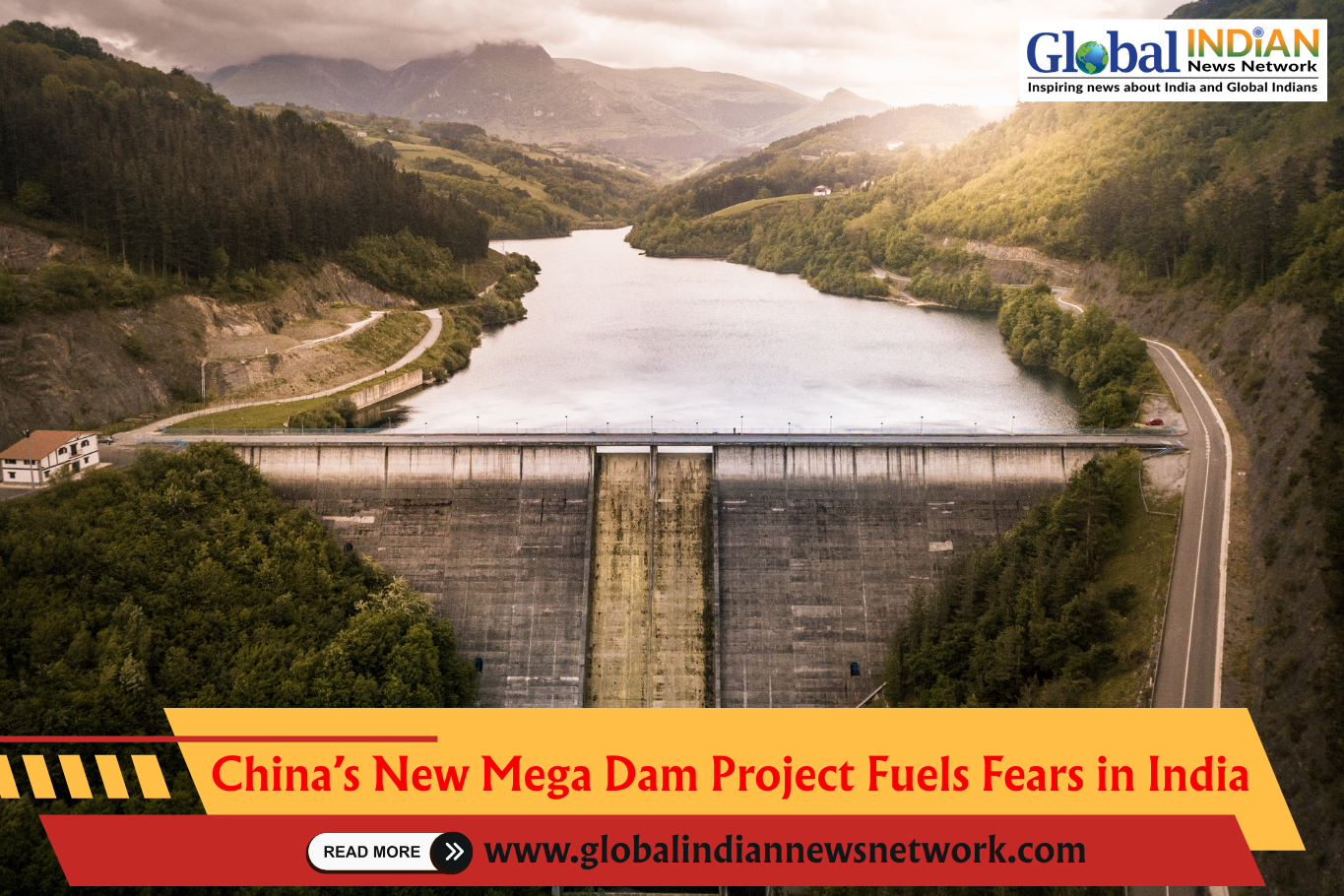
China has officially launched construction of what is set to become the world’s largest hydropower dam, located on the Yarlung Tsangpo river in Tibet. The $167 billion project, known as the Motuo Hydropower Station, has reignited fears in India and Bangladesh over its potential to disrupt water flows and threaten millions of livelihoods downstream.
Premier Li Qiang led the groundbreaking ceremony, emphasizing that the massive infrastructure project willpromote ecological sustainability and economic development in the region. However, experts and regional officials are worried about the environmental impact and the possibility of China using the dam to control water flow into neighboring countries.
The Yarlung Tsangpo, which winds through the Tibetan plateau, becomes the Siang in India’s Arunachal Pradesh and the Brahmaputra in Assam before flowing into Bangladesh as the Jamuna river. Leaders in these countries warn that China’s ability to manage or divert this trans-border river could severely impact agriculture, ecosystems, and local communities. Some even fear it could be used as a “water bomb” if large releases of water are made suddenly.
Arunachal Pradesh Chief Minister Pema Khandu recently voiced concerns that the dam could lead to critical water shortages for tribal groups like the Adi people, risking property loss, land erosion, and human casualties if flooding occurs.
In January, India officially raised concerns with China, urging transparency and collaboration to safeguard the rights of downstream nations. Bangladesh has also requested detailed information about the project, highlighting its own fears over water security.
The hydropower dam will be built in a canyon near the Namcha Barwa mountain, an area famous for its dramatic drop in river elevation. Chinese engineers plan to drill multiple 20-kilometer tunnels to divert sections of the river, creating a cascade of five power stations. Most of the electricity generated will be sent to China’s eastern cities under the national “west-to-east power transmission” plan.
Critics argue the project prioritizes China’s urban energy demands at the expense of Tibetan communities, who face displacement. Previous protests against dams in the region were met with mass arrests and violence. Environmentalists are also concerned about flooding biodiverse valleys and the risk of building mega-dams in earthquake-prone zones.