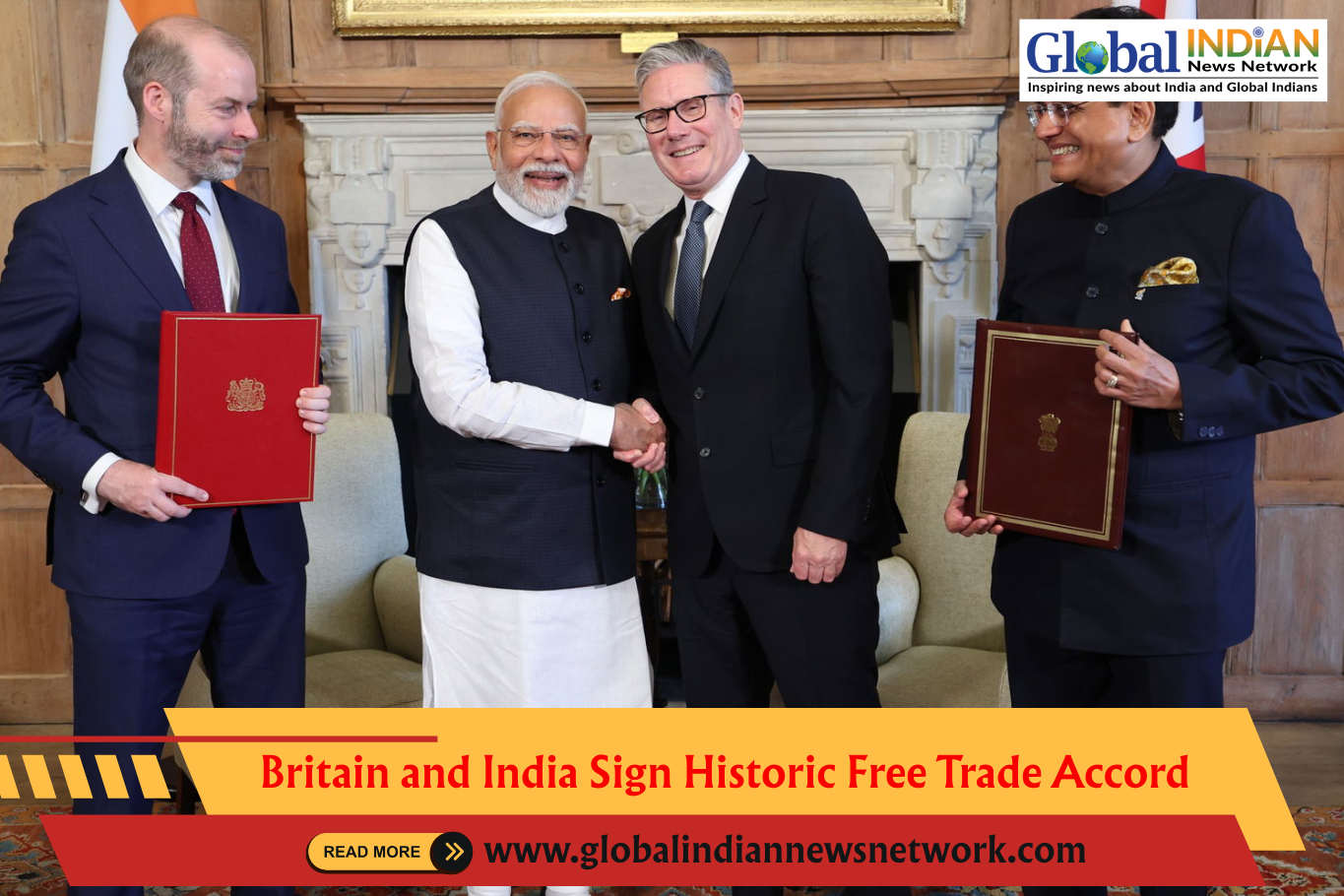
Britain and India have officially entered into a transformative free trade agreement during Indian Prime Minister Narendra Modi’s visit to the UK, marking a milestone in both nations’ economic relations. This accord, which follows three years of on-and-off negotiations, comes as the world grapples with shifting trade dynamics influenced by tariff disputes beyond their borders.
The agreement is widely seen as a pivotal step for both economies, offering significant opportunities for growthand collaboration. By substantially lowering tariffs on a wide range of products including textiles, whisky, cars, and other industrial goods, the deal is poised to drive more competitive pricing and greater consumer choice. British whisky and gin producers, for instance, will find the Indian market more accessible as import duties steadily decline, while Indian manufacturers stand to benefit from easier entry into British markets.
A key element of the agreement involves duty-free or lower-duty access for the vast majority of Indian exports such as textiles, jewelry, essential engineering goods, and agricultural produce. Sectors like leather, carpets, and marine products, which previously faced high barriers, are now positioned to see a rise in exports. Likewise, the UK can now bring in a broader array of its top exports, including aerospace components, electrical machinery, specialized medical devices, and premium beverages, at significantly lower tariffs.
Beyond goods, the trade pact paves the way for deeper cooperation in services, digital trade, and investments. Both governments have agreed to facilitate smoother movement for professionals and enhance business-to-business connections. Indian professionals working in the UK will see added financial benefits through exemptions in social security contributions, offering meaningful savings for both employees and companies.
This landmark trade alliance stands as a showcase for India’s growing influence in setting global trade standards, while the UK demonstrates its ongoing efforts to strengthen ties with emerging economies in the Indo-Pacific. As Britain repositions itself following its exit from the European Union, the partnership with India signifies a renewed commitment to dynamic, globally-minded trade strategies.
Ultimately, the agreement opens new doors for businesses and individuals, encouraging innovation, supporting job creation, and enabling access to a diverse range of high-quality goods and services. The enhanced partnership is set to boost prosperity and resilience for both countries in an increasingly interconnected world.