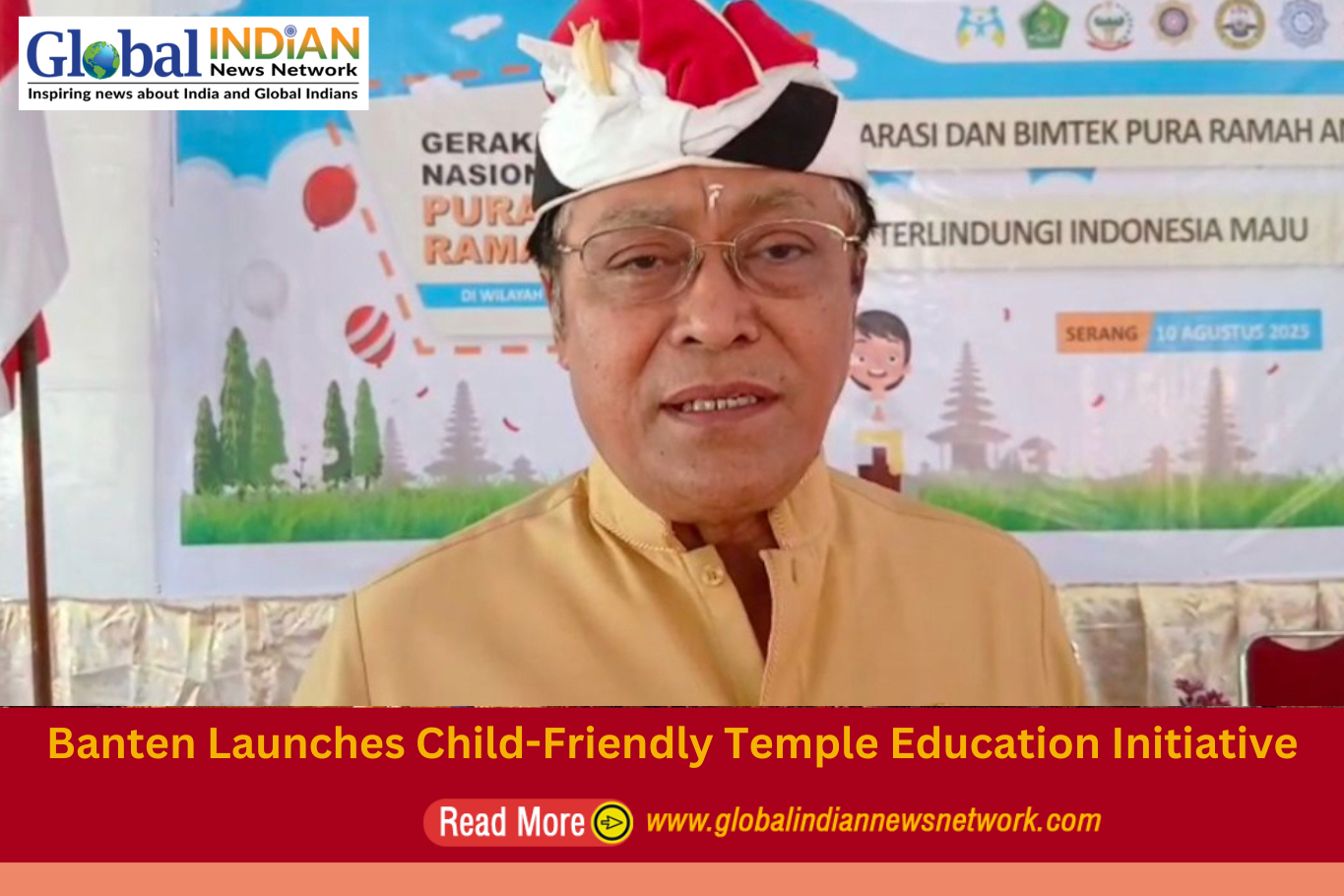
 Banten Province has embraced the national Child-Friendly Temple movement by designating six temples as centers for child development that integrate religious instruction, character education, and the cultivation of mutual respect. According to Ida Bagus Alit Wiratmaja, Chairperson of the Indonesian Hindu Dharma Council (PHDI) in Banten, this initiative is part of a nationwide program organized by the Directorate General of Hindu Community Guidance in partnership with the PHDI Central Office.
“Child-Friendly Temples are more than places of worship—they are Centers of Excellence dedicated to nurturing the next generation of Hindus,” Ida Bagus Alit said on August 10, 2025. He emphasized that the program focuses on creating an environment where children can learn Hindu teachings while simultaneously developing ethical values, character, and tolerance in their everyday lives.
The Child-Friendly Temple initiative is also seen as a crucial measure for promoting interfaith harmony in the region. “This program demonstrates that the Hindu community in Banten actively upholds tolerance and contributes meaningfully to strengthening interfaith relations,” Ida Bagus Alit noted. By combining religious and moral education, the temples aim to prepare children to become conscientious, respectful, and socially responsible adults.
The educational approach of these temples is designed to be replicable across other regions. Ida Bagus Alit highlighted that the goal is for every temple to become a safe and inclusive environment, promoting noble values while supporting the holistic growth of children. He expressed hope that this model would serve as an example for communities nationwide, showcasing how religious institutions can contribute positively to character formation and societal cohesion.
Through this initiative, the Child-Friendly Temple movement is creating spaces that are not only spiritual centers but also hubs for nurturing a generation of young Hindus with strong moral foundations, empathy, and respect for others. The program reflects Indonesia’s commitment to combining cultural heritage with contemporary educational values for children.