Author: Bhakti Narayanan

Bhakti Narayanan

India’s economy is poised to reach a $30 trillion gross domestic product (GDP) by 2050, driven by robust exports and consumption, as highlighted by Mr. Atanu Chakraborty, Chairman of HDFC Bank and Former Economic Affairs Secretary. International financial institutions anticipate India’s nominal GDP to grow between 10-12% this year, with a 6.3% growth rate and inflation around 6%. Mr. Atanu Chakraborty, speaking at a KPMG-hosted event, stated that if this momentum persists, India could become a $30 trillion economy by 2045-50, boasting a per capita income of $21,000. The International Monetary Fund (IMF) adjusted its global growth forecast to 3%…

Read More

The International Monetary Fund (IMF) has adjusted India’s growth forecast for the current fiscal year to 6.3%, a development that drew a positive response from Prime Minister Narendra Modi. He expressed that India is a dynamic force of growth and a global beacon of progress. Prime Minister Modi took to social media to comment on the IMF’s improved growth projection, underscoring India’s strength and the skills of its people. He conveyed that India, driven by the capabilities and resilience of its population, serves as a global bright spot, a powerhouse of growth and innovation. The nation’s dedication is clear in…

Read More

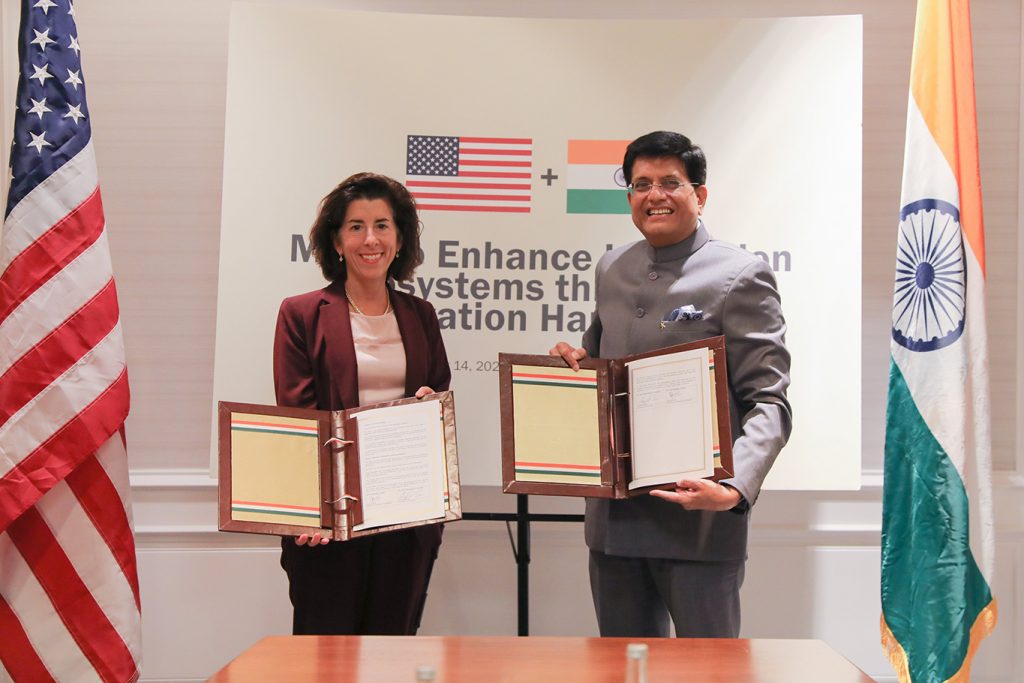
Union Minister Mr. Piyush Goyal emphasized the potential for collaboration between India and Tanzania in various sectors at the India-Tanzania Investment Forum hosted by FICCI. Tanzania holds a significant position as India’s primary export destination in Africa, and Mr. Goyal aims to foster robust growth in this partnership. President of Tanzania, Ms. Samia Suluhu Hassan, also attended the event. The collaboration between the two nations encompasses a wide spectrum, including education, skill development, capacity building, climate action, trade settlement in local currencies, and technology. India has extended lines of credit to support Tanzania’s infrastructure development and utility establishment. Mr. Goyal…

Read More

In September, Indian automobile retail sales experienced a substantial surge, rising by 20% compared to the same period the previous year, reaching 1.89 million units. Data provided by the Federation of Automobile Dealers’ Associations (FADA) attributes this increase to a positive market sentiment boosted by favorable monsoon conditions. The sales of various automobile categories witnessed significant growth, except for tractors, which experienced a 10% decline. Notably, two-wheelers saw a remarkable 22% increase, three-wheelers surged by 49%, passenger vehicles maintained a steady 19% growth, and commercial vehicles rose by 5%. Three-wheeler sales hit an all-time high of 102,426 units in September,…

Read More

UK Prime Minister Rishi Sunak recently engaged in a conversation with Canadian Prime Minister Justin Trudeau concerning the ongoing India-Canada dispute, expressing his hope for a reduction in tensions between the two nations. A statement from Downing Street revealed that Trudeau provided Sunak with an update on the situation, involving the relocation of the majority of Canadian diplomats from their Indian missions to other South Asian nations. In response to the deteriorating relationship between the two countries, India had requested the departure of 41 Canadian diplomats from its territory. Sunak reiterated the UK’s stance, emphasizing the importance of all countries…

Read More

On October 6, the Reserve Bank of India’s Monetary Policy Committee (MPC) made the widely expected decision to maintain the repo rate at 6.5 percent. RBI Governor Shaktikanta Das announced the unanimous vote to keep the repo rate unchanged during the MPC’s meeting. In addition to keeping the repo rate steady, the central bank also announced the withdrawal of its incremental cash reserve ratio (ICRR), which had been introduced in August to gradually remove excess liquidity from the system. The MPC also decided to leave the Standing Deposit Facility (SDF) and Marginal Standing Facility (MSF) rates unchanged at 6.25 percent…

Read More

A recent report by Tracxn highlights significant developments in the Indian fintech sector during the third quarter of the calendar year. Fintech companies in India managed to secure a substantial funding amount of US$436 million, marking a remarkable 68% surge from the US$259 million raised in the preceding quarter. However, a year-on-year comparison reveals a contrasting picture, with funding declining by 55% from the US$967 million raised in Q3CY22. This decline in overall funding is partially offset by a notable increase in late-stage funding rounds. Late-stage rounds witnessed an impressive growth of 141%, accumulating US$326 million in Q3CY23, up from…

Read More

The Prime Minister Street Vendor’s AatmaNirbhar Nidhi (PM SVANidhi) scheme, launched in July 2020, has significantly boosted consumption in India’s urban areas. Over 6.6 million street vendors have benefited from the scheme, with more than 40 percent being women. The microcredit facility of Rs 10,000 has served as essential working capital, enabling vendors to expand their businesses and increase their income, while also promoting financial inclusion and digitization. Although many vendors initially faced challenges in accessing loans due to document requirements, the scheme has been a game changer for millions. While Rs 10,000 may seem modest in major cities, it…

Read More

The Prime Minister Street Vendor’s AtmaNirbhar Nidhi (PM SVANidhi) scheme, an initiative of the Ministry of Housing and Urban Affairs (MoHUA), has achieved a remarkable milestone by extending assistance to more than 5 million street vendors nationwide. According to the central government, close to 5 million street vendors have availed loans amounting to INR 8600 crore (USD 1.03 billion) under a micro-credit scheme launched in 2020 to support them in coping with the challenges posed by the COVID-19 pandemic. To put this figure in perspective, this translates to more than USD 1 billion. The PM SVANidhi scheme aims to provide…

Read More

The Government of India officially established the National Turmeric Board on October 4, 2023, with a primary focus on the advancement and enhancement of the turmeric industry within the country. The National Turmeric Board will play a leading role in all aspects related to turmeric, intensify its efforts, and promote stronger collaboration with organizations like the Spices Board and various governmental bodies to foster growth and development in the turmeric sector. One of the key objectives of the Board is to capitalize on the significant potential and growing interest in the health and wellness benefits associated with turmeric. This includes…

Read More