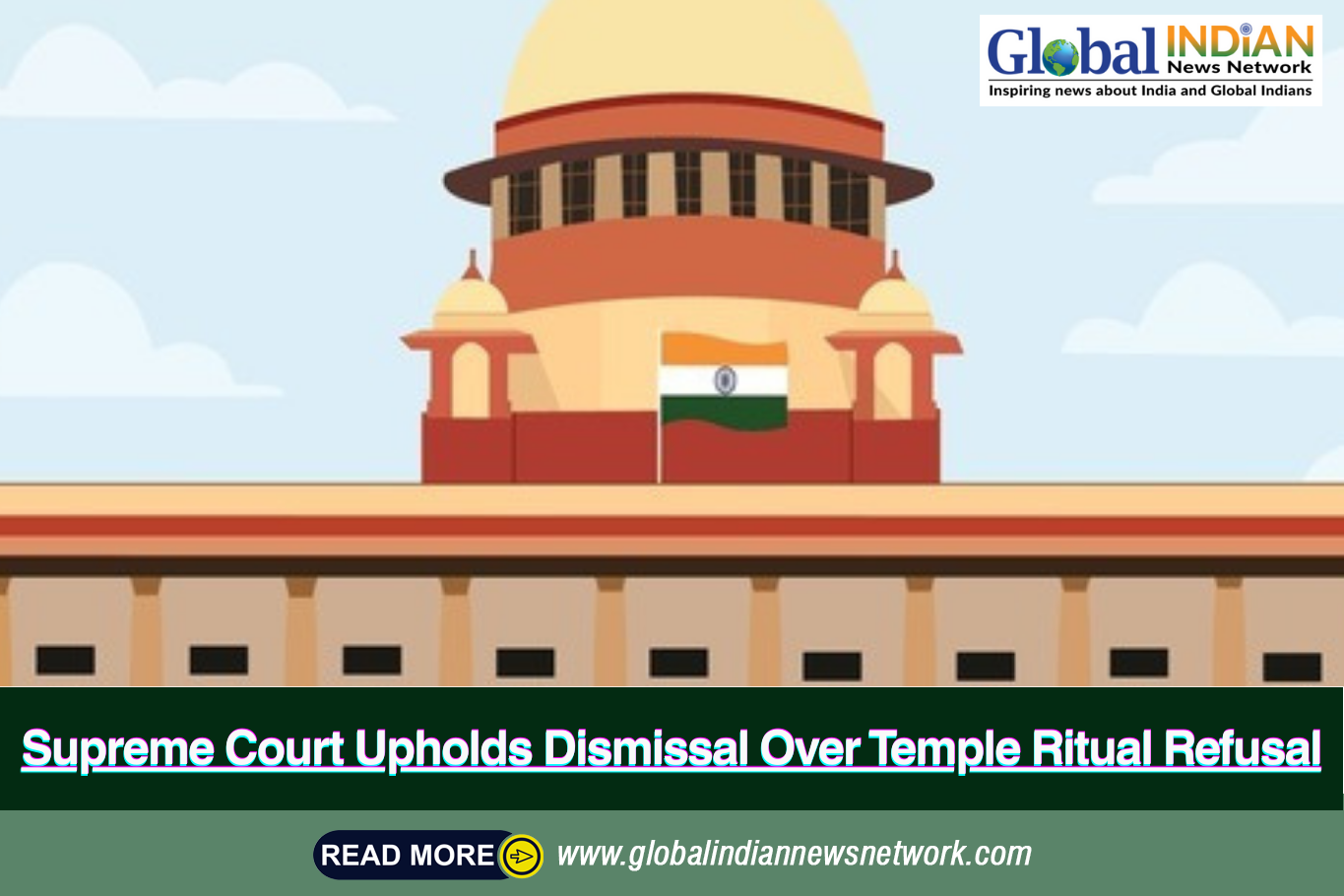
 The Supreme Court on Tuesday, November 25, 2025, affirmed the dismissal of Army officer Samuel Kamalesan, ruling that his refusal to step into his regiment’s temple for an annual ritual amounted to a serious breach of military discipline. The Bench, led by Chief Justice Surya Kant and joined by Justice Joymalya Bagchi, said the officer had relied on his “personal interpretation” of his faith to disregard a lawful regimental requirement, thereby undermining unity within his unit.
Chief Justice Kant noted that military leadership demands leading by example, not distancing oneself from long-standing traditions that soldiers see as central to their espirit de corps. He pointed out that even after a pastor from Kamalesan’s own faith assured him that participating in the ceremony was permissible, the officer continued to resist. “You cannot apply your private understanding of religion while in uniform,” the Chief Justice said, calling the conduct “the grossest kind of indiscipline.”
Justice Bagchi questioned whether any Christian scripture explicitly prohibited entering a temple. The officer’s counsel, senior advocate Gopal Sankaranarayanan, argued that Kamalesan’s right to practice his religion under Article 25 remained protected even after joining the Armed Forces. Justice Bagchi responded that Article 25 protects essential doctrines, not every individual sentiment or personal preference.
Representing the Army, Additional Solicitor General Aishwarya Bhati told the court that the officer repeatedly skipped mandatory regimental parades, despite several senior officers trying to counsel him. Such behavior, she said, eroded cohesion within the unit and weakened trust between the officer and his troops.
The Delhi High Court had earlier upheld the Army’s decision, concluding that Kamalesan placed his personal religious views above a lawful command, violating core military ethos. That judgment stressed that the Army’s secular tradition requires officers to respect practices that strengthen unit identity and battlefield morale.
Kamalesan maintained that his camaraderie with the soldiers was built on shared service, not religious events, and insisted that fraternity in the Army grows through training, shared hardships, and national allegiance — not devotional gatherings. But the Union government countered that regimental customs, including religious observances, play a key role in fortifying morale, inspiring war cries, and building cohesion that becomes crucial in combat.
By upholding the dismissal, the Supreme Court reinforced that individual interpretations of faith cannot override military discipline, especially when they risk fragmenting unit unity and undermining operational readiness.