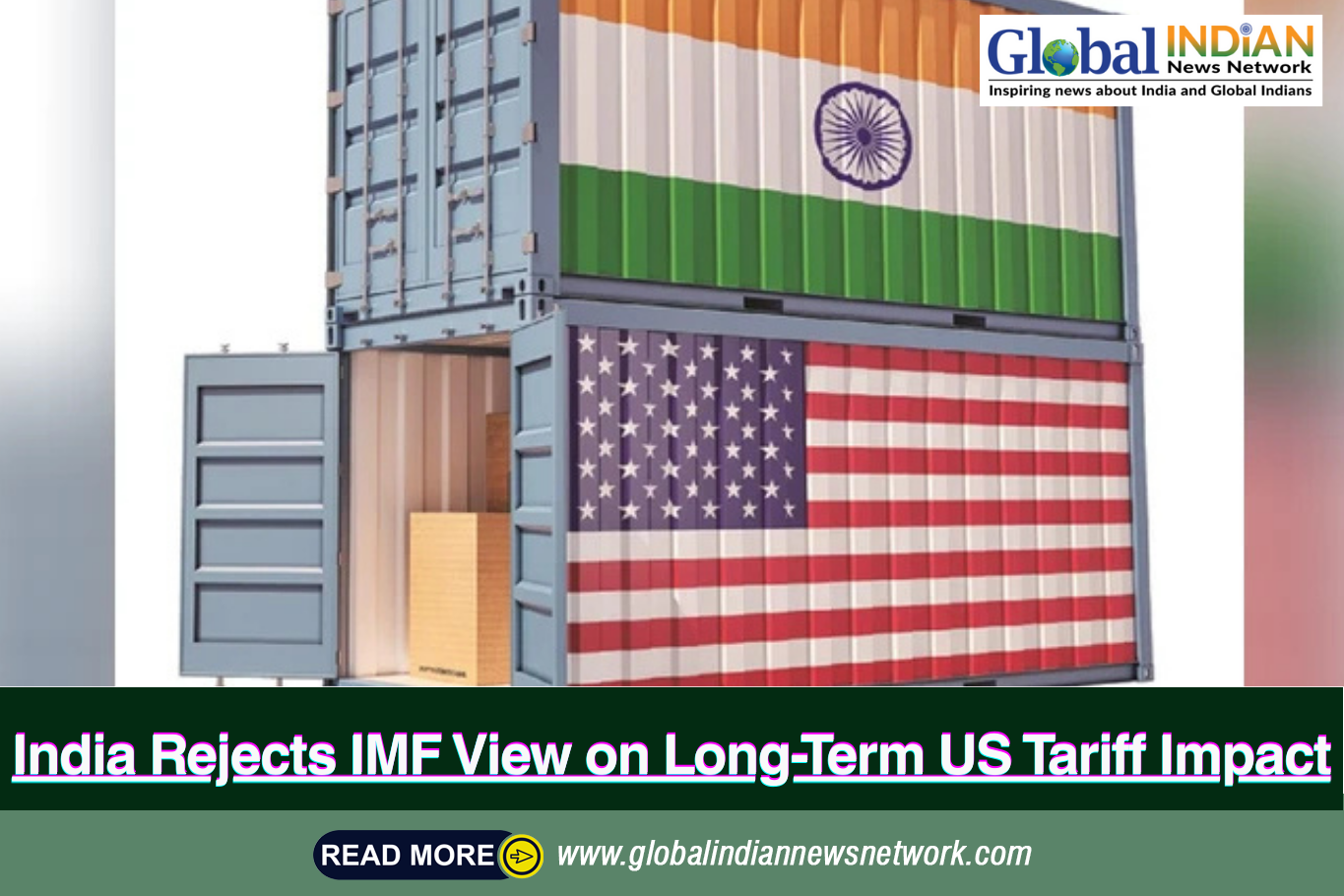
 The Indian government has pushed back against the IMF staff’s assessment that the recently imposed 50% US tariffs on Indian exports will remain in place indefinitely. This assumption formed the basis for the IMF’s projection that India’s GDP will expand by 6.6% this year and slow to 6.2% in 2026–27. According to the IMF, the persistent tariffs could weaken external demand and discourage investment, ultimately dragging growth next year. While New Delhi agreed that certain sectors may feel a sharper pinch, officials maintained that the broader economic effects are likely to be manageable over the short term.
However, Indian authorities disagreed with the IMF’s decision to treat the US tariff structure as a permanent fixture. They argued that the estimated growth impact appears overstated, especially given India’s push to accelerate exports to alternative markets and diversify trading partners.
The IMF, in its assessment, flagged escalating global trade frictions and deeper geoeconomic fragmentation as key risks for India in the near term. Such pressures, it noted, could tighten financial conditions, raise input prices, and reduce trade flows, foreign direct investment, and overall economic expansion. It added that if the tariffs continue at current levels, there may be space for further monetary policy easing as inflation remains subdued.
Indian officials acknowledged the unpredictable global environment, but emphasized that newly negotiated and upcoming free trade agreements could support growth and offset external shocks. They also felt that the IMF’s estimate of India’s potential growth rate understates the country’s longer-term capacity.
The IMF proposed temporary and targeted support for sectors severely affected by tariffs and suggested that India might need to pause fiscal consolidation in FY27 if the tariff impact widens the output gap. Indian authorities, however, strongly disagreed, calling it premature to consider halting fiscal discipline, especially given the government’s clear and credible fiscal roadmap.
The IMF also noted that persistent tariffs could justify modest interest rate cuts due to a potentially negative output gap, though a quick rollback of tariffs would reduce the need for monetary easing. It further advised the RBI to look past any one-off inflationary effects stemming from GST-related reforms.