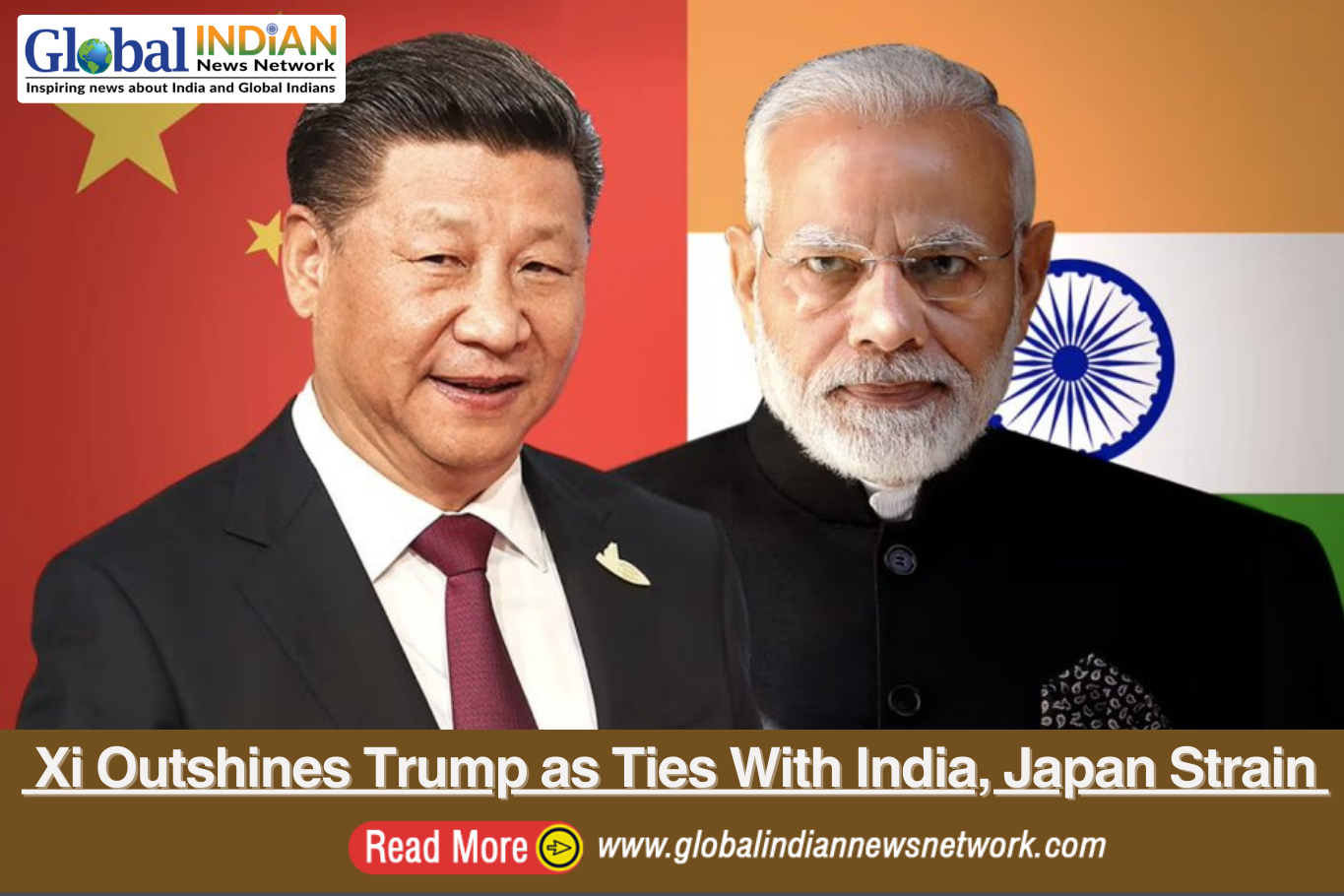
 China’s President Xi Jinping and US President Donald Trump reinforced their emerging “G-2” framework on Monday, exchanging invitations for high-level visits even as Beijing escalated tensions with Japan and India and sharpened its claims over Taiwan. Despite the rising friction in Asia, Washington showed little sign of directly confronting Beijing on the Taiwan issue.
During a forty-five-minute phone call, Xi raised concerns over Japan’s recent hardened stance. Japan’s new prime minister, Sanae Takaichi, used her first major foreign policy speech since taking office in September to warn that any Chinese move to blockade or seize Taiwan would pose a “direct threat” to Japan’s national security. Her remarks immediately triggered a response from Beijing and added fresh strain to the regional landscape.
Following Takaichi’s statement, Beijing emphasized that Xi’s conversation with Trump reaffirmed China’s position that Taiwan’s “return” forms a central part of the international order established after World War II. Foreign Ministry spokesperson Lin Jian said Xi stressed the “one-China principle” as the foundation of mutual trust and warned global actors against “interference” that could destabilize the Asia-Pacific region.
Trump, however, omitted all mention of Taiwan in his social-media summary of the call, instead highlighting trade discussions, agricultural topics, and bilateral ties. Observers saw this as a potential signal of Washington stepping back from Taiwan-related pressure, especially after criticism that the U.S. had not adequately supported Ukraine. Trump framed the call as friendly and upbeat, announcing that Xi had invited him to Beijing in April and that he would welcome Xi to the United States later in the year.
Just hours after speaking with Xi, Trump held a separate call with Prime Minister Takaichi. The White House described the conversation as productive, noting discussions on Indo-Pacific cooperation, joint military readiness, and supply chain coordination. Yet the administration again avoided referencing Taiwan directly, leaving allies uncertain about Washington’s strategic clarity.
Analysts argue that Trump appears to be walking a tightrope—pursuing deeper engagement with China while attempting not to alienate key partners like Japan. Critics warn that this balancing act could unintentionally embolden Beijing, especially as Xi tests regional boundaries. Several U.S. experts contend that Xi is “outmaneuvering” Trump, suggesting that earlier threats of strong economic retaliation against China have not materialized. With Beijing applying increasing pressure on Taiwan and the United States sending mixed signals, uncertainties continue to shape the Indo-Pacific’s security environment.