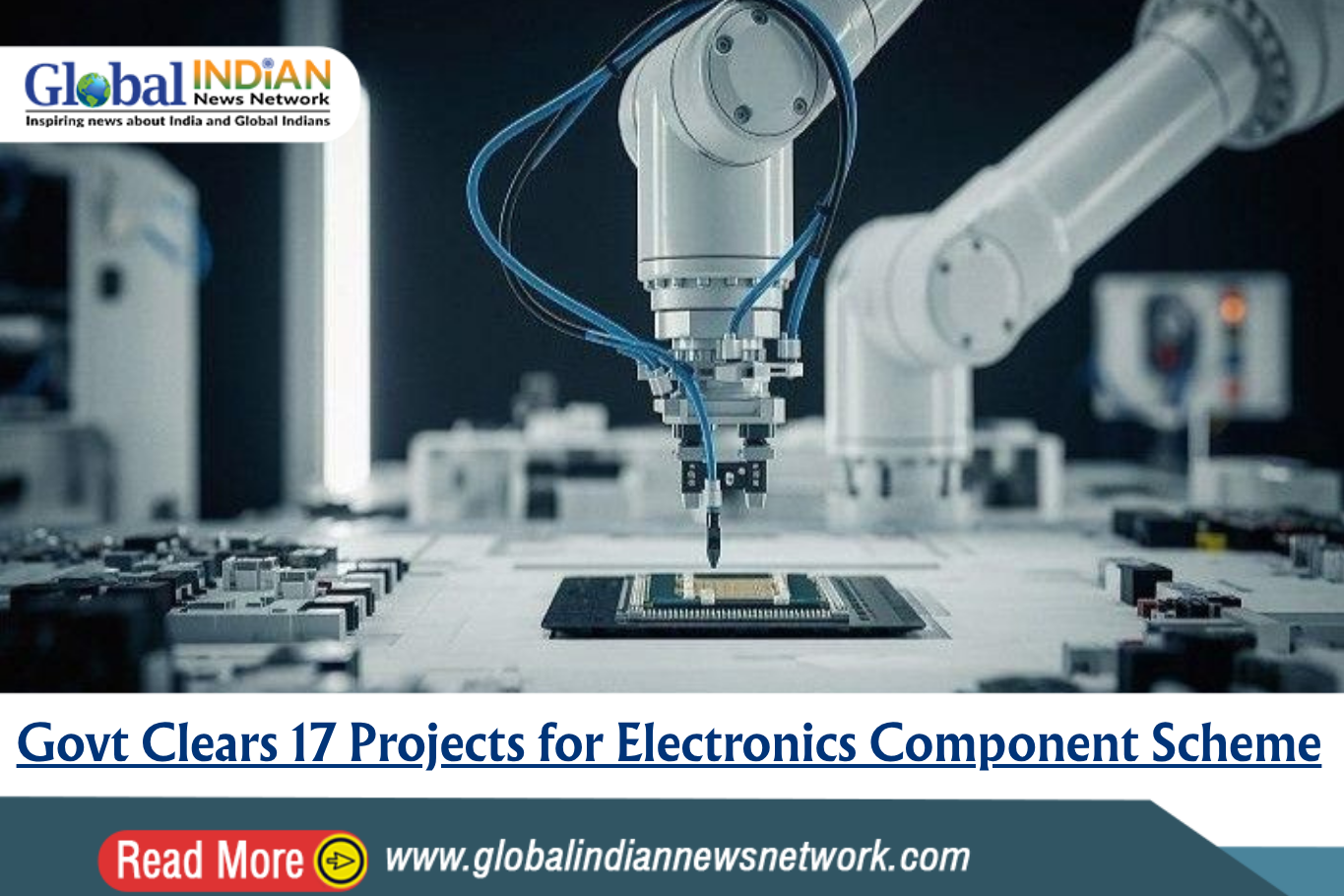
 India has taken another major step toward strengthening its electronics manufacturing capabilities with the approval of 17 new component production projects valued at about $809.48 million. Cleared under the Electronics Component Manufacturing Scheme, the projects span six product categories and are distributed across nine states. Collectively, they are expected to generate an estimated $7.35 billion in total output, marking a significant push toward building a deeper and more competitive domestic electronics ecosystem.
Announcing the second round of project approvals, Union Minister for Electronics and Information Technology Ashwini Vaishnaw said the initiative aligns with India’s long-term vision of becoming a major global hub for electronics manufacturing. He stressed that the country must strengthen its internal capabilities in high-quality component production if it hopes to maintain a competitive edge in an increasingly complex global environment. According to him, the future of India’s electronics sector will depend on building strong design talent, adopting rigorous quality systems, and fostering close partnerships with local suppliers.
Vaishnaw added that the government is already working on a comprehensive skilling framework aimed specifically at electronics manufacturing. This training model will support companies in achieving global quality standards, including six sigma processes, which the government intends to prioritize as part of its broader evaluation and monitoring approach.
With these new approvals, the total number of sanctioned projects under the scheme now stands at 24. The list of newly approved beneficiaries includes well-known domestic and international players such as Jabil Circuit India, Aequs Consumer Products, Uno Minda, ASUX Safety Components India, Zetfab India, TE Connectivity India, and Meena Electrotech. These companies will focus on producing critical components including camera modules, connectors, multilayer printed circuit boards, oscillators, enclosures, and other key elements required for modern electronic devices.
The ministry stated that these projects will expand India’s manufacturing depth, help reduce dependency on imported components, and provide greater stability for electronics supply chains. Strengthening component production is seen as essential for boosting local value addition, one of India’s primary goals as it seeks to compete with established global manufacturing hubs.
Overall, the newly approved investments are expected to accelerate the country’s transition from an assembly-focused market to a high-value manufacturing powerhouse. By enhancing both production capabilities and skilled talent, the scheme aims to position India as a critical player in the global electronics landscape while supporting long-term industrial growth.