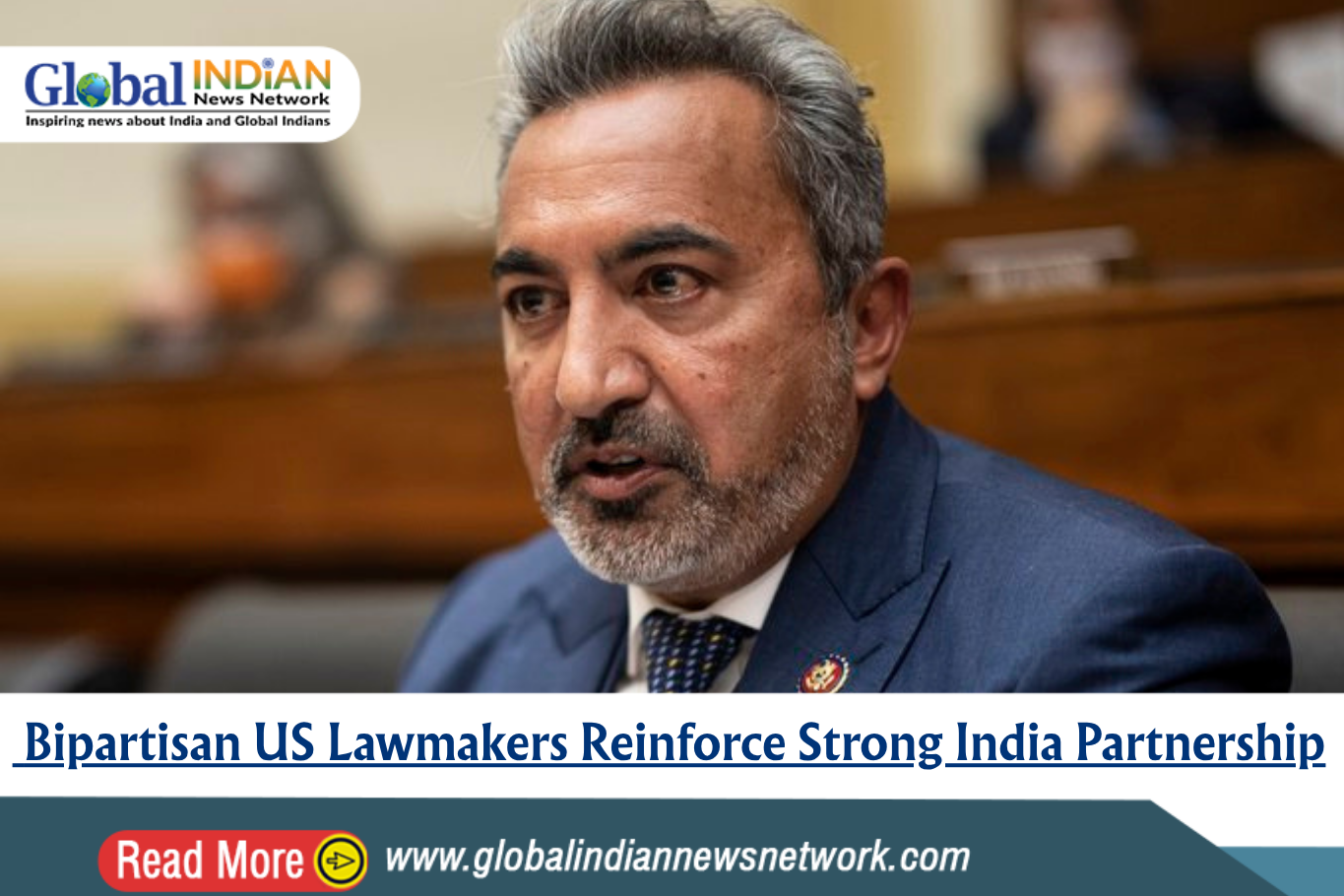
 US Representatives Ami Bera and Joe Wilson introduced a bipartisan congressional resolution on Monday reaffirming the strength and long-term value of the India-US partnership. The measure positions the relationship as a cornerstone for regional stability, democratic alignment, and shared global priorities, drawing support from both sides of the political aisle.
The resolution debuted with 24 original cosponsors, including Sydney Kamlager-Dove, Rich McCormick, Deborah Ross, Rob Wittman, Suhas Subramanyam, and Jay Obernolte—reflecting widespread, cross-party agreement on the strategic importance of ties with India.
Lawmakers placed a significant emphasis on joint counterterrorism efforts. The resolution urged continued collaboration to address global security threats and explicitly called for decisive action against the perpetrators of the 2008 Mumbai attacks. Members also noted the April attack in Pahalgam that claimed 26 lives, pointing out that it was claimed by The Resistance Front—linked to Lashkar-e-Taiba—illustrating the ongoing dangers posed by cross-border and proxy terrorism in South Asia.
The text highlights that US support for stronger relations with India has remained consistent across multiple administrations. It states that for more than 30 years, presidents from Clinton to Biden have advanced the partnership, recognizing India’s importance for economic growth, democratic governance, and regional balance.
A major segment of the resolution reaffirms India’s central role in the US Indo-Pacific strategy. It promotes expanded cooperation within the Quad—an informal alliance between India, the United States, Japan, and Australia—describing it as essential to a free and resilient Indo-Pacific region. The resolution also encourages deeper economic engagement, including through bilateral and multilateral forums.
Beyond security and diplomacy, lawmakers stressed expanding work in technology, energy security, and cultural and people-to-people exchanges, calling these areas essential to the next phase of the partnership.
This legislative move comes shortly after five members of Congress urged President Donald Trump to revisit his September 19 proclamation on H-1B visas. Their letter warned that tightening visa rules could create unintended strain on the India-US relationship. They argued that although 75% of current H-1B workers originate from India, the program requires expansion rather than limitations imposed by costs or corporate exclusivity. The letter was signed by Jimmy Panetta, Ami Bera, Salud Carbajal, Derek Tran, and Julie Johnson.