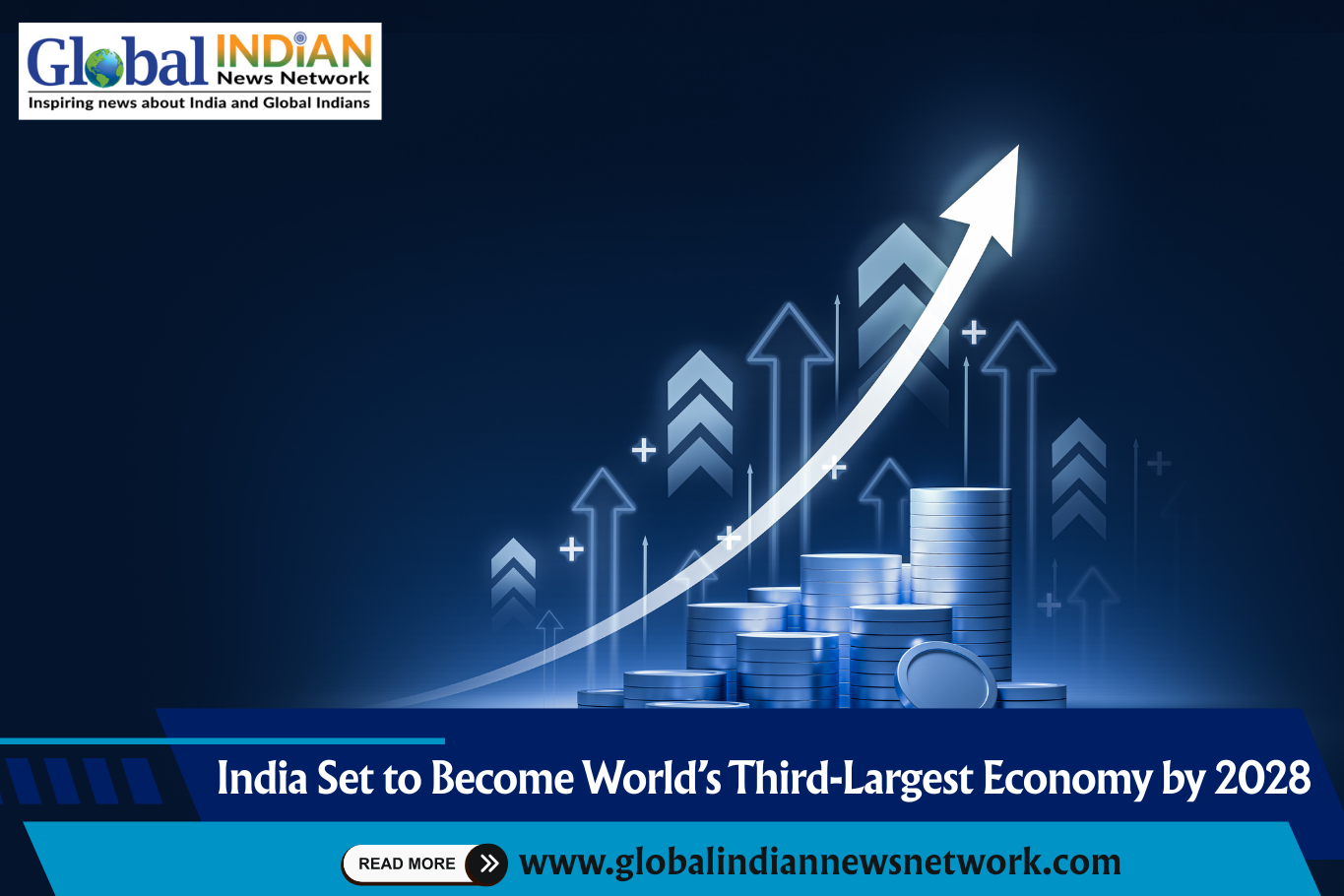
 India is on track to become the world’s third-largest economy by 2028, following the United States and China, according to a recent report by UBS. The global financial services firm forecasts that India’s real GDP will maintain an annual growth rate of 6.5% between FY2028 and FY2030. This sustained expansion positions India as not only a major economic powerhouse but also the third-largest consumer market by 2026.
UBS highlighted that household consumption in India has nearly doubled over the past decade, reaching about $2.4 trillion in 2024. This growth, averaging a 7.9% compound annual rate, outpaces major economies such as China, the United States, and Germany. The report attributes this upward trajectory to strong domestic demand, consistent policy measures, and an improving manufacturing ecosystem — all of which continue to fortify India’s economic fundamentals.
The analysis also ranks India as the fastest-growing economy in the Asia-Pacific region in 2027, ahead of nations like the Philippines and Indonesia, with forecasted growth rates of 6.1% and 5.1% respectively. UBS expects India’s GDP to grow by 6.4% in FY2027 and 6.5% in FY2028, supported by fiscal prudence, Goods and Services Tax (GST) reforms, and resilient private sector consumption.
UBS’s base scenario is built on the assumption that a comprehensive US-India trade agreement will be finalized by the end of 2025, which could normalize tariffs and encourage stronger trade flows between the two nations. However, the report also cautions that prolonged trade barriers or a potential 25% tax on US payments to Indian outsourcing firms could reduce GDP growth by up to 0.9 percentage points in FY2027.
On the monetary front, UBS anticipates a slight uptick in inflation—from 2.4% in FY2026 to 4.3% in FY2027—remaining below the Reserve Bank of India’s projection of 4.5%. The firm also expects one more 25-basis-point interest rate cut before the central bank halts further adjustments.
With a blend of policy consistency, fiscal strength, and robust consumer spending, India continues to consolidate its place as one of the most dynamic and resilient economies globally.