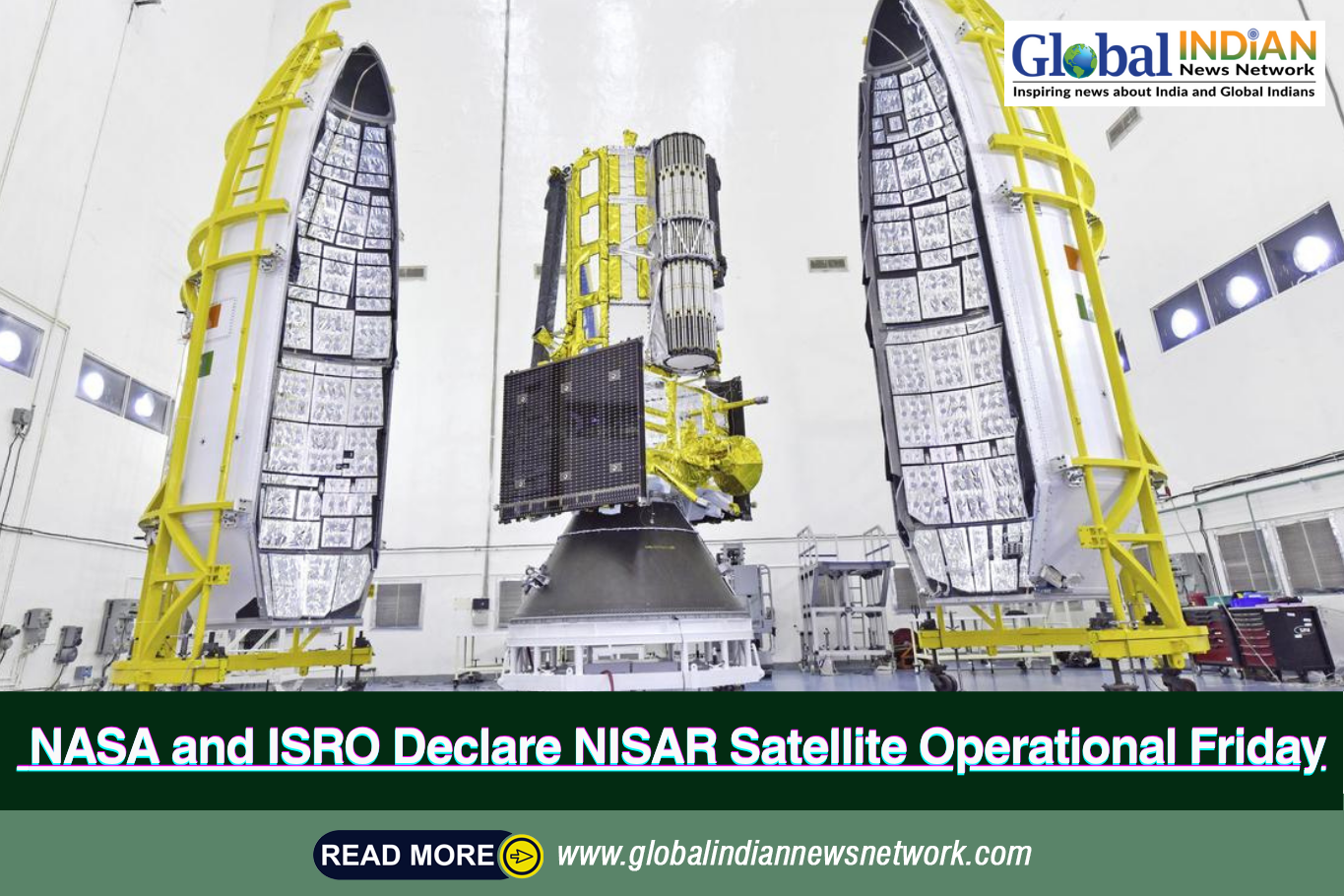
 The National Aeronautics and Space Administration (NASA) and the Indian Space Research Organisation (ISRO) are set to officially declare their jointly developed NASA-ISRO Synthetic Aperture Radar (NISAR) satellite operational on Friday, ISRO Chairman V. Narayanan announced on Wednesday.
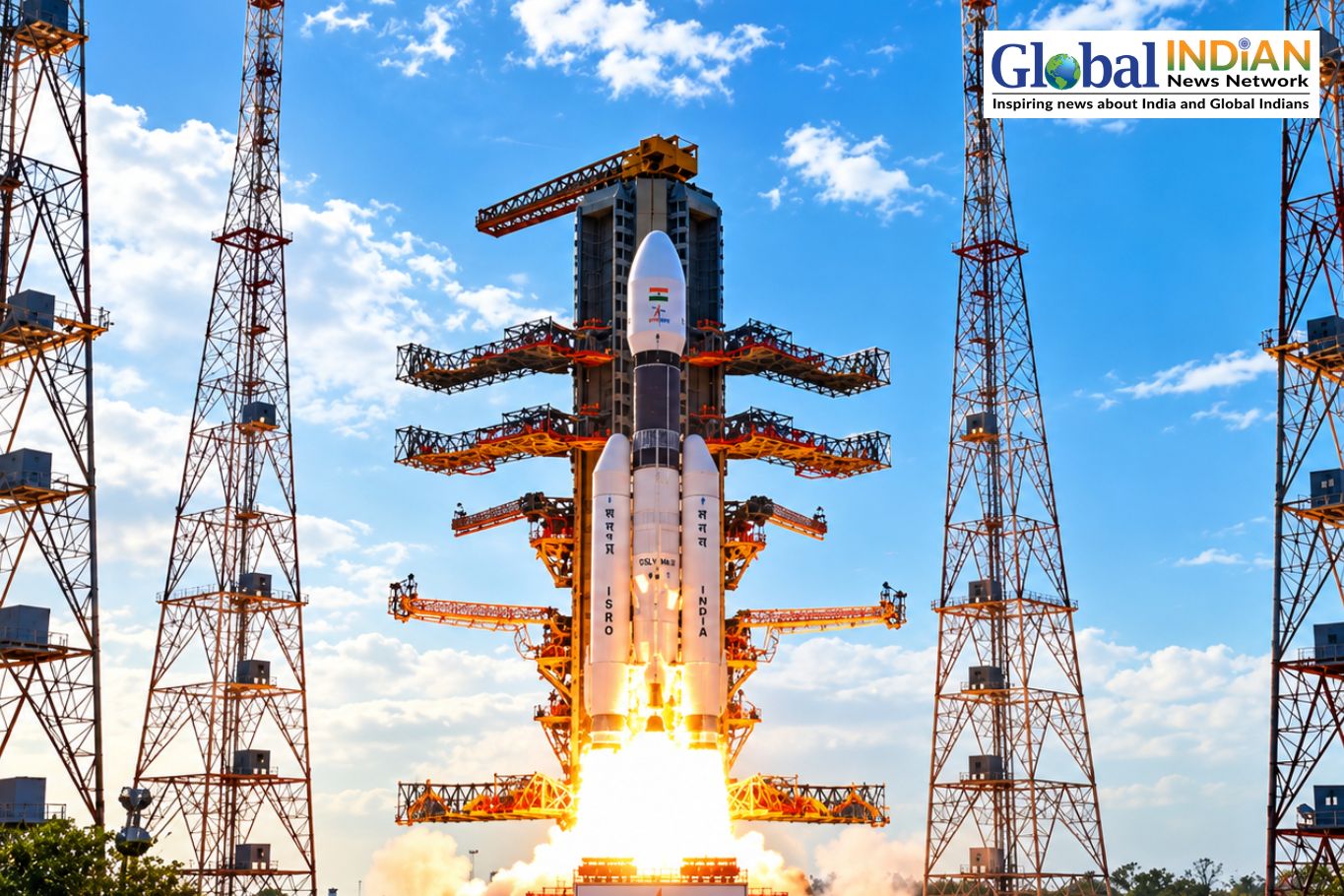
Weighing approximately 2,400 kilograms, the NISAR satellite was launched on July 30, 2025, from the Satish Dhawan Space Centre in Sriharikota aboard the GSLV rocket. Designed to be the most expensive Earth observation satellite ever built, NISAR can monitor nearly all of Earth’s land and ice surfaces twice every 12 days.
Speaking at the Emerging Science, Technology and Innovation Conclave (ESTIC), Narayanan confirmed that data calibration has been completed successfully. “All the data looks exceptional. Every 12 days, we can achieve a full scan of the planet, making it one of the most valuable observation satellites ever developed,” he stated.
The NISAR mission is unique as it carries two radar systems — an L-Band and an S-Band sensor. The L-Band radar can penetrate dense forest canopies to measure soil moisture, forest biomass, and the motion of land and ice surfaces. The S-Band radar, on the other hand, is more sensitive to smaller vegetation and can detect agricultural patterns, grassland ecosystems, and snow moisture. Both systems are capable of collecting high-resolution data day and night, even through clouds and rainfall.
In addition to the NISAR update, Narayanan shared key developments in India’s space program. He announced that the first uncrewed mission of the Gaganyaan project, India’s ambitious human spaceflight program, is scheduled for January 2026, with plans to send astronauts into orbit by 2027. So far, over 8,000 tests have been conducted to prepare for the mission.
ISRO also revealed plans to launch the first module of the Bhartiya Antariksh Station by 2028, aiming to make the full five-module orbital laboratory operational by 2035. The 52-tonne space station will host three to four astronauts for long missions and up to six for short-term expeditions, marking another leap in India’s growing presence in space exploration.