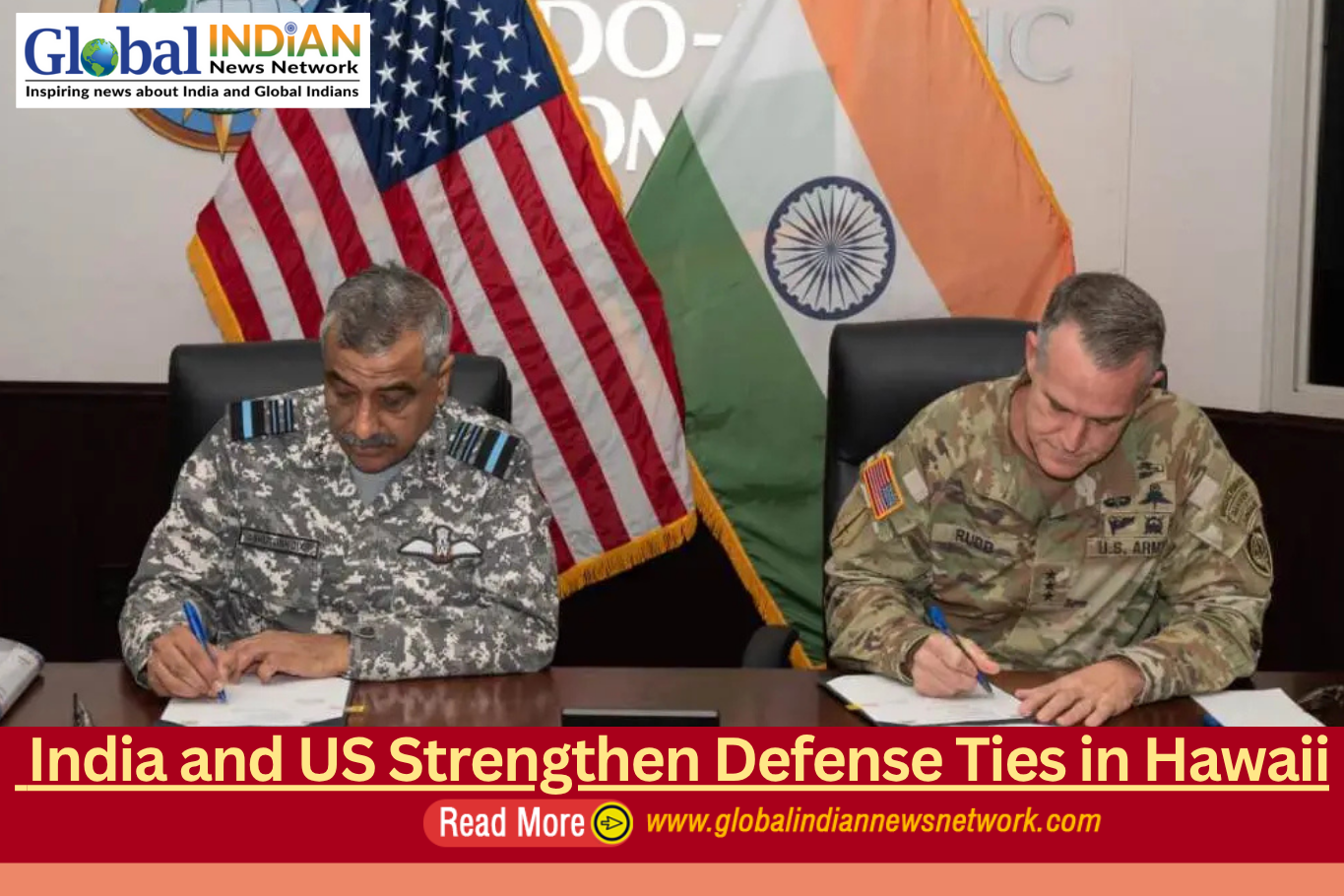
 Senior military officials from India and the United States gathered in Hawaii earlier this month for the 22nd edition of the India–US Military Cooperation Group (MCG) meeting. The two-day dialogue, held on November 3–4, centered on expanding bilateral defense cooperation, strengthening operational interoperability, and supporting a free, open, and secure Indo-Pacific region.
The discussions were co-chaired by India’s Chief of Integrated Defense Staff, Air Marshal Ashutosh Dixit, and Lieutenant General Joshua M. Rudd, Deputy Commander of the US Indo-Pacific Command. The MCG acts as a strategic platform where both nations engage in regular, high-level exchanges to advance defense collaboration and joint operational readiness.
According to the Headquarters of the Integrated Defense Staff, the meeting yielded “productive discussions,” reinforcing shared commitments to maintaining regional stability and improving mutual coordination across defense domains. These talks followed the 21st MCG session held in New Delhi last year, where both sides explored opportunities in capacity building, training programs, and defense industrial cooperation.
The Indian Defense Ministry noted that both countries reaffirmed their commitment to enhancing interoperability and addressing emerging security challenges across the Indo-Pacific. They agreed to expand the scope of military cooperation through proactive engagement and regular joint exercises aimed at improving preparedness against conventional and hybrid threats.
A major example of this cooperation is Exercise Yudh Abhyas, an annual joint military drill that continues to grow in scale and complexity. The 21st edition of the exercise took place in September at Fort Wainwright, Alaska, marking one of the Indian Army’s largest overseas training deployments. Around 450 Indian soldiers from the Madras Regiment trained alongside US troops from the 11th Airborne Division’s “Arctic Wolves,” focusing on high-altitude and cold-weather warfare.
Since beginning in 2002 as a small platoon-level exercise, Yudh Abhyas has evolved into a cornerstone of India-US military relations. Alongside other exercises like Malabar, COPE India, Vajra Prahar, and Tiger Triumph, it underscores the deep trust and collaboration between the two democracies. Together, India and the US continue to advance a vision of peace, security, and prosperity across the Indo-Pacific region.