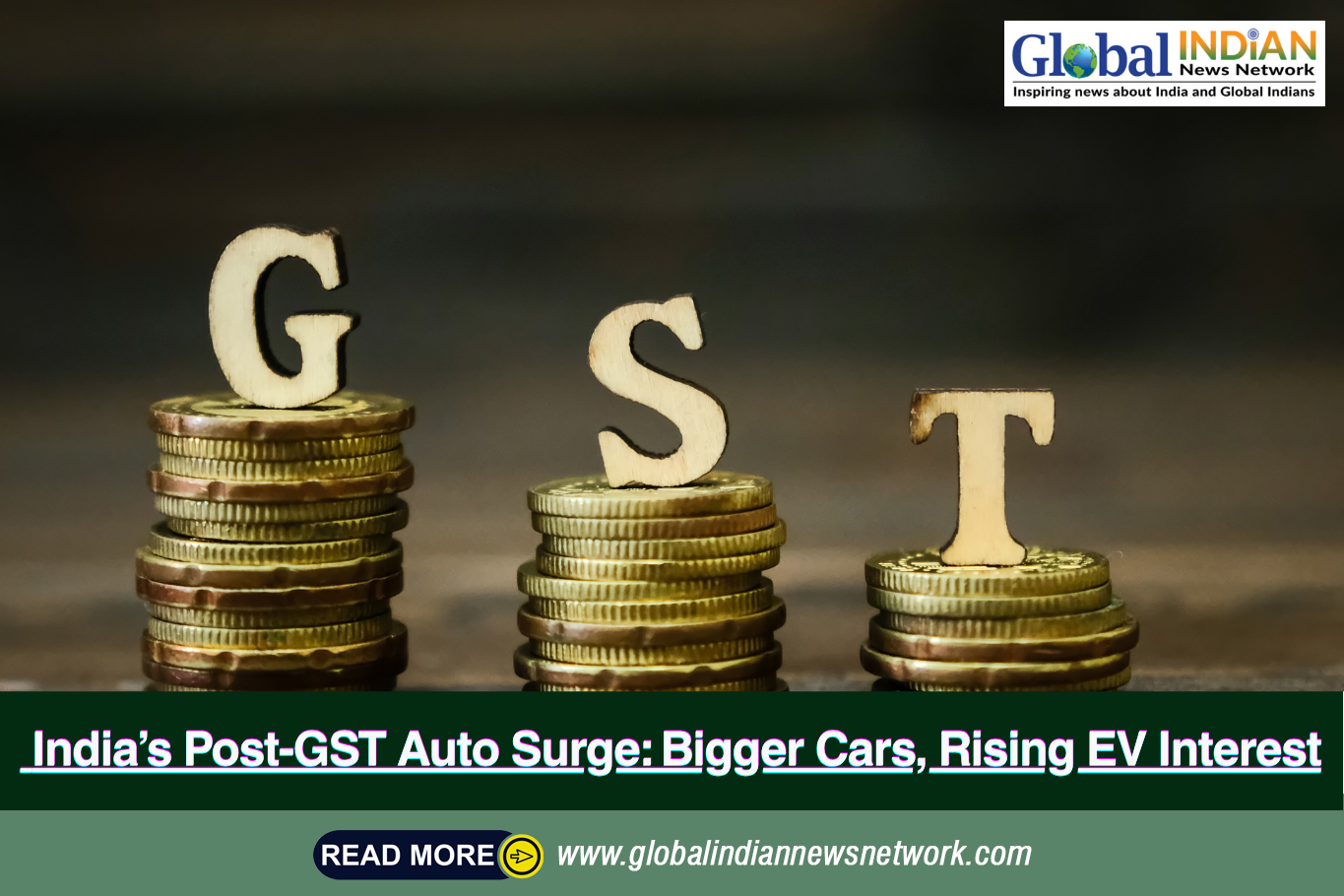
 India’s automobile market is experiencing a significant transformation following the Goods and Services Tax (GST) rate reductions. According to a recent AI-powered SmyttenPulse study conducted in October 2025, nearly 79% of Indian car buyers are channeling their GST savings into premium vehicles and additional features instead of putting the money aside. The findings highlight a major shift in buyer behavior across tier-I, II, and III cities, with 46% of respondents opting for larger vehicles such as compact and full-size SUVs. Meanwhile, more than 60% of consumers expressed their intent to upgrade within the same brand, focusing on higher-end variants.
SUVs continue to dominate the Indian automotive landscape, followed by sedans and hatchbacks, marking a clear transition from affordability-driven purchases to aspiration-based decisions. The post-GST era has fueled a wave of consumer confidence, with many embracing higher-value options that were previously out of reach.
Electric vehicles (EVs) are also capturing growing interest among Indian consumers, despite ongoing challenges. Around 75% of buyers pointed to the high cost of battery replacement as a key deterrent, while 55% noted the limited availability of charging infrastructure. Nonetheless, 68% of respondents cited environmental advantages as a motivating factor, and 66% were encouraged by government incentives promoting EV adoption.
Financial sentiment among buyers is notably strong. The survey revealed that 53% of consumers can now afford higher down payments, while 58% are choosing loans or Equated Monthly Instalments (EMIs) with extended repayment periods. This indicates a rising sense of stability and purchasing power within the middle-income demographic.
The report concludes that post-GST rate cuts, combined with festive season offers and flexible financing options, are propelling India’s car market into a new phase of growth. This momentum underscores not only a preference for comfort and style but also a shift toward sustainability as EV curiosity continues to climb, shaping the future of India’s automotive ecosystem.