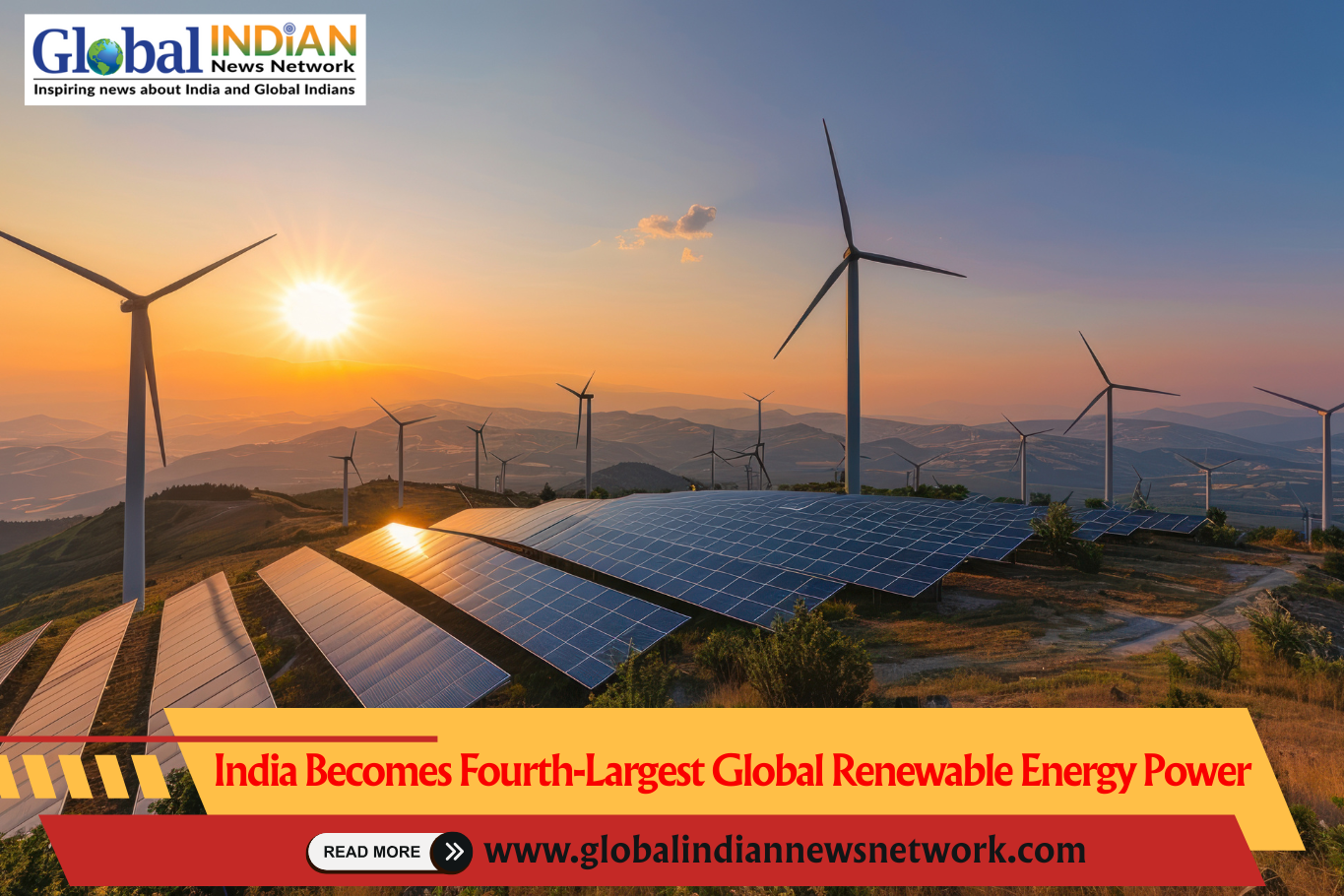
 India has officially risen to become the fourth-largest producer of renewable energy in the world, achieving an installed capacity of 257 gigawatts (GW) — a remarkable threefold increase from 81 GW in 2014, according to Union Minister for New and Renewable Energy Pralhad Joshi. Speaking at the eighth International Solar Alliance Assembly, the minister highlighted India’s unprecedented progress in the clean energy sector, particularly in solar power generation and manufacturing.
Joshi noted that the nation’s solar capacity skyrocketed from 2.8 GW in 2014 to 128 GW in 2025, reflecting rapid growth driven by government-backed initiatives and private investments. On the industrial front, solar module manufacturing capacity expanded from 2 GW to 110 GW, while solar cell production surged from virtually nothing to 27 GW, positioning India as a global hub for solar manufacturing.
The minister attributed this success to Prime Minister Narendra Modi’s vision, emphasizing that India achieved its Nationally Determined Contribution (NDC) goal of generating 50% capacity from non-fossil fuel sources—five years ahead of schedule. India’s renewable energy tariffs, covering solar, battery storage, and green ammonia, now rank among the lowest worldwide, making clean energy both affordable and accessible.
Citing projections from the International Energy Agency (IEA), Joshi stated that India is poised to become the second-largest renewable energy market globally in the coming years. Meanwhile, the International Renewable Energy Agency (IRENA) has hailed India as a powerhouse of the global energy transition, underscoring its leadership in scaling sustainable solutions.
Reaffirming its commitment to global cooperation, India also announced a $25 million contribution to the Africa Solar Facility under the International Solar Alliance. This funding will support mini-grid projects and distributed renewable energy systems across Africa, reinforcing India’s dedication to advancing equitable energy growth in the Global South.
India’s rapid rise in clean energy marks not just a national achievement but also a global turning point—signaling a future where innovation, affordability, and sustainability power progress for all.