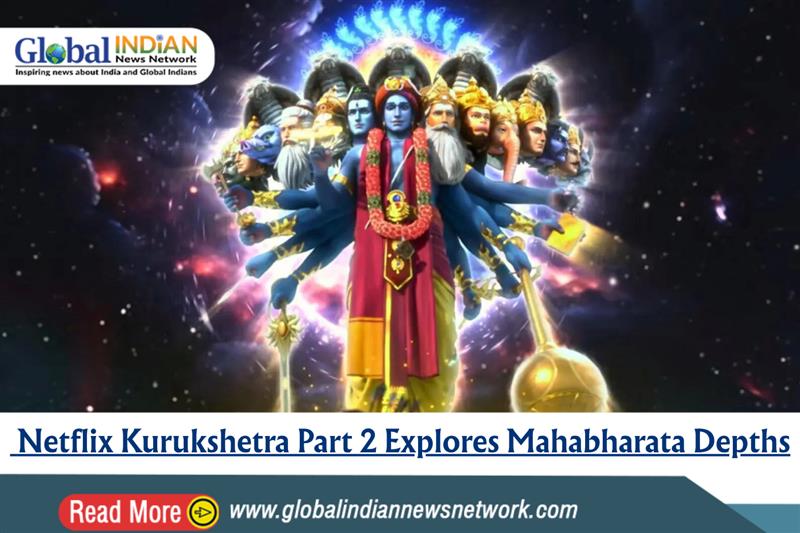
 Netflix has released Part 2 of Kurukshetra: The Great War of Mahabharata, a visually striking and emotionally compelling continuation of the epic battle between the Pandavas and Kauravas. Created by Ujaan Ganguly, the series builds on Part 1, which concluded with Jayadratha’s death, and offers a deeper exploration of the human struggles, moral conflicts, and ethical questions underlying the 18-day war.
The animation series reinterprets the Mahabharata for contemporary audiences, presenting legendary characters not only as divine or heroic figures but also as flawed, complex humans navigating duty, desire, and destiny. While Krishna’s guidance influences the warriors, the show underscores that choices made by individuals ultimately shape outcomes, emphasizing the interplay between fate and free will.
A key takeaway from the series is that the Mahabharata was never solely about winning a throne. The narrative highlights the erosion of morality and dharma as central drivers of the conflict, turning the war into a reflection of human conscience where ethical decisions are rarely black or white. Heroes and villains alike, from Karna and Duryodhana to Krishna, are portrayed as multidimensional figures shaped by circumstance and personal conviction.
Kurukshetra also examines the consequences of power wielded without purpose. Misplaced loyalty, unchecked pride, and rigid adherence to oaths demonstrate how moral failure can lead to widespread devastation. The series challenges viewers to consider the nuances of righteousness and justice, exploring gray areas where duty, vengeance, and morality intersect.
Significantly, the series elevates the voices of women, offering depth to characters like Draupadi, Kunti, and Gandhari. Their choices, suffering, and influence are shown as pivotal to the unfolding of events, revealing the often-overlooked forces behind the war.
Ultimately, Kurukshetra Part 2 conveys that the most profound battles are internal, fought within the human soul. Conflicts of duty versus desire, truth versus loyalty, and love versus justice are central themes. Through its cinematic storytelling, the series transforms the Mahabharata from a historical epic into a timeless reflection on ethics, responsibility, and human nature, making it highly relevant to modern audiences seeking both entertainment and insight.