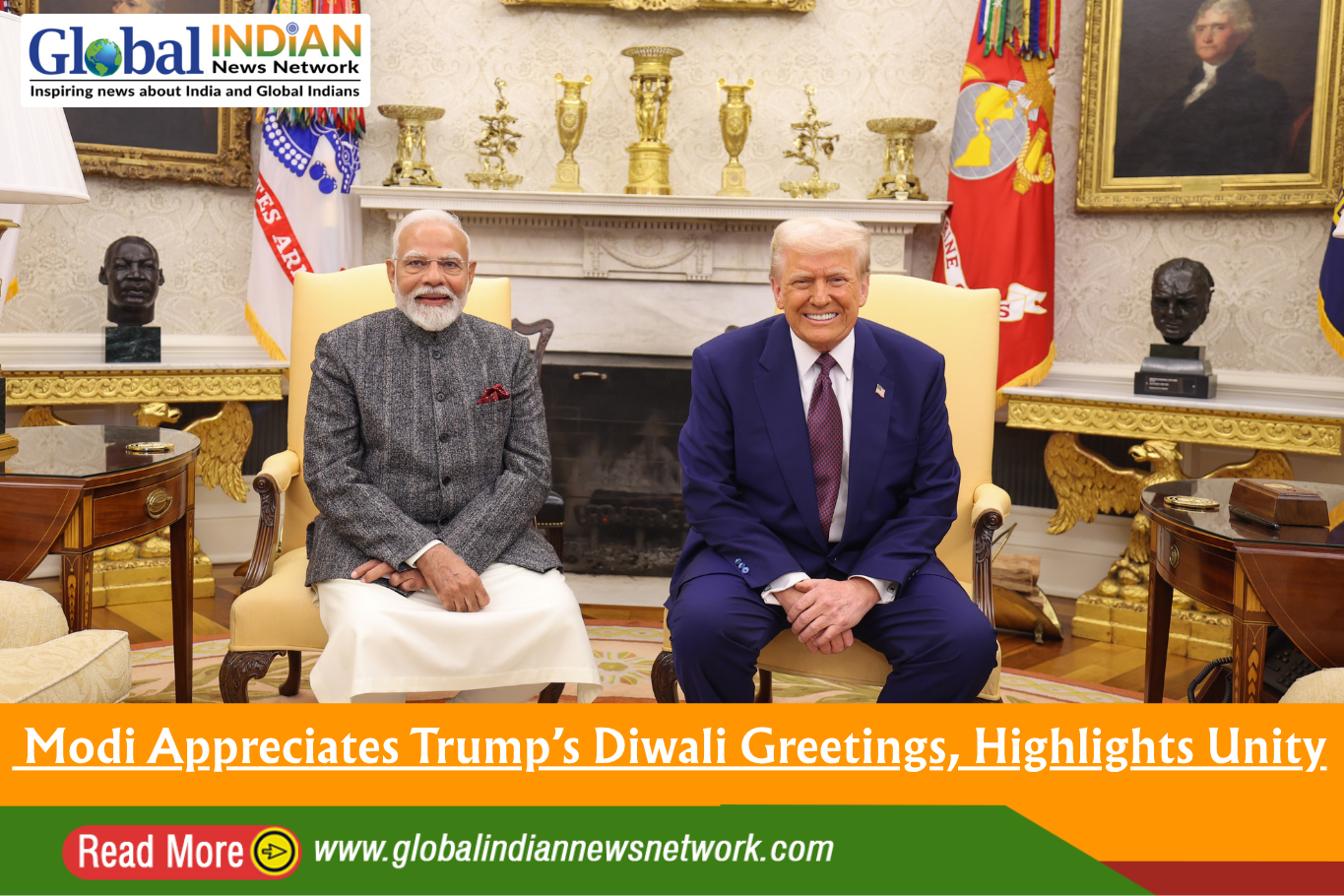
 Prime Minister Narendra Modi expressed his gratitude to US President Donald Trump early Wednesday for a phone call and his warm Diwali wishes. In his message on X, PM Modi described India and the United States as “great democracies” and highlighted the importance of staying united in combating terrorism in all its forms. He wrote, “Thank you, President Trump, for your phone call and warm Diwali greetings. On this festival of lights, may our two great democracies continue to illuminate the world with hope and stand united against terrorism in all its forms.”
Earlier, President Trump marked the Diwali celebrations at the White House and extended his greetings to the people of India. He referred to his “great conversation” with PM Modi, noting that trade and regional security issues were discussed. Trump said, “Let me extend our warmest wishes to the people of India. I just spoke to your Prime Minister today. Had a great conversation. We talked about trade… He’s very interested in that. We also discussed ensuring peace with Pakistan. Trade discussions were productive, and I’m grateful for the friendship we’ve developed over the years.”
While Trump mentioned discussions about Pakistan, sources clarified that the matter was not part of the phone call. Nonetheless, the conversation reflected the ongoing dialogue between the two leaders aimed at strengthening bilateral relations and expanding trade opportunities.
Despite these positive exchanges, tensions persist on the trade front. President Trump recently imposed a 50% tariff on India in response to its significant purchases of Russian oil, underscoring ongoing challenges in trade negotiations between the two nations.
The phone call and mutual greetings during Diwali underline the continued commitment of India and the United States to maintain strong diplomatic and economic ties, uphold shared democratic values, and collaborate in global efforts to combat terrorism. Both leaders reaffirmed the importance of dialogue, partnership, and friendship in navigating complex geopolitical and economic landscapes.