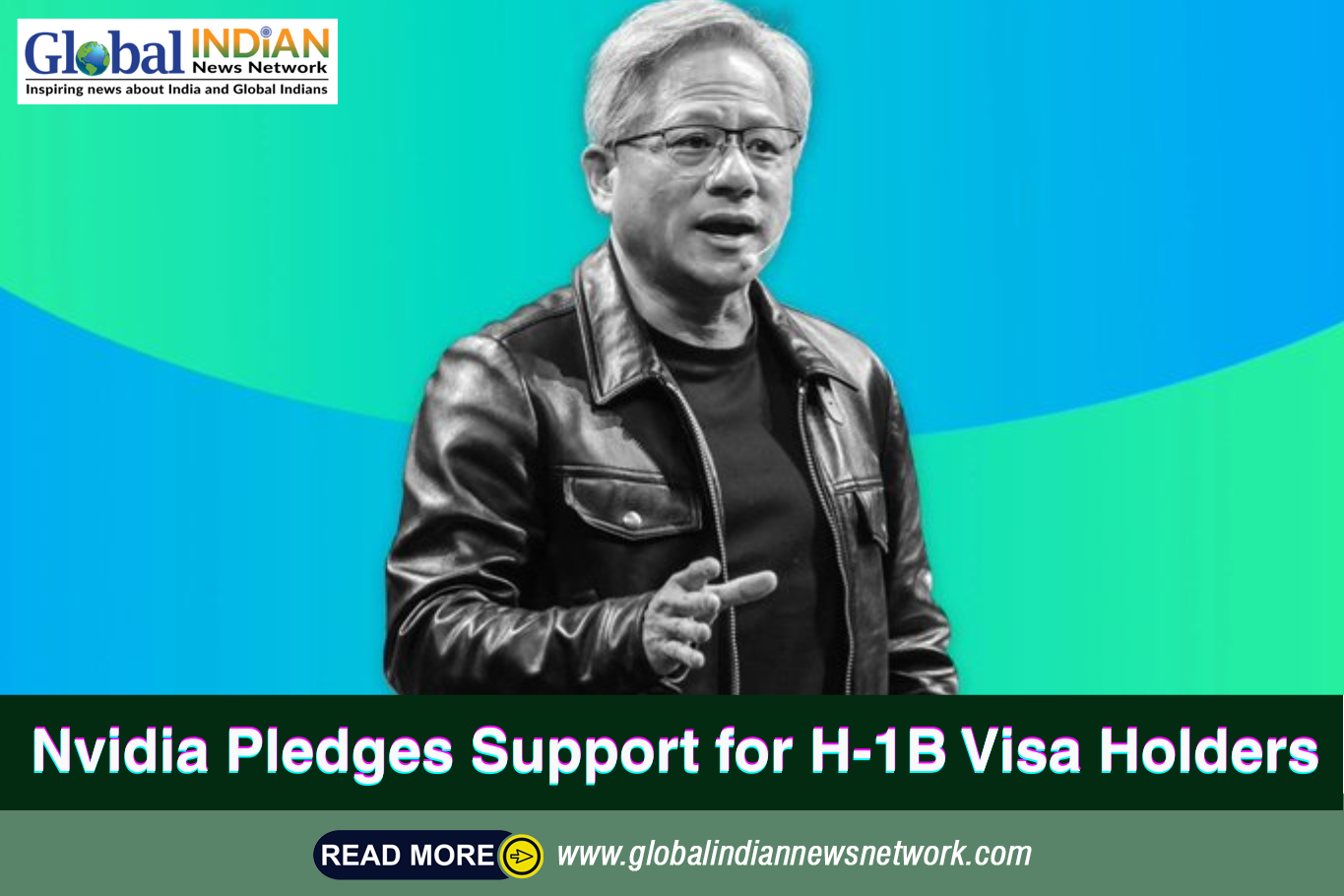
 Nvidia CEO Jensen Huang has reassured his staff that the company will maintain its support for H-1B visa applicants, covering all costs associated with applications. Huang highlighted the critical role immigration has played in the company’s growth, noting that many Nvidia employees, including himself, have benefitted from opportunities in the United States. In a note to employees, he emphasized that the company’s success is built on the talent of skilled professionals worldwide, making immigration an essential element of Nvidia’s innovation.
Huang stressed that legal immigration is vital for the US to retain its position as a global leader in technology and ideas. He reiterated that Nvidia will continue sponsoring H-1B applicants and managing all related fees, inviting employees to contact Nvidia-Immigration for any visa-related questions.
This commitment comes in response to significant recent changes in US immigration policy. On September 19, President Donald Trump signed a proclamation tightening the H-1B visa program, introducing a $100,000 application fee. The administration defended the move as an effort to incentivize hiring of American workers. Commerce Secretary Howard Lutnick described the policy as a way to prevent large corporations, particularly in the tech sector, from training and employing foreign workers at low cost.
The new rules have faced immediate legal challenges. Earlier this month, a coalition of unions, educators, and religious organizations filed a lawsuit in the Northern District of California, arguing that the president lacks authority to unilaterally alter the statutory framework established by Congress. The plaintiffs described the $100,000 fee as “unprecedented, unjustified and unlawful,” warning that exceptions within the policy could lead to selective enforcement and corruption.
Despite the heightened restrictions and substantial application costs, Nvidia’s stance underscores the company’s commitment to a diverse workforce. By continuing to sponsor H-1B visas, the tech giant aims to ensure that its global talent pool remains integral to innovation and growth. Huang’s statement also reinforces the broader industry view that foreign talent is essential for sustaining US competitiveness in high-tech sectors.
With legal challenges underway and corporate support continuing, the future of H-1B sponsorship may face uncertainty, but companies like Nvidia are signaling that immigrant professionals remain central to their operations and long-term strategies.