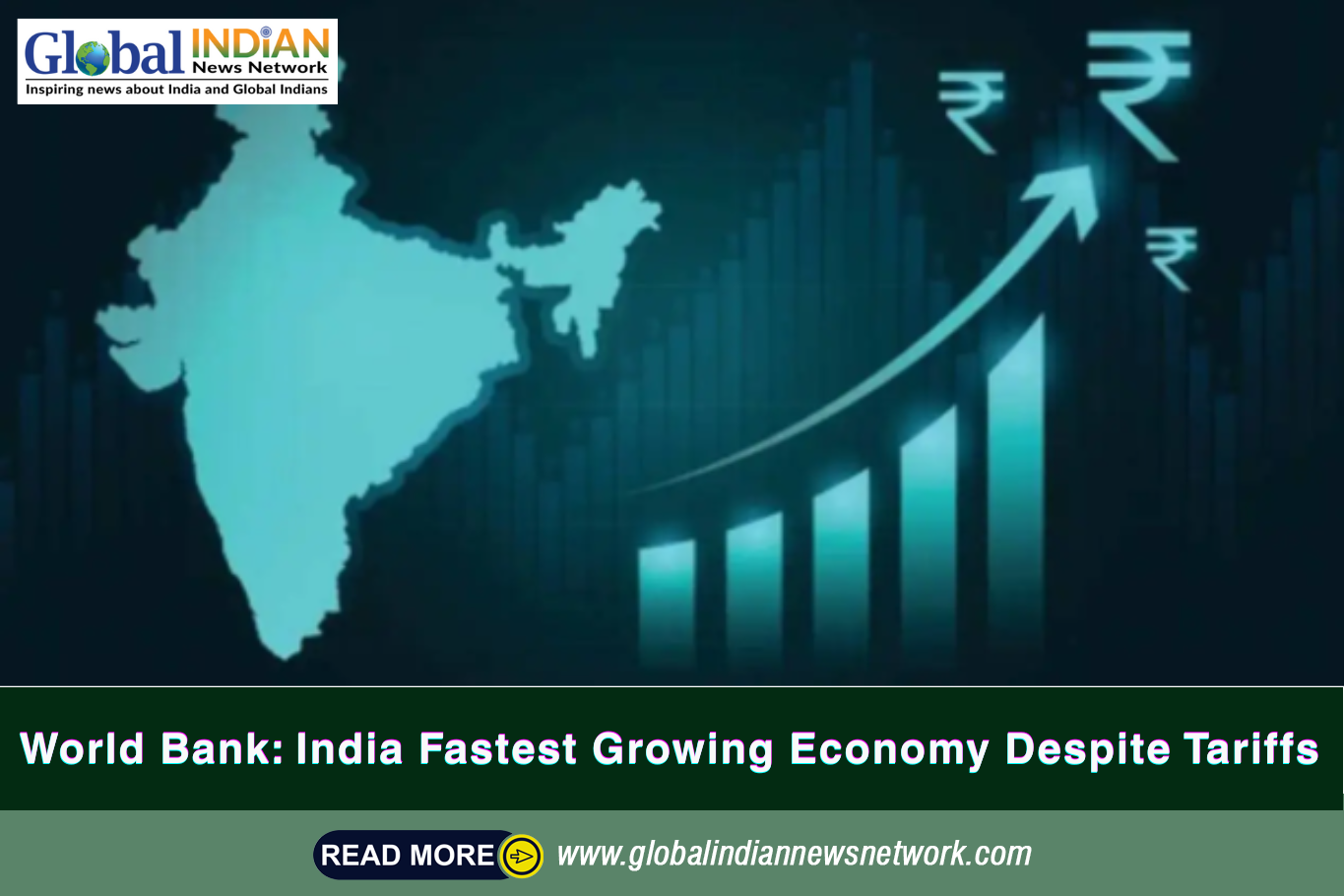
 The World Bank has revised its projection for India’s economic growth in the current fiscal year, increasing it by 20 basis points to 6.5%. The global lender attributed this optimism to India’s position as the world’s fastest-growing major economy, driven by rising consumer demand and policy reforms.
In its latest South Asia Development Update for October, the World Bank emphasized that India’s sustained consumption growth continues to underpin its robust economic performance. The report also highlighted the government’s recent steps to simplify the Goods and Services Tax (GST) system — such as reducing the number of tax slabs and easing compliance requirements — which are expected to stimulate further business activity.
However, the report issued a note of caution for FY27, citing the potential impact of the 50% tariff imposed by the US under Trump’s trade policy. These high tariffs, among the steepest in the world, are expected to affect nearly 75% of India’s exports to the United States, posing risks to industries that rely heavily on international trade. The report noted that almost 20% of India’s goods exports were directed to the US in 2024, accounting for around 2% of the nation’s GDP.
The World Bank’s updated forecast comes shortly after the Reserve Bank of India (RBI) also increased its growth outlook for FY26 from 6.5% to 6.8%, following stronger-than-expected GDP data. India’s economy expanded by 7.8% in the June quarter, surpassing market expectations due to solid private consumption, healthy investment activity, and lower-than-anticipated inflation.
According to the World Bank, the ongoing expansion in investment is fueled by significant public infrastructure spending, growing credit availability, and a more accommodative monetary environment. These factors together reinforce India’s medium-term growth trajectory despite global uncertainties.
Regionally, the World Bank raised its overall growth projection for South Asia by 50 basis points to 6.6% for 2025, but trimmed the 2026 forecast by 60 basis points to 5.8%, reflecting challenges from external trade pressures and policy adjustments across neighboring economies.
With structural reforms, steady consumption, and investment-led expansion, India continues to stand out as a key engine of growth for the global economy.