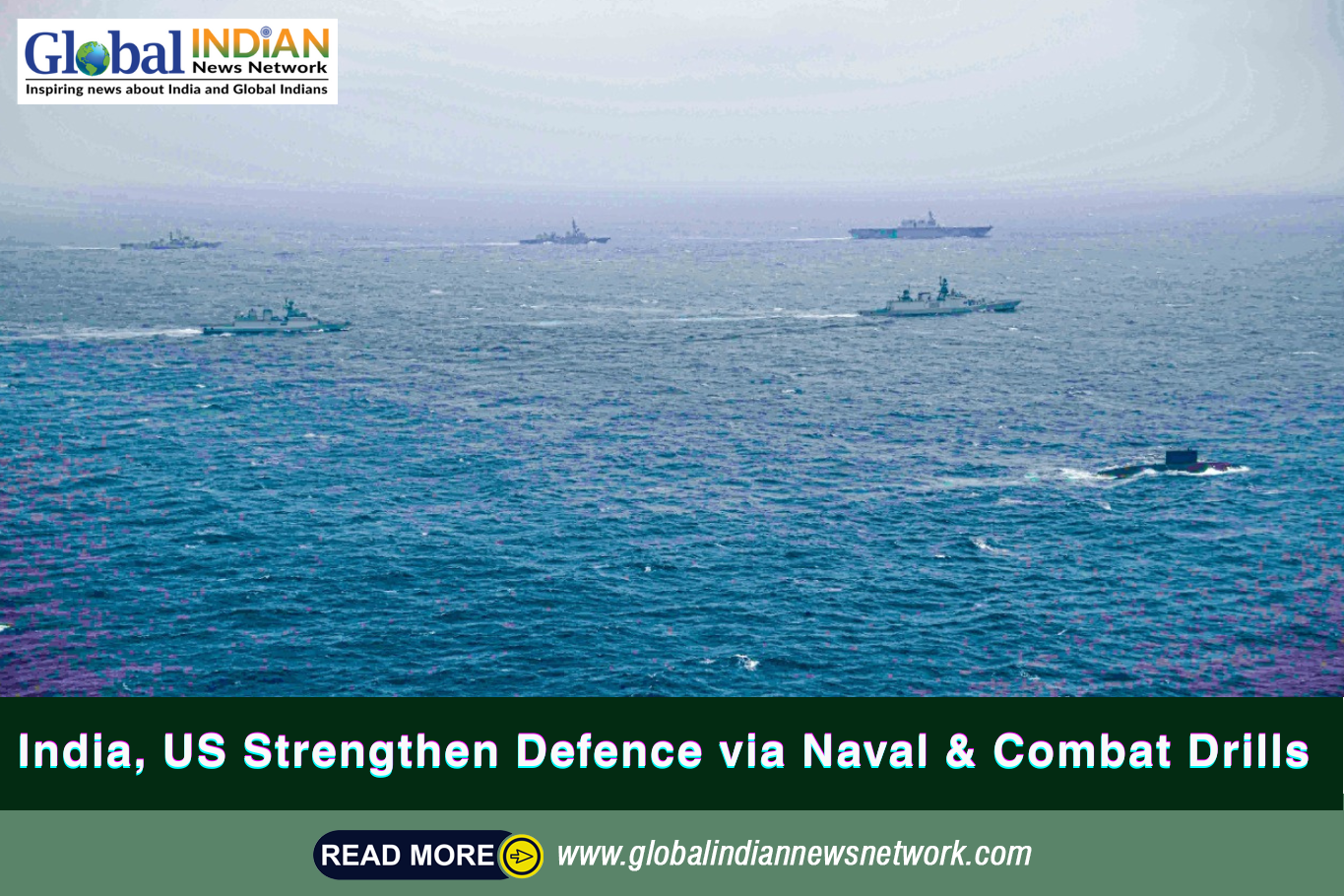
 Even as tariff-related tensions continue to shadow India-US trade relations, the militaries of both nations remain committed to strengthening defence cooperation. Over the past two decades, joint combat exercises have become a defining feature of this strategic partnership. The latest chapter unfolded on Monday when Indian Navy’s guided-missile destroyer INS Imphal joined hands with the US Navy’s USS Gridley, an Arleigh-Burke class destroyer, for maritime drills in the Arabian Sea.
According to Navy spokesperson Captain Vivek Madhwal, the exercise featured tactical manoeuvres, cross-deck flying operations, anti-piracy training (VBSS), and an exchange of operational best practices. These activities are designed to improve interoperability between the two navies and boost maritime security in critical sea lanes. The growing frequency of such engagements highlights the shared commitment to ensuring a free and open Indo-Pacific.
This naval engagement comes close on the heels of the recently concluded ‘Yudh Abhyas 2025’ exercise, held from September 1 to 14 at Fort Wainwright in Alaska. More than 450 Indian soldiers trained alongside US troops in high-altitude combat scenarios. The drills tested endurance, mountain warfare techniques, and joint operational planning, reflecting the increasing complexity and depth of bilateral defence exercises.
Looking ahead, India, the US, Japan, and Australia – the four members of the Quad grouping – are preparing for the next edition of the Malabar naval exercise, scheduled for November off the coast of Guam in the Western Pacific. First launched as a bilateral India-US initiative in 1992, Malabar has since expanded into a multilateral drill, showcasing the partners’ collective resolve to counter rising maritime challenges, particularly amid China’s assertive posturing in the Indo-Pacific.
Defence Minister Rajnath Singh has underscored the importance of tri-services integration following the success of Operation Sindoor earlier this year. His remarks reaffirm India’s focus on strengthening jointness across its armed forces while deepening collaboration with key strategic partners like the US.
Despite economic frictions, the India-US defence relationship continues to flourish, anchored by shared democratic values and security concerns in the Indo-Pacific. From naval manoeuvres in the Arabian Sea to joint combat drills in Alaska and upcoming Quad engagements, the partnership is poised to play a pivotal role in shaping regional security dynamics in the years ahead.