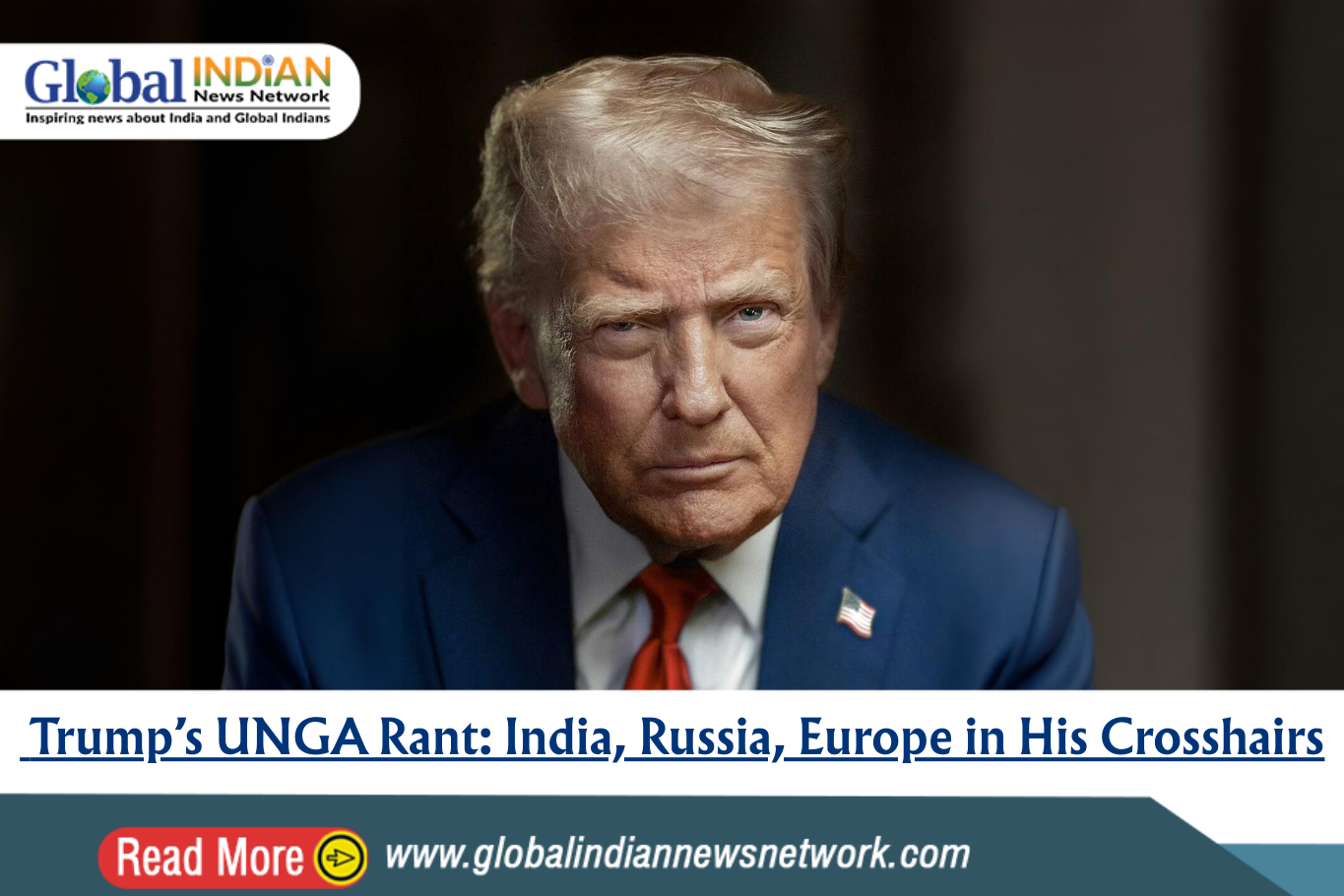
 On September 23, President Donald Trump delivered a lengthy address at the United Nations General Assembly, sharply criticizing the UN and its policies while reiterating his controversial assertion that he ended multiple conflicts, including the India-Pakistan standoff. Speaking for nearly an hour—well beyond his allotted 15 minutes—Trump lambasted the organization for “empty words” and inefficiency, referencing technical difficulties during his speech as emblematic of its shortcomings.
Trump expressed frustration that he had to personally intervene in global conflicts, claiming that the UN had failed to support his peace efforts. He cited a rejected $500 million proposal to renovate the UN building, contrasting it with a later multi-billion-dollar project he deemed inferior. The President once again claimed credit for ending seven “un-endable” wars, including the India-Pakistan conflict, a statement denied by New Delhi, which attributes the truce to direct communications between military officials of the two countries.
During his speech, Trump accused India and China of indirectly supporting Russia’s war in Ukraine through continued energy purchases and warned of imposing strong tariffs on Russia, contingent on European cooperation. Beyond foreign policy, he criticized open border policies in Europe, claiming they threaten societal stability, and dismissed global climate concerns as a “con job,” advocating continued use of carbon fuels over renewable energy sources.
In a rare positive note, Trump announced a new international initiative to enforce the Biological Weapons Convention. This program would leverage artificial intelligence to monitor and prevent the development of bioweapons, with the president emphasizing the catastrophic consequences if such weapons were deployed, suggesting the UN would be rendered irrelevant in such a scenario.
Trump’s address combined elements of a campaign-style rally with his traditional focus on sovereignty, national interest, and skepticism toward multilateral institutions. The speech underscores his administration’s preference for unilateral actions and transactional diplomacy, challenging longstanding norms of international cooperation and multilateral engagement at the UN.