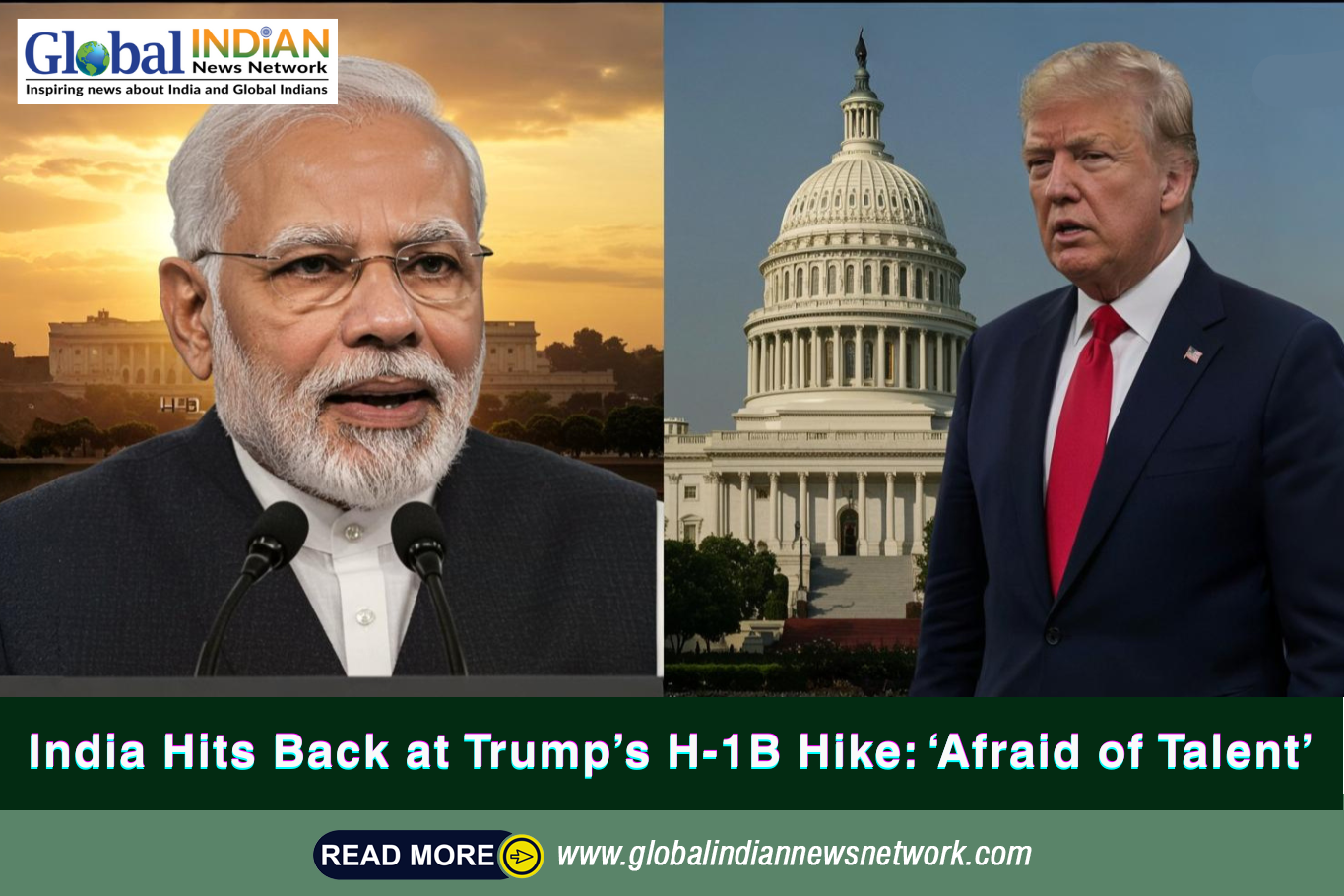
 India has strongly criticized the United States after President Donald Trump introduced a $100,000 fee for H-1B visa applicants, a move that could significantly disrupt the flow of skilled workers to America. Officials in New Delhi described the measure as one with serious humanitarian consequences, as it would impact not just professionals but also their families who depend on these work permits.
The H-1B visa, widely used by American companies to hire foreign talent in fields such as IT, engineering, and healthcare, has long been a pathway for Indian professionals. In 2024, India accounted for nearly 71% of all approved H-1B visas, making it the single largest beneficiary of the program. However, the Trump administration defended the decision, arguing that the visas were being exploited to replace U.S. workers with cheaper labor from abroad. The White House claimed that H-1B holders already represent 65% of the U.S. IT workforce, fueling concerns about outsourcing.
India’s commerce minister, Piyush Goyal, remarked that the decision reflected Washington’s fear of Indian talent. The Ministry of External Affairs also issued a statement urging U.S. authorities to reconsider, stressing that the exchange of skilled workers had been mutually beneficial for both economies.
The announcement sent shockwaves through India’s technology sector. Stock prices of leading IT firms such as Infosys and Tata Consultancy Services dropped on Monday morning as investors feared long-term disruption. Nasscom, the Indian IT trade body, warned that the move could create uncertainty for companies, professionals, and students, while also damaging America’s innovation ecosystem.
Confusion spread quickly among workers as immigration lawyers reported a surge of panic calls over the weekend. Before clarifications arrived, companies like Microsoft, Amazon, and Tata Consultancy Services advised employees to return to the U.S. immediately or postpone travel, triggering last-minute rushes and canceled plans. The White House later confirmed that the rule applied only to new visa applicants, not to renewals or existing holders.
Still, the uncertainty rattled many. One Indian professional described the situation as “absolute panic,” likening the fee to a travel ban, while another questioned whether building a life in the U.S. was still realistic given shifting immigration rules.
China, the second-largest source of H-1B workers with nearly 12% of approvals, has not officially responded yet. But on Chinese social media, frustration ran high, with users accusing Washington of deliberately targeting foreign professionals.
For India, the issue has escalated into a matter of urgency. Telangana’s chief minister, Revanth Reddy, urged Prime Minister Narendra Modi to treat the crisis as a “war footing” matter, warning of unimaginable hardship for Indian IT workers in America.