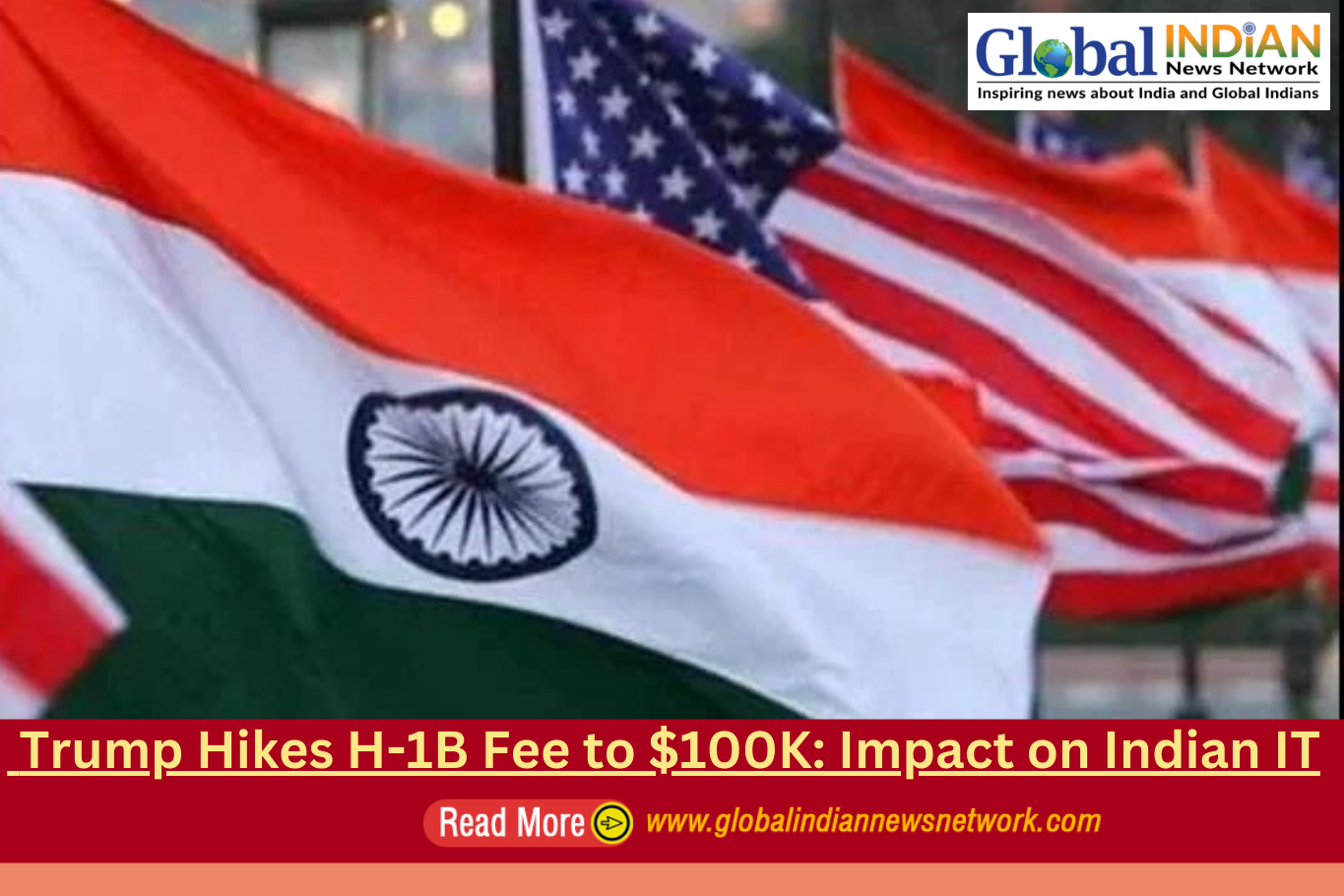
 The Trump administration has announced a dramatic increase in H-1B visa application fees, raising them to $100,000 per petition effective September 21, 2025. The move aims to curb misuse of the program while giving preference to highly paid and specialized foreign professionals. This change is expected to have a significant impact on Indian IT employees and US companies heavily reliant on foreign STEM talent.
The H-1B visa program allows US firms to hire foreign workers in specialized roles across IT, engineering, science, mathematics, and medicine. Previously, fees ranged from $1,700 to $4,500, meaning the new charge represents a staggering 2,111% increase. The policy is scheduled for 12 months and could be extended after federal review.
Officials cited widespread exploitation of the program in the IT sector, where companies replaced American employees with lower-paid overseas workers. The presidential directive also instructs authorities to prioritize higher salaries and grants discretion to the Secretary of Homeland Security to approve exceptions serving national interests.
Indian professionals account for a major portion of H-1B recipients, with companies like Amazon, TCS, Microsoft, Meta, Apple, and Google among the most affected. Amazon leads with over 10,000 approved visas, followed by TCS with 5,505. Other notable companies include Infosys, Wipro, Tech Mahindra Americas, and Deloitte.
Recent reports indicate that IT positions dominate H-1B allocations, increasing from 32% in FY2003 to over 65% in the past five fiscal years. Several major employers reportedly downsized American workforces while hiring thousands of H-1B workers, cutting labor costs by as much as 36% on entry-level positions. Some firms reduced thousands of US jobs while onboarding tens of thousands of foreign professionals, highlighting systemic reliance on overseas STEM talent.
This unprecedented visa fee hike is expected to reshape hiring strategies for Indian IT professionals and US tech companies, potentially reducing reliance on H-1B visas and altering the US STEM workforce landscape for the coming year.