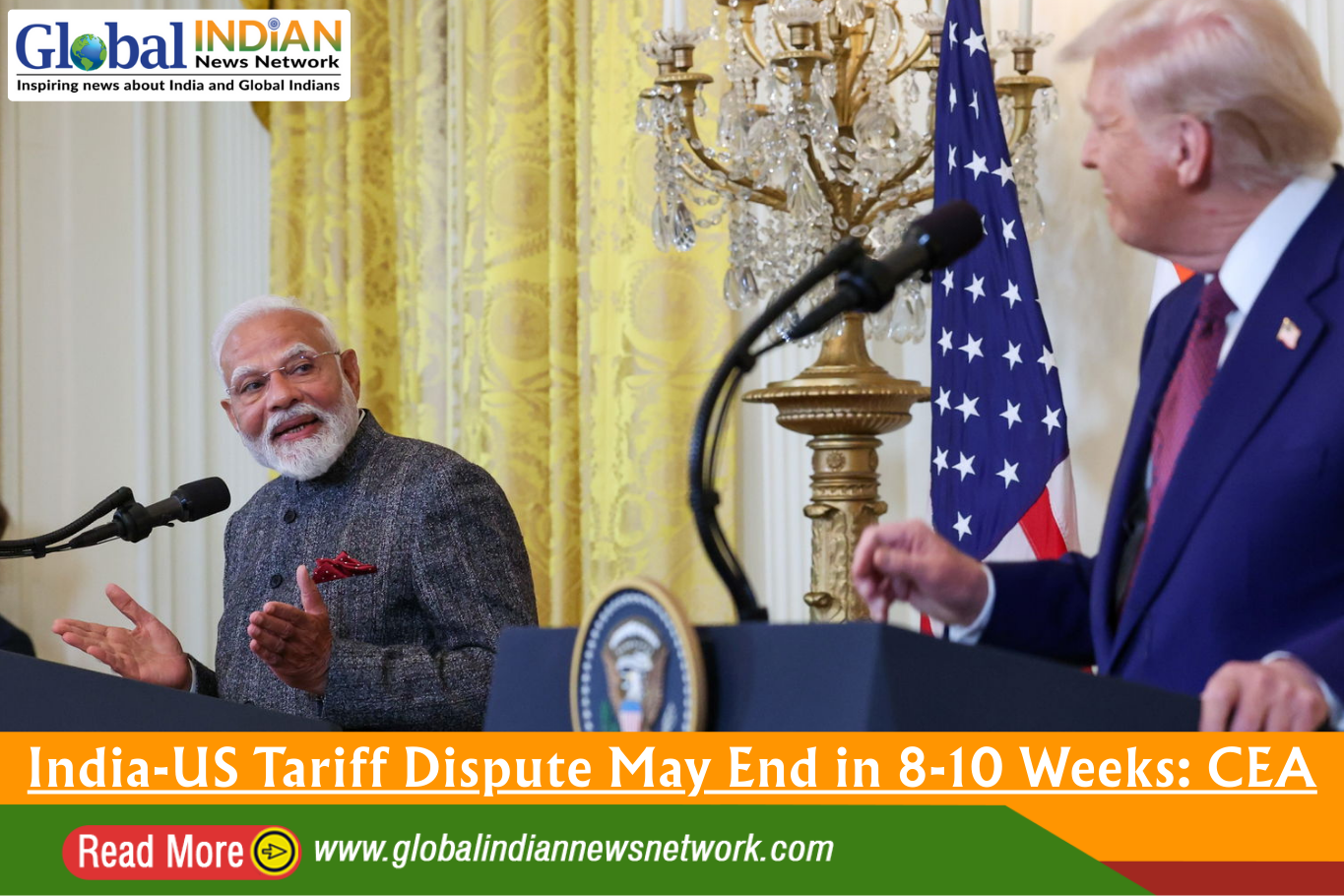
 Chief Economic Advisor (CEA) V Anantha Nageswaran said on Thursday that a solution to the ongoing tariff dispute between India and the United States could emerge within the next eight to ten weeks. Speaking at an interactive session hosted by the Bharat Chamber of Commerce, he noted that discussions between New Delhi and Washington were actively progressing behind the scenes.
“My sense is that we will likely see a resolution to the tariff challenge within the next two months,” Nageswaran remarked, expressing optimism about the pace of ongoing talks.
The US imposed a steep 50% tariff on Indian goods entering American markets starting August 27. Of this, 25% was applied as a penalty linked to India’s continued purchase of Russian oil. The measure has significantly impacted India’s labor-intensive export industries, particularly shrimp, textiles, leather, and footwear.
The trade strain traces back to the Trump administration, which had unilaterally introduced sweeping tariffs on Indian goods. New Delhi has consistently labeled these duties as “unjustified,” arguing they unfairly target Indian exports and risk damaging long-standing economic ties.
The announcement of tariffs coincided with delicate negotiations between both governments over a potential bilateral trade agreement (BTA). Despite the heightened tensions, chief negotiators from both sides resumed talks earlier this week.
Representing the US, Brendan Lynch, Assistant Trade Representative for South and Central Asia, is leading discussions. On the Indian side, Rajesh Agrawal, Special Secretary in the Department of Commerce, is spearheading negotiations. Since March, both countries have held five rounds of discussions, with a sixth round scheduled for late August. However, the US delegation’s planned visit to New Delhi was canceled amid the escalating dispute.
President Donald Trump, in an interview with Fox and Friends last week, admitted that his administration’s decision to impose tariffs on India was difficult. “India was their biggest customer. I put a 50% tariff on India because they’re buying oil from Russia. That’s not an easy thing to do, and it causes a rift,” Trump said.
With ongoing dialogue and both sides signaling readiness to compromise, the prospect of resolving the tariff standoff appears brighter. A breakthrough within the coming weeks could help restore momentum in India-US trade relations, which are vital for both economies.