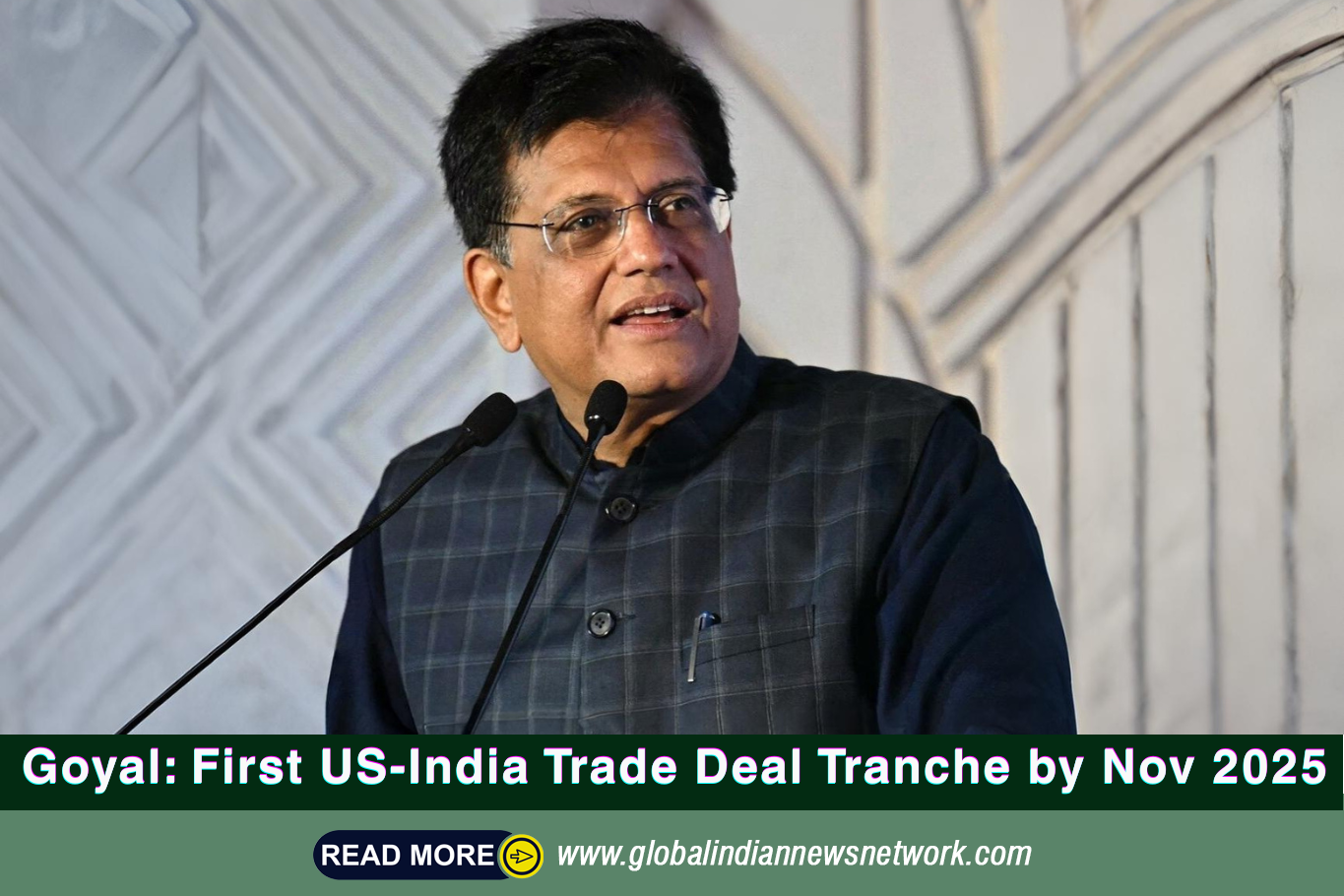
 Union Commerce and Industry Minister Piyush Goyal announced on Thursday that the first stage of a trade agreement between India and the United States should be completed by November 2025. Addressing the media in Patna, Goyal explained that both Prime Minister Narendra Modi and President Donald Trump had directed their ministers earlier this year to work toward a meaningful agreement within a clear timeframe.
“In February 2025, our leaders instructed us to ensure the first tranche of the agreement is ready by November. Since March, discussions have been moving forward constructively. Progress is visible, and both governments are satisfied with the positive environment surrounding these talks,” Goyal said.
The announcement follows signals from Washington that the tone of the trade relationship is improving. President Trump, writing on Truth Social, noted that both sides are actively working to resolve differences. “I am pleased to announce that India and the United States are continuing negotiations to address the trade barriers between our two nations. I look forward to speaking with my very good friend, Prime Minister Modi, in the upcoming weeks. I am confident we will reach a successful conclusion for both of our great countries,” Trump stated.
This comes shortly after Trump described the bilateral relationship as “very special” and reassured that he and Modi share a lasting friendship, adding that there is “nothing to worry about.”
Prime Minister Modi echoed this sentiment in a post on X, reaffirming India’s commitment to advancing trade ties. “India and the US are close friends and natural partners. I am confident that our trade negotiations will pave the way for unlocking the limitless potential of the India-US partnership. Our teams are working to conclude these discussions at the earliest. I look forward to speaking with President Trump as we aim for a brighter, more prosperous future for our people,” Modi wrote.
The optimism surrounding these statements comes at a time when India is facing economic pressures tied to global volatility. The United States had earlier imposed a 50% tariff on Indian goods, adding another 25% penalty over New Delhi’s continued purchases of Russian crude oil. Washington has argued that such imports indirectly bolster Moscow’s war effort in Ukraine.
Despite these challenges, both sides are signaling determination to reset their trade ties and build a framework that strengthens the long-term partnership. The November deadline now stands as a critical milestone for delivering the first phase of this long-awaited agreement.