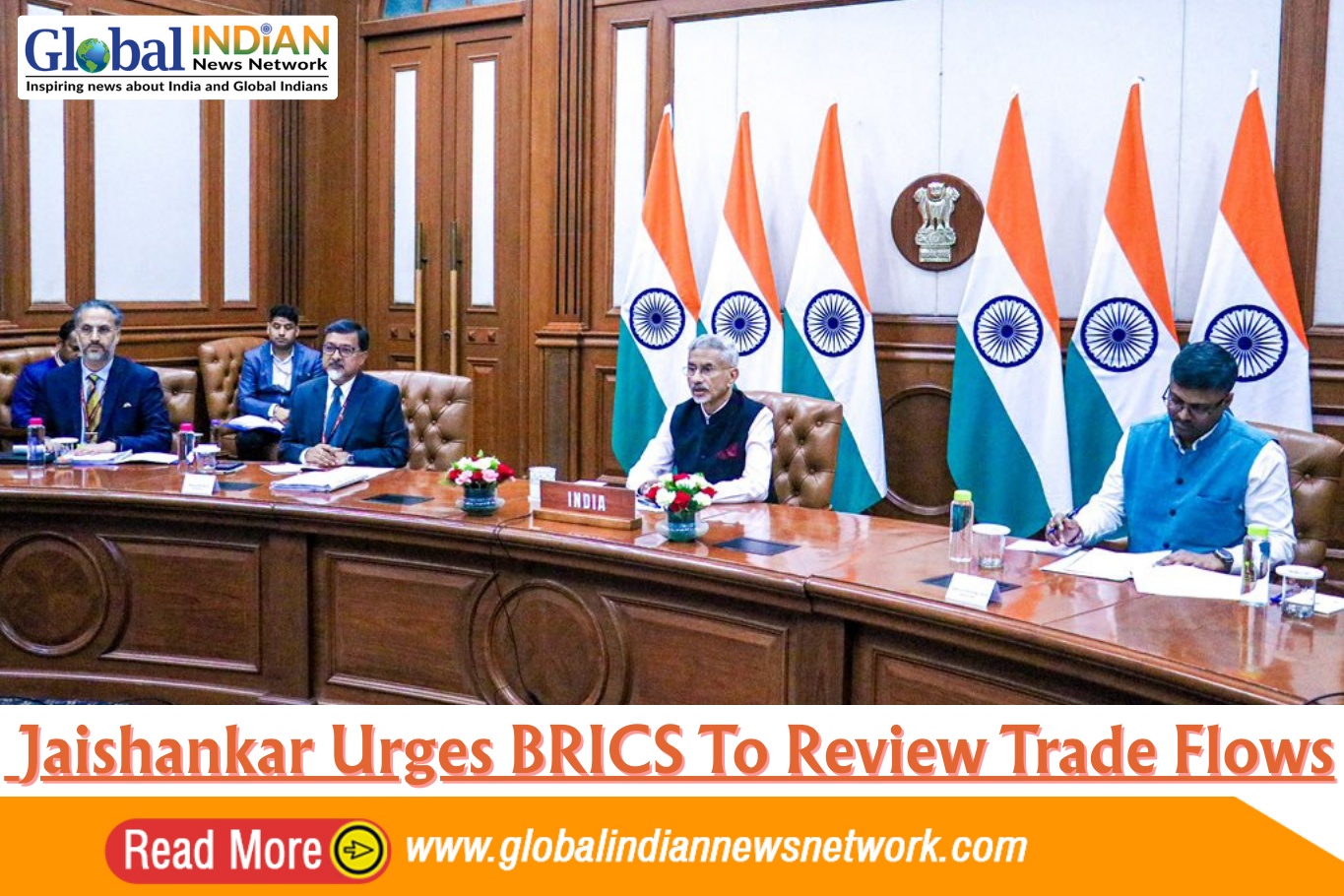
 External Affairs Minister S. Jaishankar on Monday emphasized that BRICS nations must evaluate trade flows within the grouping to address imbalances and set an example for sustainable global trade. He made the remarks while representing Prime Minister Narendra Modi at a virtual BRICS leaders’ meeting, stressing the urgent need for a stable and predictable environment for global commerce and investment.
“Trade patterns and market access dominate today’s economic discussions. The world requires cooperative approaches, not restrictive barriers or the linking of trade with unrelated issues,” Jaishankar stated. He highlighted India’s own trade deficits with some BRICS partners, urging the bloc to deliver swift solutions.
The minister’s comments came against the backdrop of heightened India-US tensions following Washington’s imposition of additional tariffs on Indian goods over Russian oil purchases. Jaishankar had previously criticized the move, pointing out that China, not India, is the largest buyer of Russian crude.
Addressing the broader global context, Jaishankar declared that the multilateral system is faltering. He cited the lingering effects of the pandemic, conflicts in Ukraine and West Asia, unstable trade and investment flows, intensifying climate events, and a slowing Sustainable Development Goals (SDG) agenda. He called for meaningful reform of multilateral institutions ahead of the upcoming UN General Assembly.
In a post on X, Jaishankar summarized India’s message: BRICS must work to stabilize the global economy, shield the Global South from conflict impacts, and push for multilateral reforms.
He also underlined the importance of fair, transparent, and inclusive economic practices. To withstand future disruptions, nations must develop resilient, shorter, and diversified supply chains while decentralizing manufacturing across more regions. This, he said, would boost self-reliance and reduce vulnerabilities during crises.
Highlighting India’s position, Jaishankar stressed that the international trading system must remain rooted in openness, equity, and a rules-based framework, with special support for developing nations.
On conflicts, he noted the Global South’s worsening food, energy, and fertilizer insecurity. Targeting shipping, he said, damages both trade and livelihoods. Only diplomacy and early cessation of hostilities can deliver lasting solutions.
Turning to climate, he warned that both action and justice are slipping down global priorities. He urged fresh initiatives and highlighted Indian-led platforms such as the International Solar Alliance, the Coalition for Disaster Resilient Infrastructure, and the Global Biofuels Alliance as models for collective progress.