 China’s Ambassador to India, Xu Feihong, has urged New Delhi and Beijing to work together in rejecting tariff measures and trade wars imposed by the United States. Speaking at an event on Monday, Xu emphasized that both India and China, as two leading Asian economies, must safeguard the multilateral trading system and defend the collective interests of developing nations.
He criticized Washington’s recent move to impose a steep 50% tariff on Indian goods, calling it “unfair and unreasonable.” Xu argued that the US, which has historically benefited from free trade, is now exploiting tariffs as a weapon to demand exorbitant prices. He insisted that India and China should instead promote inclusive globalization, cooperation, and an equal multipolar world.
Xu made these remarks during the 80th anniversary of the victory in the Chinese People’s War of Resistance against Japanese Aggression. He said the world is experiencing profound shifts, with rising unilateralism, growing acts of bullying, and new global turbulence. Humanity, he noted, stands at a crossroads between peace and conflict, dialogue and confrontation, cooperation and zero-sum rivalry.
Focusing on India-China relations, Xu stressed the importance of shared responsibility. He noted that both nations should pursue peaceful coexistence as neighbors, contribute to global governance, and strengthen world peace. This year marks the 75th anniversary of diplomatic ties between the two nations—a relationship that has seen challenges but has largely been guided by cooperation.
Trade between India and China has continued to expand despite global headwinds. In the first seven months of 2025, bilateral trade in goods reached $88 billion, reflecting a 10.5% year-on-year increase. Xu said China is ready to align its development strategies with India and share modernization experience.
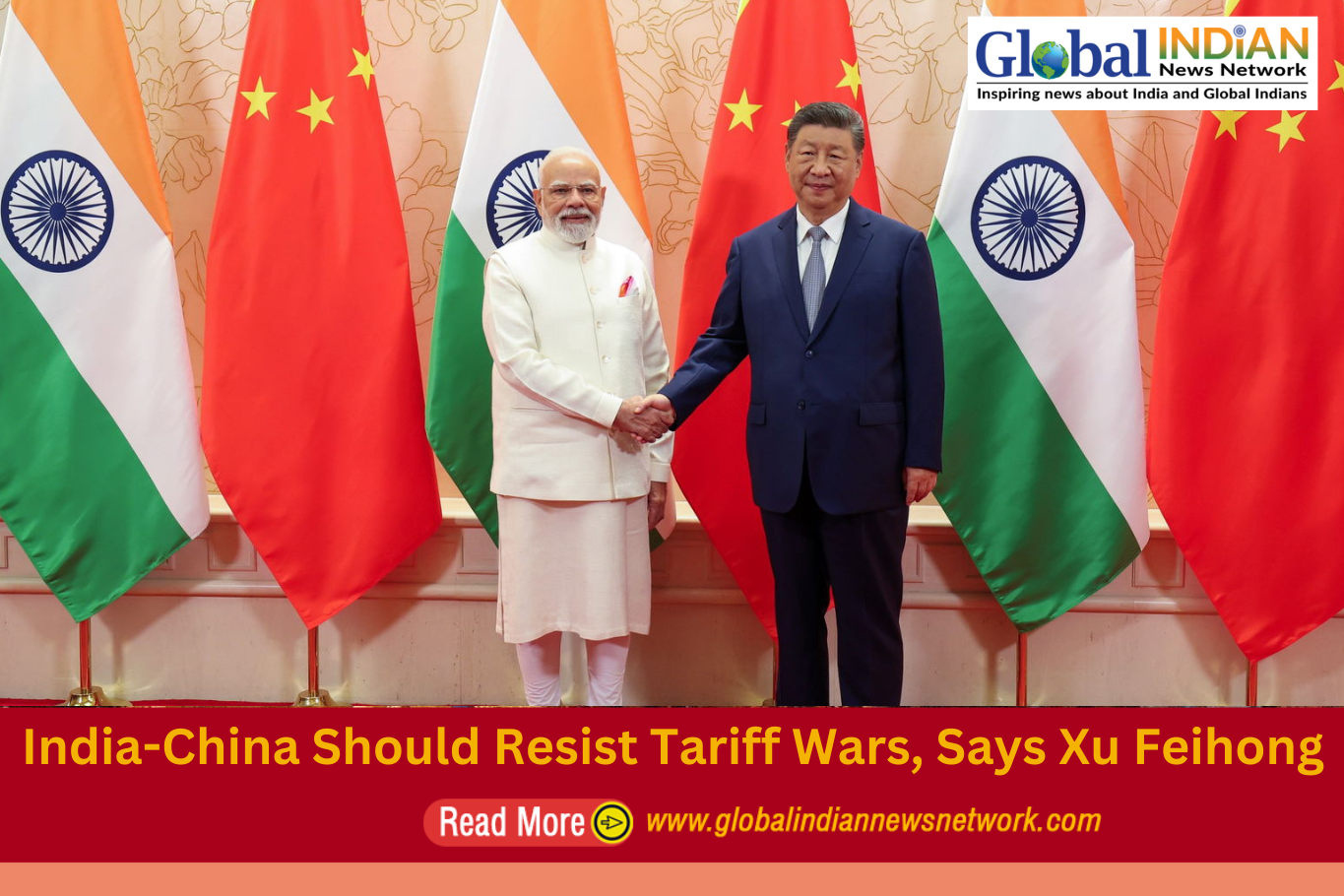
Highlighting recent progress, Xu noted that President Xi Jinping and Prime Minister Narendra Modi met twice in Kazan and Tianjin over the past year, setting the tone for constructive engagement. Their governments have implemented key agreements, with active exchanges between foreign ministers, defense officials, and special representatives. These interactions, Xu said, have contributed to the steady improvement of relations.
Additionally, China has issued more than 240,000 visas to Indian citizens in 2025, including for pilgrimages to sacred sites in Tibet such as Kangrinboqe and Mapam Yuco, underscoring a growing people-to-people connection.