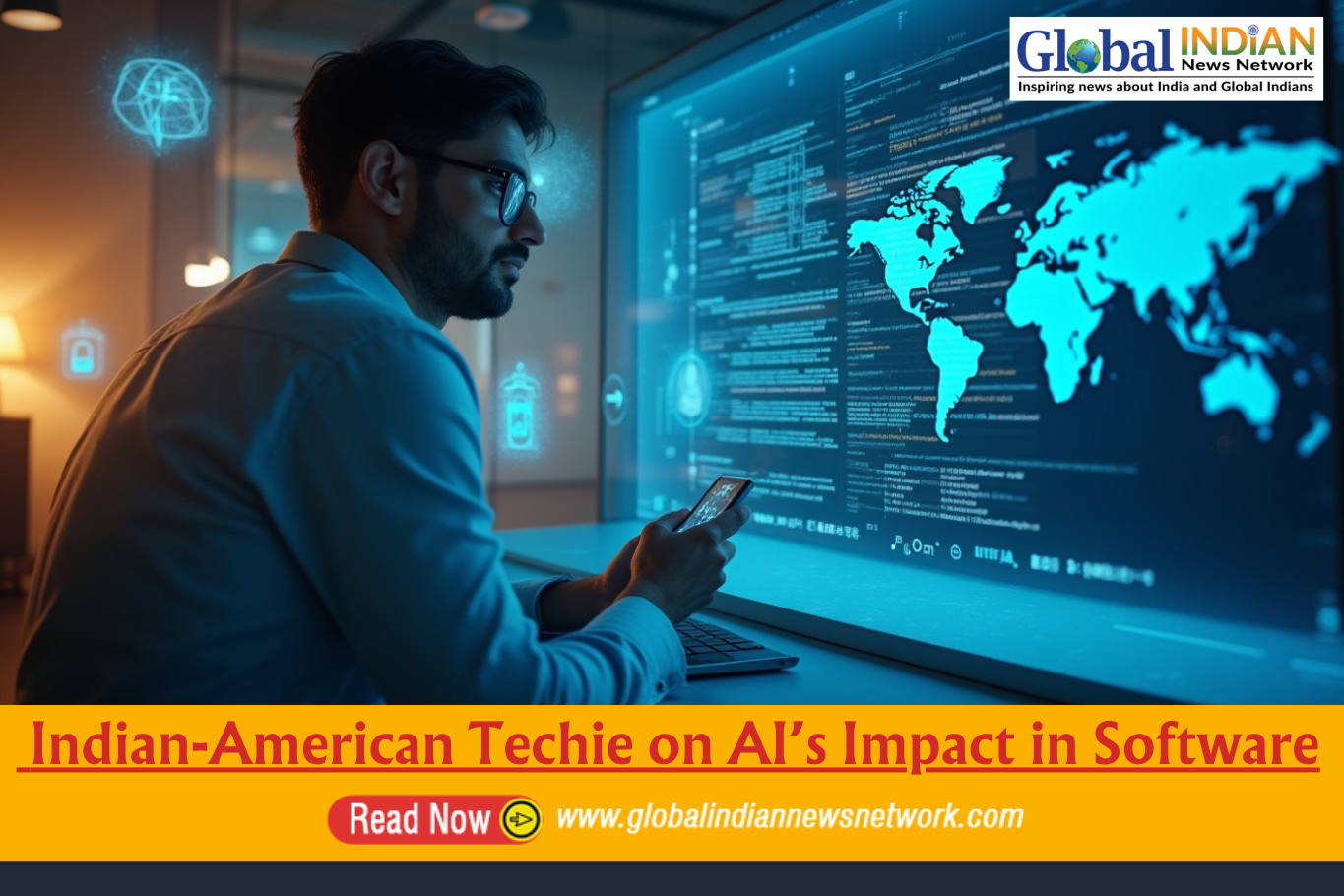
 Harsh Varshney, an Indian American machine learning software engineer at Google, recently shared his perspective on how artificial intelligence (AI) is redefining the role of software engineers. Writing in a blog for Business Insider, he described the rapid evolution of the tech sector as one of the most transformative and exciting shifts in history.
Varshney explained that AI has revolutionized workflows, turning tasks that once spanned several days into jobs completed within hours. This shift has heightened expectations—software engineers today must design not only functional systems but also intelligent ones that reflect the growing complexity of the real world.
“The expectation is no longer to simply build something that works—it must be smart,” Varshney emphasized. He added that the way engineers understand and use data has fundamentally changed with the rise of AI.
Generative AI, in particular, has made it crucial for software engineers to expand their expertise into machine learning, data science, and AI-focused technologies. While automation will continue handling repetitive assignments, human engineers remain essential for creativity, innovation, and solving complex problems that require critical thinking.
Varshney also pointed out that AI is opening up fresh opportunities in the industry. Engineers are increasingly able to focus on high-level design, strategic decision-making, and innovation-driven problem-solving. Companies, recognizing these shifts, are prioritizing AI engineering roles more than ever, fueling demand for professionals with these specialized skills.
Looking ahead, Varshney argued that the future of software engineering will be shaped by those who embrace AI both as a building material and as a collaborative tool. “The engineers who will define the next decade are those who treat AI as both the resource they build with and the intelligent partner they build alongside,” he wrote.
Ultimately, Varshney’s reflections highlight how AI is no longer just a trend but a cornerstone of modern software development, setting new benchmarks for innovation and redefining the role of engineers in the digital age.