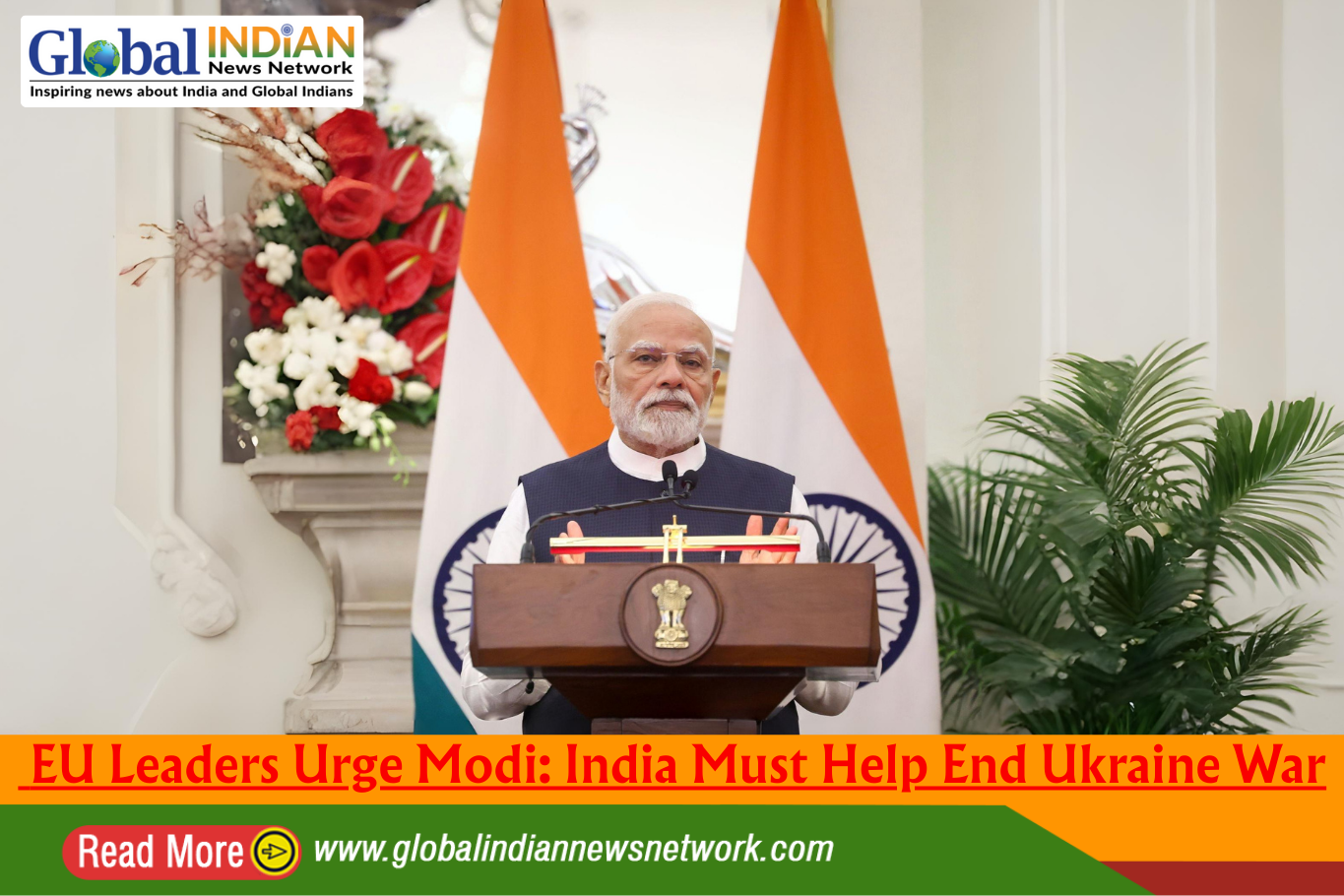
 Prime Minister Narendra Modi recently joined a trilateral call with European Council President Antonio Costa and European Commission President Ursula von der Leyen to review the current state of India-EU relations and push forward areas of mutual cooperation.
During the discussion, all three leaders welcomed progress in crucial sectors such as trade, technology, investment, defense, sustainability, and supply chain security. They reiterated their determination to fast-track the long-pending India-EU Free Trade Agreement (FTA) while highlighting the importance of implementing the India-Middle East-Europe Economic Corridor (IMEEC).
Von der Leyen underlined the global consequences of the ongoing war in Ukraine, pointing out its negative impact on international security and economic stability. She acknowledged India’s constructive engagement with Ukrainian President Volodymyr Zelenskyy and emphasized that India holds a key role in nudging Russia toward ending the conflict. “This war threatens not just Europe but the stability of the entire world,” she posted on X, welcoming India’s diplomatic outreach.
Prime Minister Modi invited both EU leaders to visit India for the next India-EU Summit, scheduled for early 2026. The summit is expected to carry forward the momentum from the EU College of Commissioners’ visit earlier this year. Von der Leyen also confirmed on X that both sides plan to finalize a joint strategic agenda during the summit.
Apart from trade and investment, the leaders exchanged views on pressing global concerns, particularly the Ukraine conflict. Prime Minister Modi reiterated India’s consistent call for peace, dialogue, and stability, stating that a negotiated solution is the only sustainable path forward.
Later, Modi shared details of the discussion on X, describing the conversation as “very good” and reaffirming shared goals for the India-EU FTA and IMEEC corridor. He added that both sides exchanged perspectives on regional and global developments, including efforts to end the Ukraine war.
Both India and the EU agreed to stay closely engaged to deepen their strategic partnership, grounded in democratic values and a common vision of global peace, prosperity, and resilience.