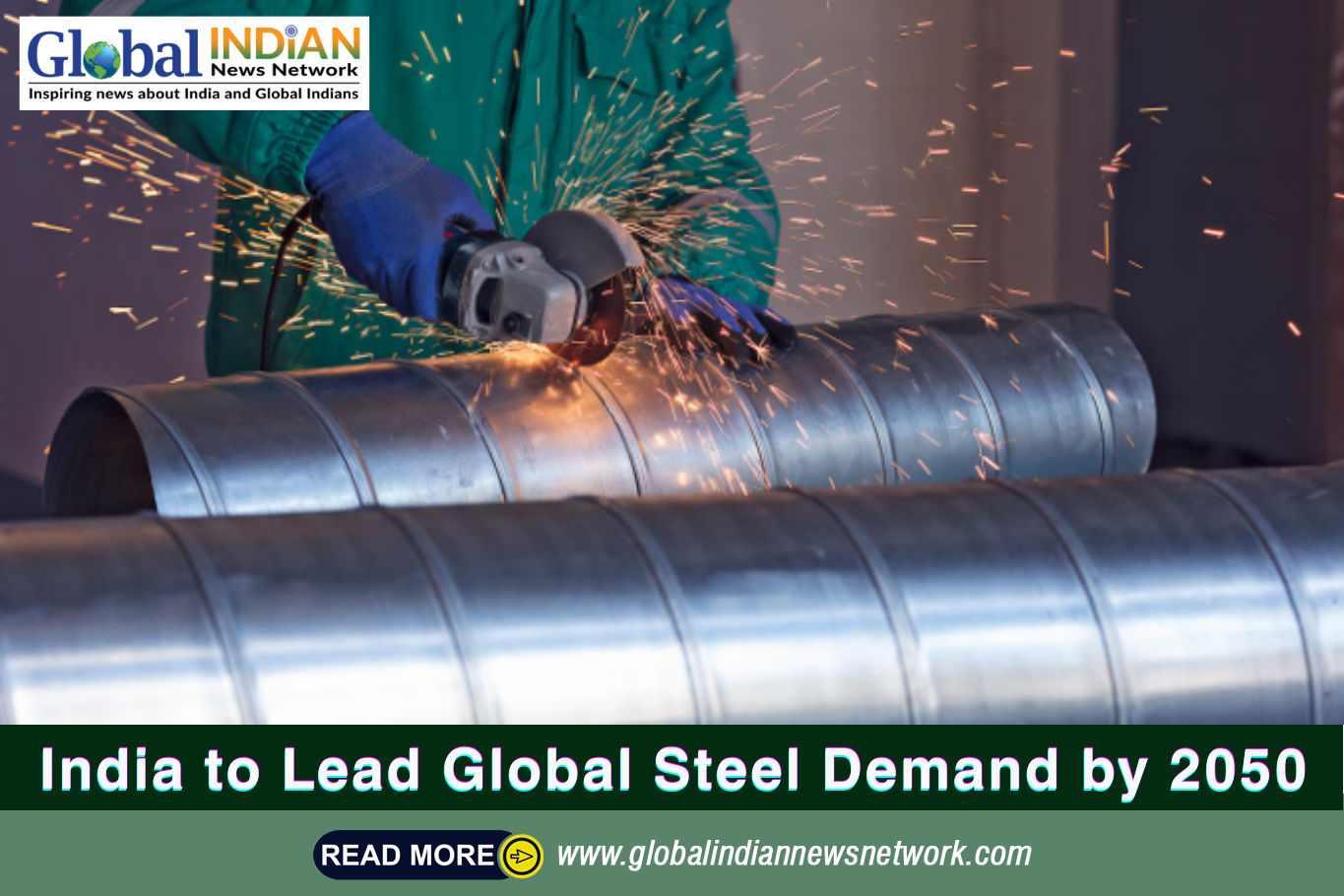
 India is emerging as the future powerhouse of the global steel industry, with demand projected to surge nearly threefold by 2050, according to research firm Wood Mackenzie. As China’s dominance in steel consumption fades, India is expected to become the central driver of global growth, fueled by robust domestic infrastructure and industrial expansion.
In 2024, China accounted for almost half of the world’s steel demand at 49%. However, the country is forecast to see annual declines of five to seven million tonnes over the next decade. By 2050, its global share will shrink dramatically to 31%. Meanwhile, India, which represented just 8% of global steel demand in 2024, is anticipated to climb to 21% by mid-century, nearly tripling its consumption.
This remarkable rise in demand will be powered by heavy government investment in transport corridors, renewable energy projects, and rapid urban development. The automobile and machinery industries are also expected to play a major role in sustaining long-term steel consumption.
India’s momentum is already visible. The country recorded an 8% rise in steel demand during 2024 and is forecast to grow more than 7% in 2025. Beyond this near-term expansion, India is likely to settle into a steady long-term growth trajectory of 4–5% annually.
Southeast Asia is also strengthening its global presence. Countries like Vietnam, Thailand, and Indonesia are projected to double their collective share of world steel consumption from 5% in 2024 to 10% by 2050. This positions the region as another critical growth center in the decades ahead.
The global steel trade landscape is set for significant changes as well. Protectionist policies and carbon taxes are expected to reduce China’s longstanding export dominance. Instead of a quarter of steel output being traded globally, as is the case today, only around 12% is projected to cross borders in the future. This shift will accelerate regionalization, giving India and Southeast Asia a far greater role in shaping steel demand patterns.
Wood Mackenzie notes that these evolving dynamics will transform the global steel sector, redistributing influence from China toward South and Southeast Asia. For India, the outlook is clear—its expanding infrastructure, urban growth, and industrial strength will ensure its place as a global steel leader by 2050.