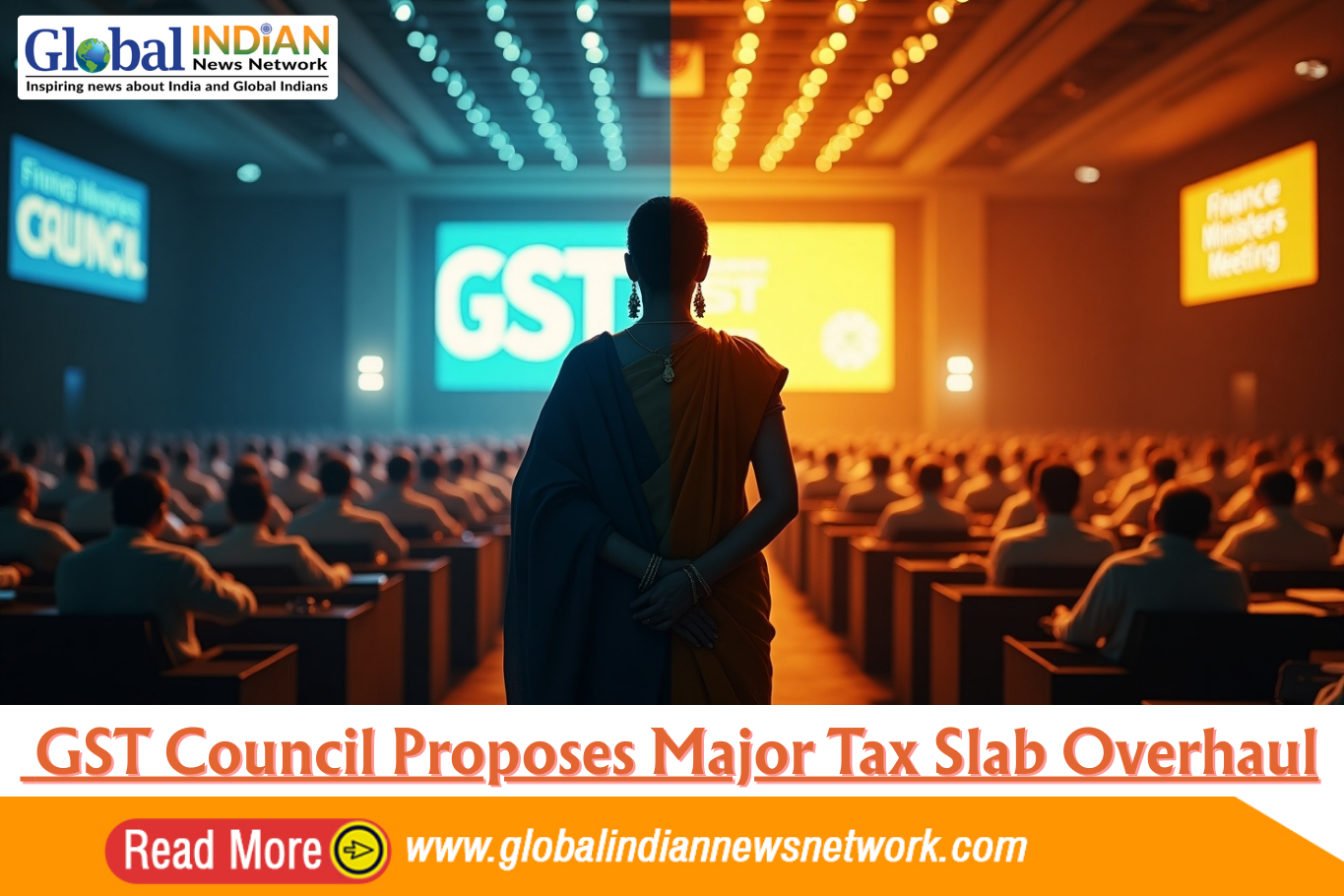
 The Goods and Services Tax (GST) Council, chaired by Finance Minister Nirmala Sitharaman, began its 56th meeting in New Delhi this week, focusing on sweeping reforms aimed at simplifying India’s indirect tax system. The two-day session, held on September 3-4, discussed moving away from the current four-tier GST framework to a more streamlined two-tier structure.
At present, goods and services are taxed under four slabs of 5%, 12%, 18%, and 28%. The Council is now considering retaining just two primary slabs—5% for essentials and 18% for non-essentials—while introducing a special 40% rate for so-called “sin goods.” These include items like tobacco, pan masala, alcohol, sugary drinks, gambling services, and high-end cars priced above $600,000.
Reports indicate that nearly 175 items could see tax reductions under this overhaul. Everyday goods such as feeding bottles, bicycles, umbrellas, jute handbags, footwear under $120, and furniture may move from the 12% to the 5% bracket, lowering their retail prices. Similarly, food products including condensed milk, dried fruits, frozen vegetables, pasta, jams, and traditional Indian snacks could also become cheaper.
The move is also expected to benefit households by reducing costs on medicines, electronics, and agricultural equipment. Insurance premiums and education services are under review, with the government considering partial or full tax exemptions on health and life insurance to ease consumer expenses. However, such exemptions could lead to a potential revenue loss of around $1.2–1.4 billion annually.
Eight sectors—textiles, fertilisers, agriculture, renewable energy, handicrafts, healthcare, automotive, and insurance—stand to gain significantly if the reforms are implemented. Automobiles are of particular focus, with entry-level cars likely to fall into the 18% slab, while SUVs and luxury vehicles would be placed in the 40% category.
The Council’s proposal has won support from several states, including Assam and Andhra Pradesh, which see the rationalisation as a step toward benefiting common citizens. However, opposition-ruled states have demanded clear compensation from the Centre for revenue shortfalls arising from reduced tax collections.
If approved, these reforms could not only reduce the tax burden on consumers but also stimulate demand, boost economic activity, and simplify compliance for businesses.