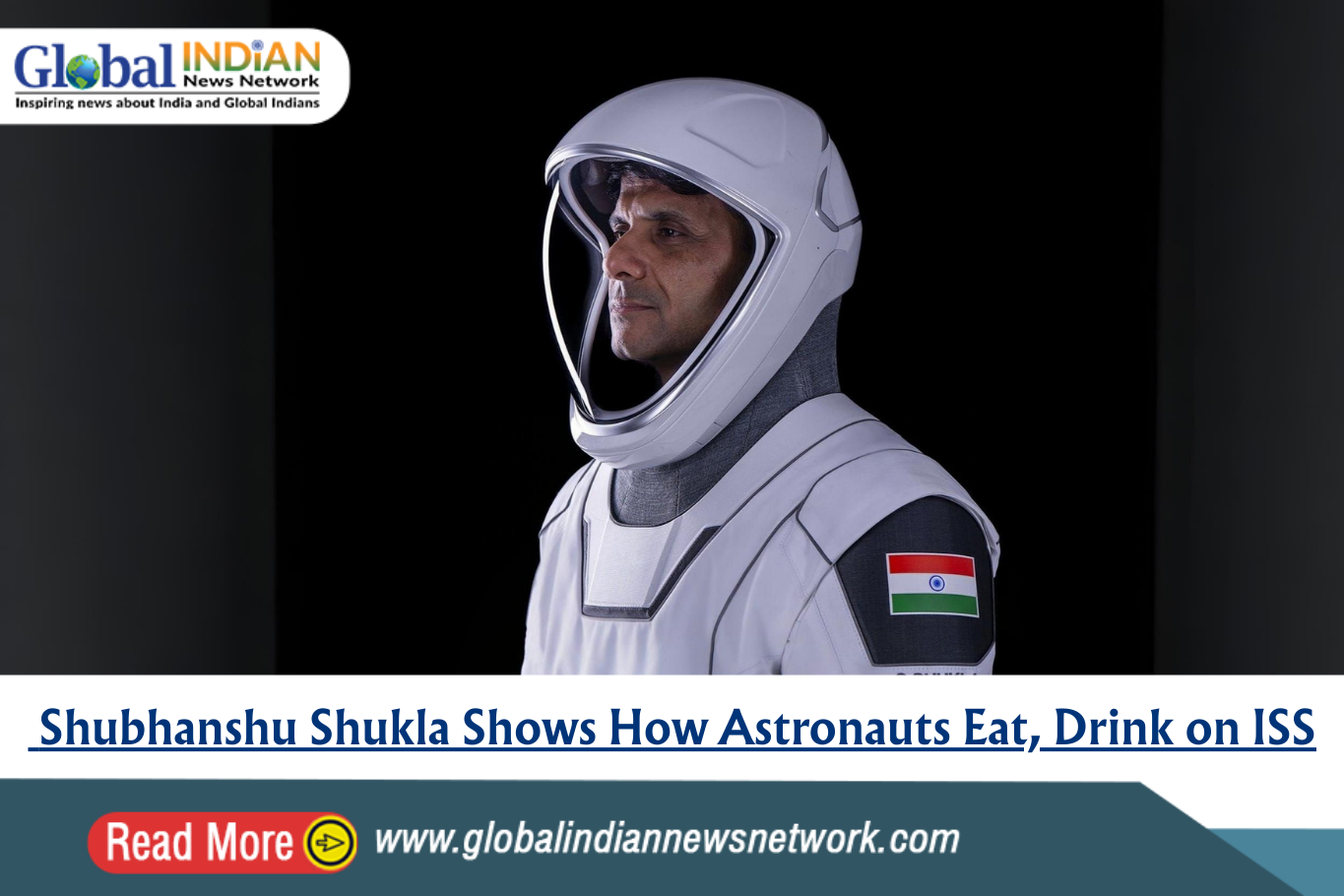
 Indian astronaut and IAF Group Captain Shubhanshu Shukla has offered an engaging look at life aboard the International Space Station (ISS) through a video he recorded himself. In the clip, Shukla highlighted the unusual process of eating and drinking in microgravity, stressing the need for careful handling of food to prevent floating spills.
The video demonstrated how sipping coffee in space differs drastically from Earth, as liquids float in suspended blobs instead of pouring naturally. He emphasized patience while dining, sharing his motto, “Slow is Fast,” to remind viewers that rushing meals in space can easily cause accidents.
One key highlight of his demonstration was digestion in space. Contrary to common belief, gravity does not aid the process. Instead, muscle contractions known as peristalsis ensure food moves effectively through the digestive tract. This means digestion works just as efficiently in space as it does on Earth.
Shukla’s post quickly drew widespread attention online. Social media users expressed admiration and curiosity about his life on the ISS. Many appreciated his effort to share everyday details of space living, from floating beverages to his personal touch—such as a Rudraksha necklace that drifted in slow motion during the recording. Some even hailed him as the “world’s first spacefluencer,” while others encouraged him to post more videos from orbit.
Beyond this glimpse into daily life, Shukla’s mission marks a historic achievement for India’s space program. He launched aboard SpaceX’s Falcon 9 as part of Axiom Mission 4 on June 25 from Kennedy Space Center in Florida, docking with the ISS the following day. Over his 20-day stay, he took part in more than 60 experiments, ranging from studies on radiation biology to developing oxygen systems using microalgae.
His efforts provided invaluable insights for India’s upcoming Gaganyaan mission, as he helped gather data on human adaptability in microgravity and tested technologies essential for long-term space travel. Shukla’s training prepared him rigorously for this journey, equipping him with the skills to manage spacecraft systems, perform experiments, and handle emergencies in orbit.
By sharing both scientific achievements and personal experiences, Shukla has inspired countless aspiring astronauts and researchers back home. His mission has not only advanced India’s space ambitions but also connected the public to the wonders—and challenges—of living beyond Earth.