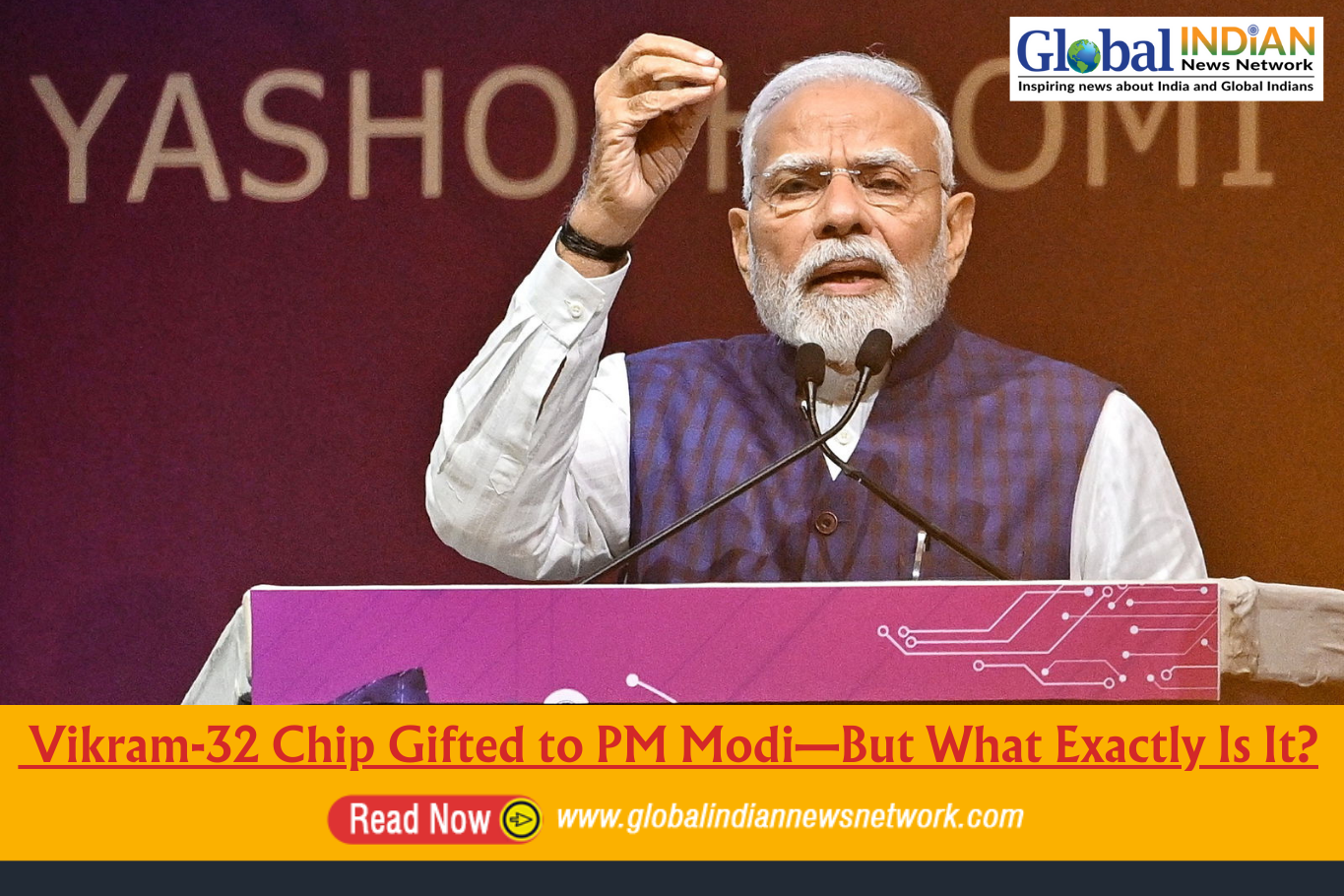
 India reached a major milestone in its pursuit of semiconductor independence with the unveiling of the Vikram-32 chip at Semicon India 2025. Electronics and IT Minister Ashwini Vaishnaw presented the nation’s first indigenously developed 32-bit processor to Prime Minister Narendra Modi, marking a proud step forward in India’s technological capabilities.
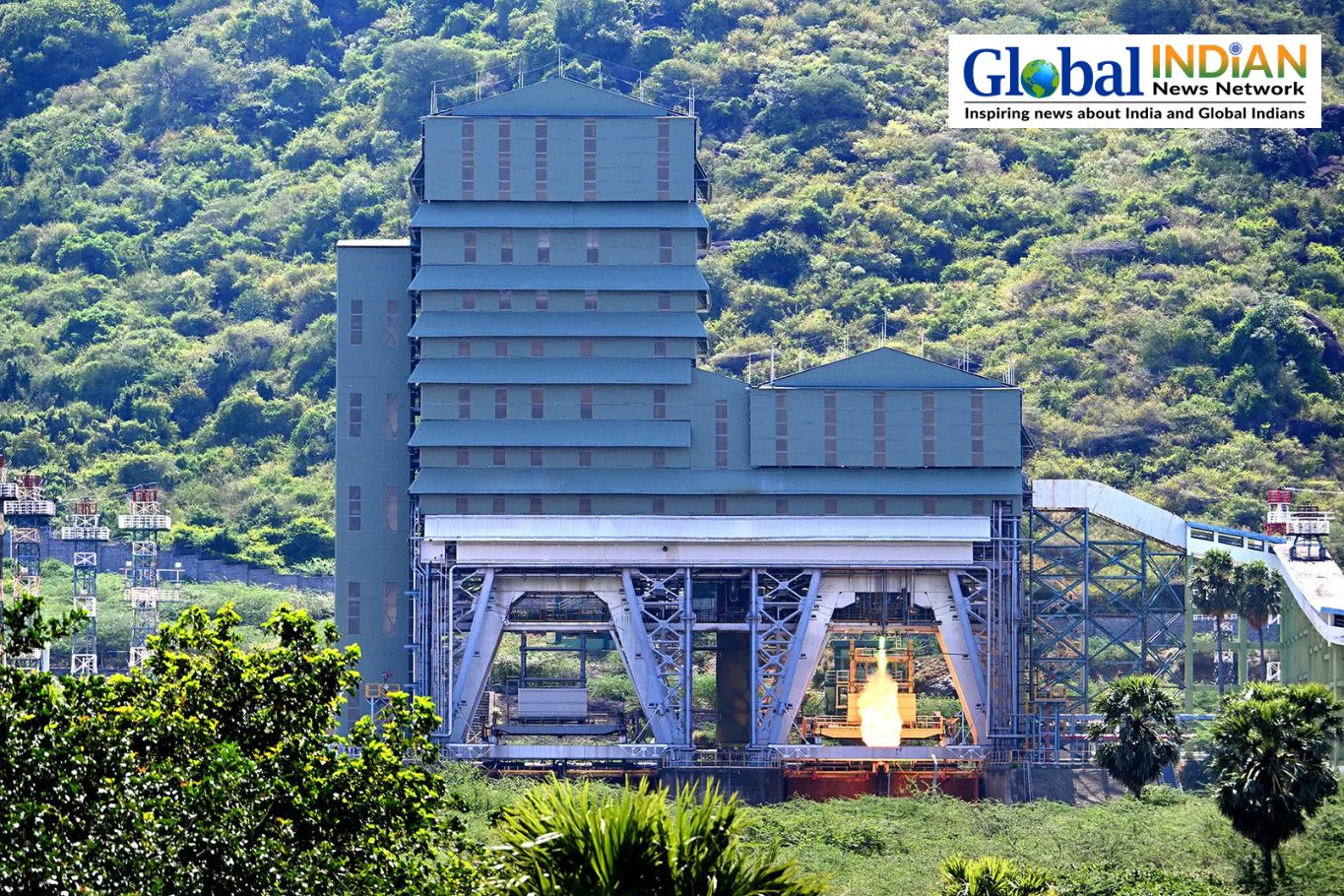
The Vikram-32 was created by the Indian Space Research Organisation’s Semiconductor Laboratory (SCL) in Mohali, Punjab. Specifically designed to endure the demanding environment of space launches, it represents India’s first fully homegrown microprocessor engineered for satellite and rocket applications. The initial batch, labeled Vikram 3201, was successfully tested during the PSLV-C60 mission, proving its resilience and reliability in real-world conditions.
Introduced earlier in March, the processor underscores the rapid progress India has made in chip design and fabrication since the launch of the India Semiconductor Mission in 2021. In less than four years, the country has evolved from a large-scale consumer of semiconductors into a credible manufacturer. This transformation is driven by strong government support, sustained R&D, and a stable policy framework.
Fabricated at SCL’s 180nm CMOS facility, the Vikram-32 incorporates advanced technical features. It is capable of executing complex floating-point calculations, handling large memory, and processing 32-bit data streams. Most importantly, it has been built to function in extreme thermal and environmental conditions encountered in space. ISRO has also highlighted its versatility for use in strategic areas such as defence, aerospace, automotive, and energy systems.
During the handover ceremony, Minister Vaishnaw emphasized India’s broader semiconductor ambitions. He noted that five fabrication units are already under construction, and ten more projects worth over $19 billion in investment have been approved across six states. Additionally, 23 design startups are receiving backing under the Design Linked Incentive scheme.
The presentation of Vikram-32 to Prime Minister Modi was not only a technological achievement but also a symbolic moment. It showcased India’s determination to become a global force in semiconductor production and innovation.
The three-day Semicon India 2025 conference continues to highlight India’s role as an emerging hub for resilient and sustainable chipmaking, with the Vikram-32 standing as a shining example of indigenous progress.